Common asparagus fern
-
 Domestic and indoor
 - Also known as:Plumosa Fern, Ferny asparagus, Lace fern, Climbing asparagus
 Domestic and indoor
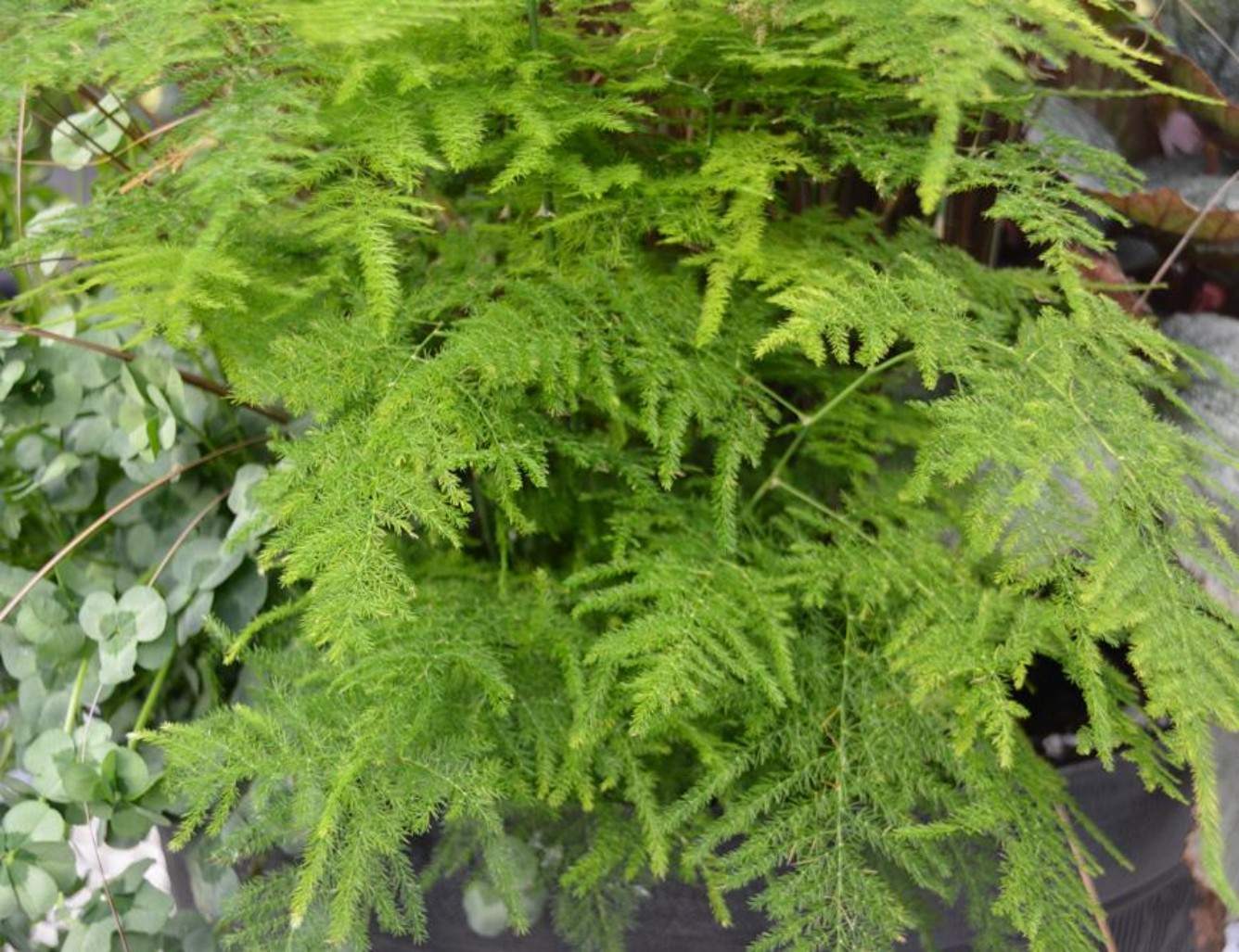
Nursing Skills
To care for Common asparagus fern, place it in bright, indirect light and water when the top 1-2 inches of soil dries out, avoiding overwatering. Keep humidity moderate (40-60%) and maintain a temperature of 18-24°C. Fertilize monthly in spring-summer, prune yellow fronds, and keep its toxic berries away from kids and pets.
Advertisement
Plant Properties
-
- Toxicity
- Humans, pets
-
- Flower color
- white
-
- Plant type
- evergreen perennial
-
- Leaf shape
- pinnate
-
- Bloom Time
- spring
-
- Lifespan
- long-lasting
Plant Care Requirements
-
Difficulty Level
Moderate, easy to care for, suitable for beginners
-
Watering Schedule
Spring and Autumn: 1-2 days/time; Summer: Daily; Winter: 3-5 days/time
-
Light Requirements
Bright, indirect light; avoid direct sunlight
-
Soil pH
pH 6.0-7.0
-
Planting Time
Spring (April-May)
-
Hardiness Zones
USDA Zones 9-11
-
Growth Rate
Moderate, grows 30-50cm per year
Advertisement
Plant Care Guide
-
What kind of light does the Common Asparagus Fern need, and how to avoid light-related problems?
The Common Asparagus Fern is a plant that prefers bright, indirect light, and it is extremely sensitive to direct sunlight, which is one of the key points to ensure its healthy growth. It thrives in an environment with sufficient scattered light, such as a bright room 1-2 meters away from a south-facing or east-facing window, where it can receive 4-6 hours of soft light every day. This kind of light can promote the photosynthesis of the plant, make its foliage lush and bright green, and avoid the problem of thin stems and yellow leaves caused by insufficient light. If the light is too weak for a long time, such as placing it in a dark corner all year round, the plant will appear leggy, the cladodes (the structures that look like leaves) will become sparse and pale, and the overall growth will be sluggish, even losing its ornamental value. On the other hand, direct sunlight, especially the strong midday sun in summer, will cause serious damage to the plant. The delicate cladodes are easily scorched, showing brown spots, dry edges, or even complete withering, which is irreversible. Therefore, it is necessary to take shade measures in summer: you can hang a light-transmitting curtain on the window to filter the strong sunlight, or move the plant to a place with diffused light, such as a balcony with awnings or a corner near a north-facing window. In winter, when the sunlight is weak, you can appropriately move the plant closer to the window to let it receive more light, which is conducive to its overwintering. For indoor potted plants, it is also recommended to rotate the flower pot every 1-2 weeks to ensure that all parts of the plant receive uniform light, avoiding the problem of uneven growth caused by one-sided light exposure. In addition, if you place the plant outdoors in spring and autumn, you should also choose a shaded area, such as under a big tree or a pergola, to prevent direct sunlight from burning the foliage.
-
How to water the Common Asparagus Fern correctly to prevent overwatering or underwatering?
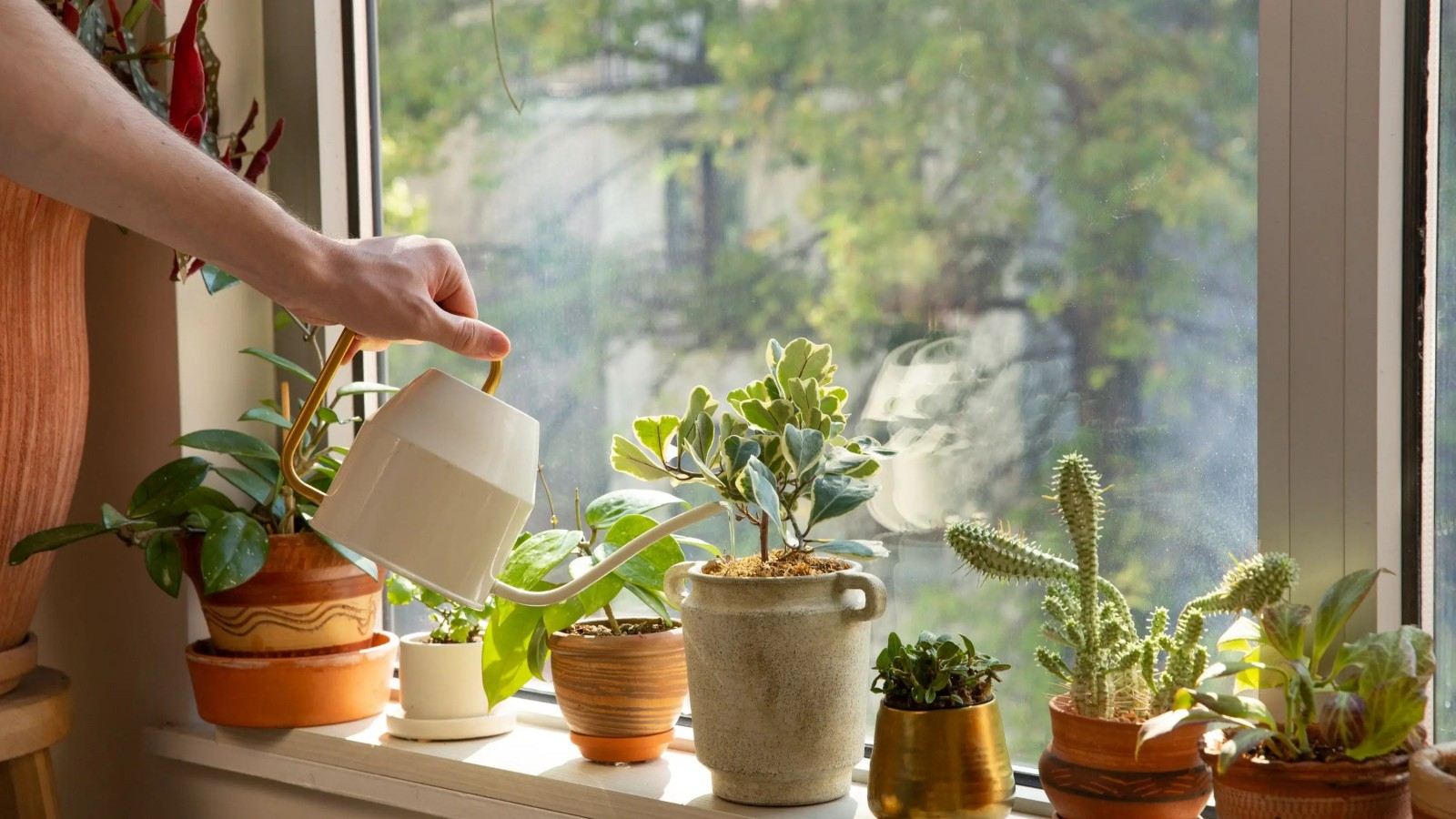
water thoroughly when the soil is dry avoid water accumulationWatering is a crucial part of caring for the Common Asparagus Fern, and its core principle is “water thoroughly when the soil is dry, and avoid water accumulation”, because this plant is afraid of waterlogging and also cannot tolerate long-term drought. First of all, it is necessary to judge whether the plant needs watering: insert your finger 1-2 inches into the soil. If the soil feels dry, it means it is time to water; if the soil is still moist, you should wait for 1-2 days before checking again. This method is simple and practical, and can effectively avoid blind watering. The frequency of watering needs to be adjusted according to the seasons, temperature, humidity and soil conditions, and there is no fixed time standard. In spring and autumn, which are the peak growth periods of the Common Asparagus Fern, the temperature is moderate, the evaporation rate is moderate, and the plant’s water demand is relatively large. It is generally watered once every 1-2 days. When watering, slowly pour water along the edge of the flower pot until the water seeps out from the bottom of the pot, ensuring that the root system can fully absorb water. In summer, the temperature is high, the evaporation is fast, and the water demand increases. It can be watered once a day, and even spray water on the foliage 1-2 times a day to increase the surrounding air humidity, which is beneficial to the growth of the plant. However, it should be noted that summer watering should be done in the morning or evening to avoid watering at noon when the temperature is the highest, which will cause the root system to be scalded by the hot soil. In winter, the plant enters a semi-dormant state, the growth rate slows down, and the water demand decreases significantly. It is usually watered once every 3-5 days, and the amount of water should be reduced to avoid water accumulation in the soil, which will lead to root rot. In addition, the water quality for watering is also important. It is best to use rainwater or distilled water. If tap water is used, it should be placed in a container for 1-2 days to let the chlorine in the water volatilize, so as to avoid the accumulation of harmful substances in the soil and affect the growth of the plant. At the same time, it is necessary to ensure that the flower pot has good drainage holes. After watering, if there is water in the saucer under the pot, it should be poured out in time to prevent the root system from being soaked in water for a long time, which will cause root rot, yellow leaves and other problems. If underwatering occurs accidentally, the plant will show wilting, dry leaves and other phenomena. At this time, it should be watered in time, and the water should be poured thoroughly, and the plant should be placed in a cool and ventilated place to recover slowly.
-
What type of soil is suitable for Common Asparagus Fern, and how to maintain soil quality?
pH value 6.0-7.0The Common Asparagus Fern likes loose, breathable, well-drained and fertile soil with a slightly acidic to neutral pH value (6.0-7.0). Such soil can ensure that the root system of the plant can breathe smoothly, absorb water and nutrients effectively, and avoid root rot caused by poor drainage. If the soil is too heavy, sticky or poorly drained, the root system will be in a waterlogged environment for a long time, leading to root rot, yellow leaves and even plant death. Therefore, choosing the right soil and maintaining its quality are essential for the healthy growth of the Common Asparagus Fern. When configuring the soil, you can use a mixed soil formula: 4 parts of peat soil (or coconut coir), 3 parts of perlite (or vermiculite), 2 parts of garden soil, and 1 part of organic fertilizer (such as decomposed cow manure, sheep manure or compost). Peat soil (or coconut coir) has good water retention and air permeability, and can provide a slightly acidic environment; perlite (or vermiculite) can improve the drainage performance of the soil and prevent compaction; garden soil provides basic nutrients; organic fertilizer can increase soil fertility and improve soil structure. The mixed soil is loose and breathable, has good drainage, and is very suitable for the growth of Common Asparagus Fern. It should be noted that the soil should be disinfected before use, such as exposing it to the sun for 2-3 days, which can kill the bacteria, eggs and other harmful substances in the soil and reduce the occurrence of diseases and insect pests. In the process of daily maintenance, it is also necessary to maintain the quality of the soil. First of all, avoid frequent watering, which will lead to soil compaction. You can loosen the soil with a small shovel every 1-2 months to increase the air permeability of the soil and facilitate the breathing of the root system. Secondly, fertilize reasonably to supplement the nutrients consumed by the soil. It is not advisable to apply too much fertilizer, especially nitrogen fertilizer, which will cause the soil to harden. In addition, it is necessary to replace the soil regularly. Generally, the potted Common Asparagus Fern should be repotted once every 1-2 years, and the old soil should be replaced with new mixed soil, which can avoid the depletion of soil nutrients and the accumulation of harmful substances, and provide a good growth environment for the plant. When repotting, it is also necessary to trim the rotten roots and old roots of the plant to promote the growth of new roots.
-
What temperature and humidity conditions are suitable for Common Asparagus Fern?
18-24°CThe Common Asparagus Fern is a warm-loving and humidity-loving plant, and its growth is greatly affected by temperature and humidity. The suitable temperature for its growth is 18-24°C, which is the most favorable temperature range for its growth and development. In this temperature range, the plant grows vigorously, the cladodes are lush and green, and the growth rate is relatively fast. When the temperature is higher than 30°C in summer, the growth of the plant will be affected. The high temperature will accelerate the evaporation of water, and the plant is prone to wilting, yellow leaves and other phenomena. At this time, it is necessary to take cooling measures: move the plant to a cool and ventilated place, spray water on the foliage and around the plant frequently to reduce the ambient temperature and increase air humidity. It should be noted that the plant should not be placed in an environment with strong wind, which will cause the foliage to dry and fall off. In winter, the Common Asparagus Fern is not cold-tolerant. When the temperature drops below 10°C, the growth of the plant will slow down significantly, and it will enter a semi-dormant state. If the temperature drops below 5°C, the plant will be frostbitten, showing symptoms such as wilting, browning of cladodes, and even death. Therefore, it is necessary to do a good job in cold protection and warmth preservation in winter: move the potted plant indoors before the first frost, place it in a bright and warm place with a temperature above 10°C, such as near a heating vent (but avoid direct contact with the heating vent to prevent the foliage from drying), and reduce watering and fertilization to let the plant overwinter safely. In addition, the temperature difference between day and night should be avoided as much as possible in winter, which will also affect the overwintering of the plant. In terms of humidity, the Common Asparagus Fern likes a moderate humidity environment, and the suitable air humidity is 40%-60%. If the air humidity is too low, the cladodes of the plant will become dry, yellow, and even fall off, which will affect the ornamental value. Especially in winter, when the indoor heating is turned on, the air is very dry, which is very unfavorable for the growth of the plant. At this time, you can use a humidifier to increase the indoor air humidity, or place a basin of water next to the plant, or spray water on the foliage 1-2 times a day to maintain the humidity around the plant. It should be noted that the air humidity should not be too high, otherwise it will easily lead to the growth of mold on the foliage and the occurrence of fungal diseases. Therefore, while increasing the humidity, it is also necessary to ensure good ventilation to keep the air circulating.
-
How to fertilize Common Asparagus Fern correctly to promote healthy growth?
Fertilize monthly in spring and autumn Fertilize every 2-3 months in summer Stop fertilizing completely in winterFertilization is an important measure to supplement the nutrients needed for the growth of Common Asparagus Fern, but fertilization must be scientific and reasonable, otherwise it will cause fertilizer damage and affect the growth of the plant. The Common Asparagus Fern is a foliage plant, and its demand for nitrogen fertilizer is relatively large, but it also needs an appropriate amount of phosphorus and potassium fertilizer to promote the strong growth of the root system and improve the plant’s resistance. The fertilization principle is “thin fertilizer and frequent application”, that is, the concentration of fertilizer should be low, and the frequency of fertilization can be appropriately increased, avoiding the application of thick fertilizer or raw fertilizer, which will burn the root system. In spring and autumn, which are the peak growth periods of the Common Asparagus Fern, the plant’s demand for nutrients is relatively large, and it is necessary to fertilize once a month. You can use a water-soluble compound fertilizer with a balanced ratio (such as N-P-K = 20-20-20), which can provide comprehensive nutrients for the plant and promote the lush growth of the foliage. When fertilizing, dilute the fertilizer according to the ratio of 1:1000, and then water it along the edge of the flower pot to avoid direct contact between the fertilizer and the root system. Alternatively, you can use organic fertilizer, such as decomposed liquid fertilizer, which is mild and non-irritating, and can also improve the soil structure. The organic fertilizer should also be diluted before use to avoid burning the roots. In summer, when the temperature is higher than 30°C, the growth of the plant slows down, and the demand for nutrients decreases. At this time, the frequency of fertilization should be reduced, and fertilization can be done once every 2-3 months, or even stopped. If fertilization is continued in high temperature, the fertilizer will be difficult to be absorbed by the root system, and it will easily accumulate in the soil, causing fertilizer damage. In winter, the plant enters a semi-dormant state, and the growth is basically stagnant, so fertilization should be stopped completely. At this time, fertilization will not only not promote growth, but also increase the burden on the root system, leading to root rot. In addition, it is necessary to pay attention to the time of fertilization. It is best to fertilize in the morning or evening when the temperature is relatively low, avoiding fertilization at noon when the temperature is high. After fertilization, you can water the plant appropriately to help the root system absorb the fertilizer. If fertilizer damage occurs accidentally (such as yellow leaves, wilting, etc.), you should stop fertilizing immediately, water the plant thoroughly to dilute the concentration of fertilizer in the soil, and move the plant to a cool and ventilated place to recover. At the same time, when repotting the plant, you can add an appropriate amount of organic fertilizer as base fertilizer, which can provide long-term and stable nutrients for the plant.
-
How to prune Common Asparagus Fern and deal with its growth problems?
Proper pruningPruning is an important part of the daily maintenance of Common Asparagus Fern. Proper pruning can not only keep the plant in a beautiful shape, but also promote the growth of new branches and make the plant more lush. The main purpose of pruning is to remove yellow, withered, diseased and insect-infested cladodes and stems, as well as overgrown, leggy and messy branches, so as to reduce the consumption of nutrients and improve the ventilation and light transmission of the plant. Pruning can be carried out at any time during the growth period, but the best time is spring, when the plant is in the peak growth period, and the wound after pruning heals quickly, and new branches can grow quickly. When pruning, use a pair of sharp and disinfected pruning shears (you can wipe the shears with alcohol to disinfect), and cut off the yellow, withered or diseased parts from the base of the stem. For overgrown and leggy branches, you can cut them short according to the desired shape, which can promote the germination of lateral buds and make the plant more compact. For messy branches, you can sort them out and cut off the redundant branches to maintain the overall shape of the plant. It should be noted that when pruning, do not cut off too many healthy branches at one time, which will affect the growth of the plant. Generally, it is appropriate to cut off 10%-20% of the branches each time. In addition to regular pruning, it is also necessary to deal with common growth problems of Common Asparagus Fern in time. For example, if the plant is leggy, it is usually caused by insufficient light or excessive fertilization. At this time, in addition to pruning the leggy branches, it is also necessary to move the plant to a place with sufficient scattered light and reduce the amount of nitrogen fertilizer. If the foliage turns yellow, it may be caused by overwatering, underwatering, insufficient light or fertilizer damage. It is necessary to find out the cause and take corresponding measures: if it is overwatering, stop watering and loosen the soil to promote water evaporation; if it is underwatering, water in time; if it is insufficient light, move to a bright place; if it is fertilizer damage, water thoroughly to dilute the fertilizer. If the plant is infected with diseases and insect pests, such as scale insects, aphids, etc., it is necessary to remove the diseased and insect-infested parts in time, and spray insecticides (such as insecticidal soap) to prevent the spread of diseases and insect pests.
Advertisement
Frequently Asked Questions
-
1 Is Common Asparagus Fern toxic to humans and pets, and what should I do if ingestion happens?
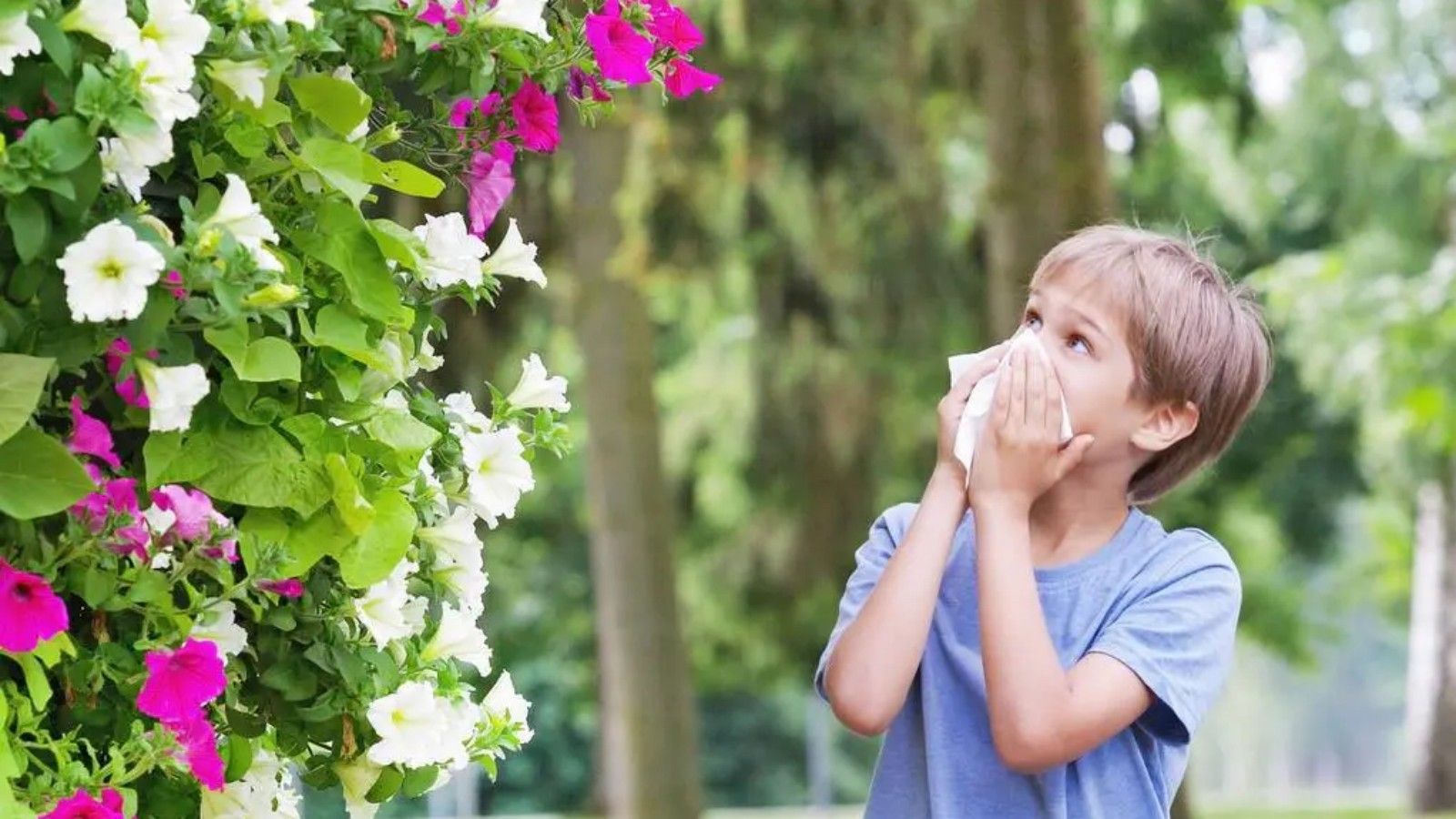
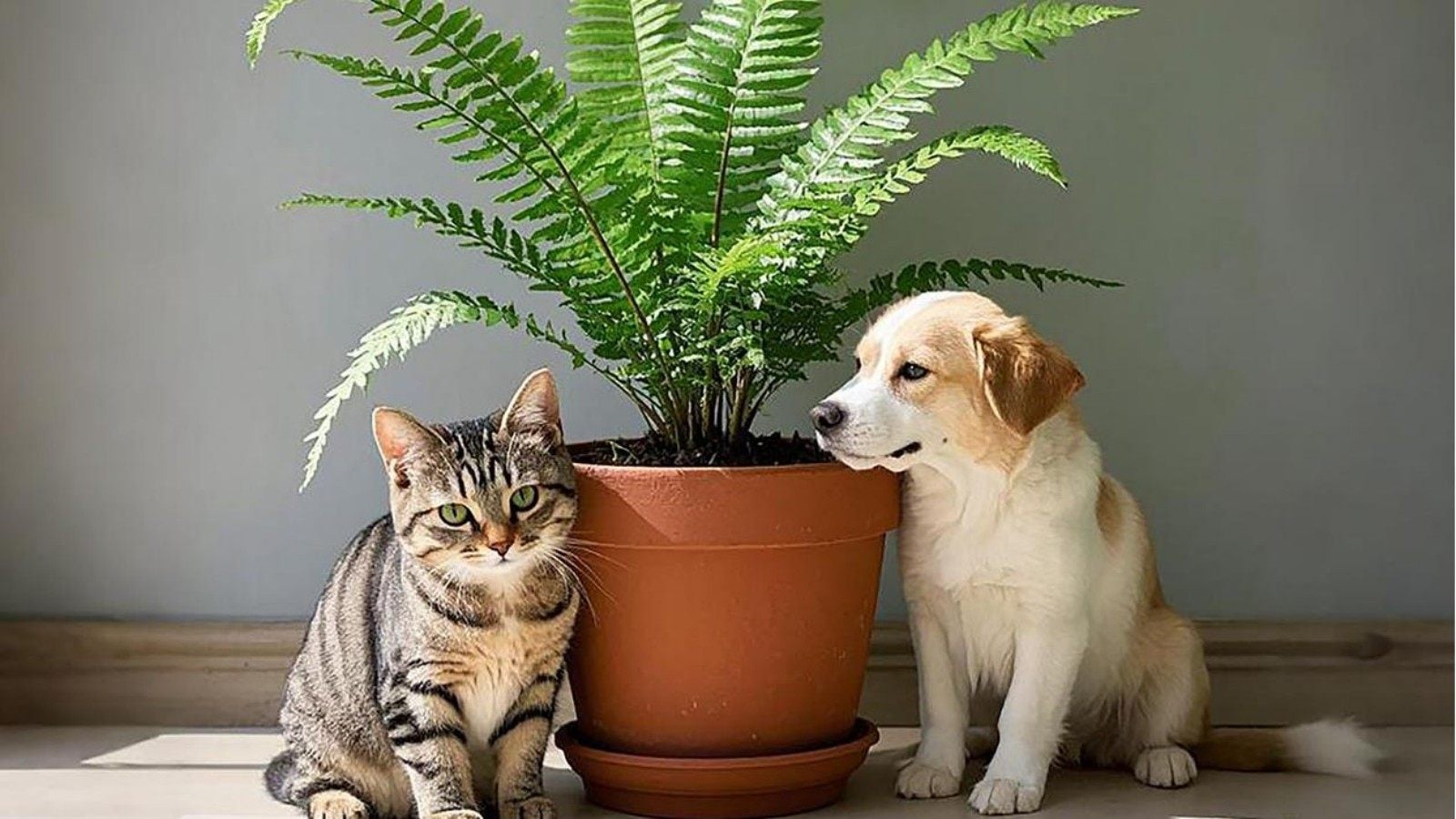
Common Asparagus Fern (Asparagus setaceus) is toxic to both humans and pets, and this is a top concern for many plant owners. The toxicity comes from saponins, a natural compound found in its foliage and black berries. For humans, especially children, ingesting any part of the plant can cause mild to moderate irritation, including a burning sensation in the mouth, lips, and throat, along with nausea, vomiting, and diarrhea. The reaction is usually not life-threatening but can be uncomfortable, especially for young kids who may be curious and pick the berries or leaves. For pets, particularly cats and dogs, ingestion can lead to more severe symptoms, such as excessive drooling, vomiting, diarrhea, loss of appetite, lethargy, and even abdominal pain. In rare cases, large amounts of ingestion may cause more serious issues, but this is uncommon. If a child or pet accidentally ingests the plant, immediate action is needed: rinse the mouth thoroughly with water to remove any plant residue. For pets, offer small amounts of water to prevent dehydration, but do not force them to drink. If symptoms persist or worsen—such as severe vomiting, difficulty breathing, or lethargy—seek medical attention for humans or veterinary care for pets right away. To prevent ingestion, place the plant in a high, out-of-reach area, away from children and pets, and educate kids not to touch or eat the plant.
-
2 How often should I water my Common Asparagus Fern, and how to avoid overwatering or underwatering?
Watering is a key part of caring for Common Asparagus Fern, and getting it right is essential to prevent common issues like root rot or dry, yellow foliage. The plant thrives with a “moist but not waterlogged” soil condition, and there is no fixed watering schedule—frequency depends on factors like season, temperature, humidity, and soil type. In spring and autumn, the plant’s peak growth periods, water it when the top 1-2 inches of soil feel dry to the touch, which is typically every 1-2 days. During summer, when temperatures are high and evaporation is fast, you may need to water daily, and even mist the foliage 1-2 times a day to increase air humidity. In winter, the plant enters a semi-dormant state, so water less frequently—every 3-5 days, and reduce the amount of water to avoid water accumulation. To check if your plant needs water, insert your finger into the soil; if it’s dry at the 1-inch mark, it’s time to water. When watering, pour water slowly along the edge of the pot until it seeps out of the drainage holes, ensuring the roots get enough moisture. Avoid overwatering by ensuring the pot has drainage holes and emptying any excess water from the saucer after watering. Underwatering is less common but can cause wilting and yellow tips—if this happens, water thoroughly and adjust your routine to check the soil more regularly.
-
3 What light and temperature conditions does Common Asparagus Fern need to grow well?
Common Asparagus Fern is a shade-loving plant that thrives in bright, indirect light and warm temperatures, making it well-suited for indoor growth or outdoor gardens in mild climates. When it comes to light, the plant cannot tolerate direct sunlight, especially the harsh midday sun in summer, which will scorch its delicate, feathery cladodes (the structures that look like leaves), causing brown spots, dry edges, and discoloration. The ideal light condition is bright, filtered light—such as a spot 1-2 meters away from a south-facing or east-facing window with a sheer curtain, or a shaded outdoor area under trees or a pergola. If the plant gets too little light, it will become leggy, with sparse, pale foliage and slow growth; in this case, move it to a brighter location or use a grow light to supplement. For temperature, the plant prefers a warm environment between 18-24°C (65-75°F), which is typical of most indoor spaces. It is not cold-tolerant: temperatures below 10°C (50°F) slow its growth, and temperatures below 5°C (41°F) can cause frost damage, leading to wilting and browning. In winter, move potted plants indoors to a warm, bright spot, away from cold drafts or heating vents (which can dry out the foliage). In summer, avoid placing the plant in areas with temperatures above 30°C (86°F), as this can cause stress and yellowing—move it to a cool, well-ventilated area if needed.
Advertisement
Introduction
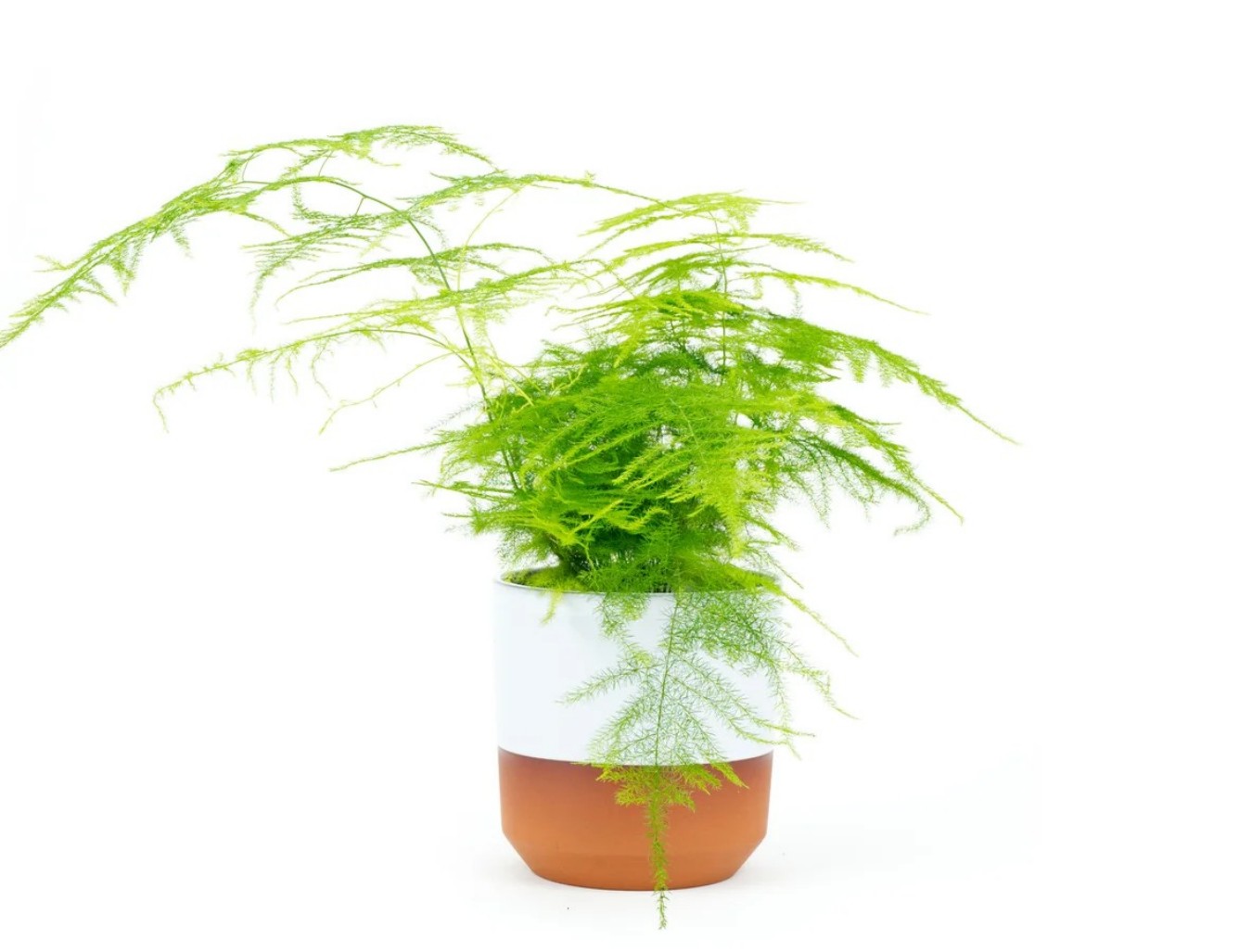
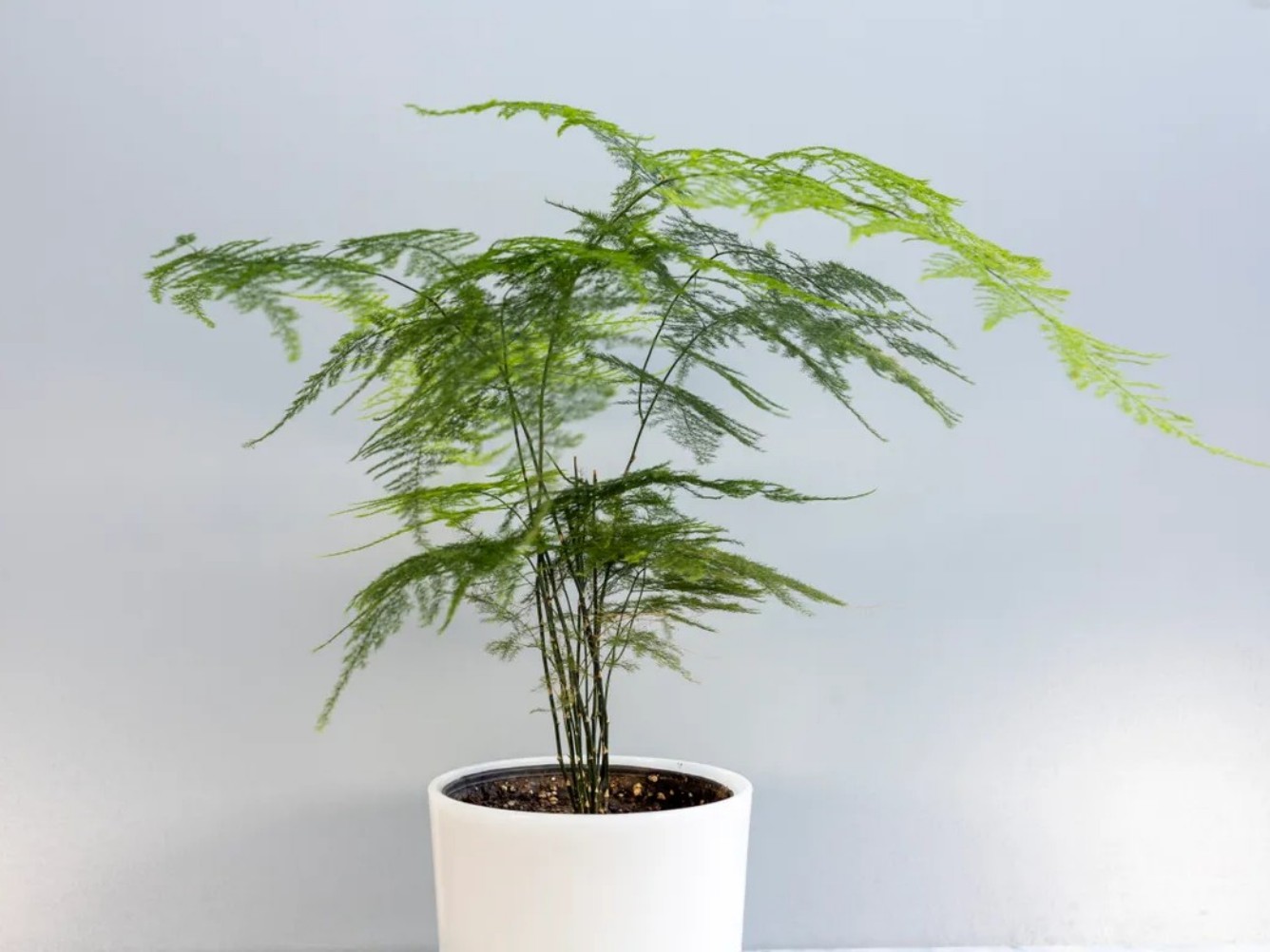
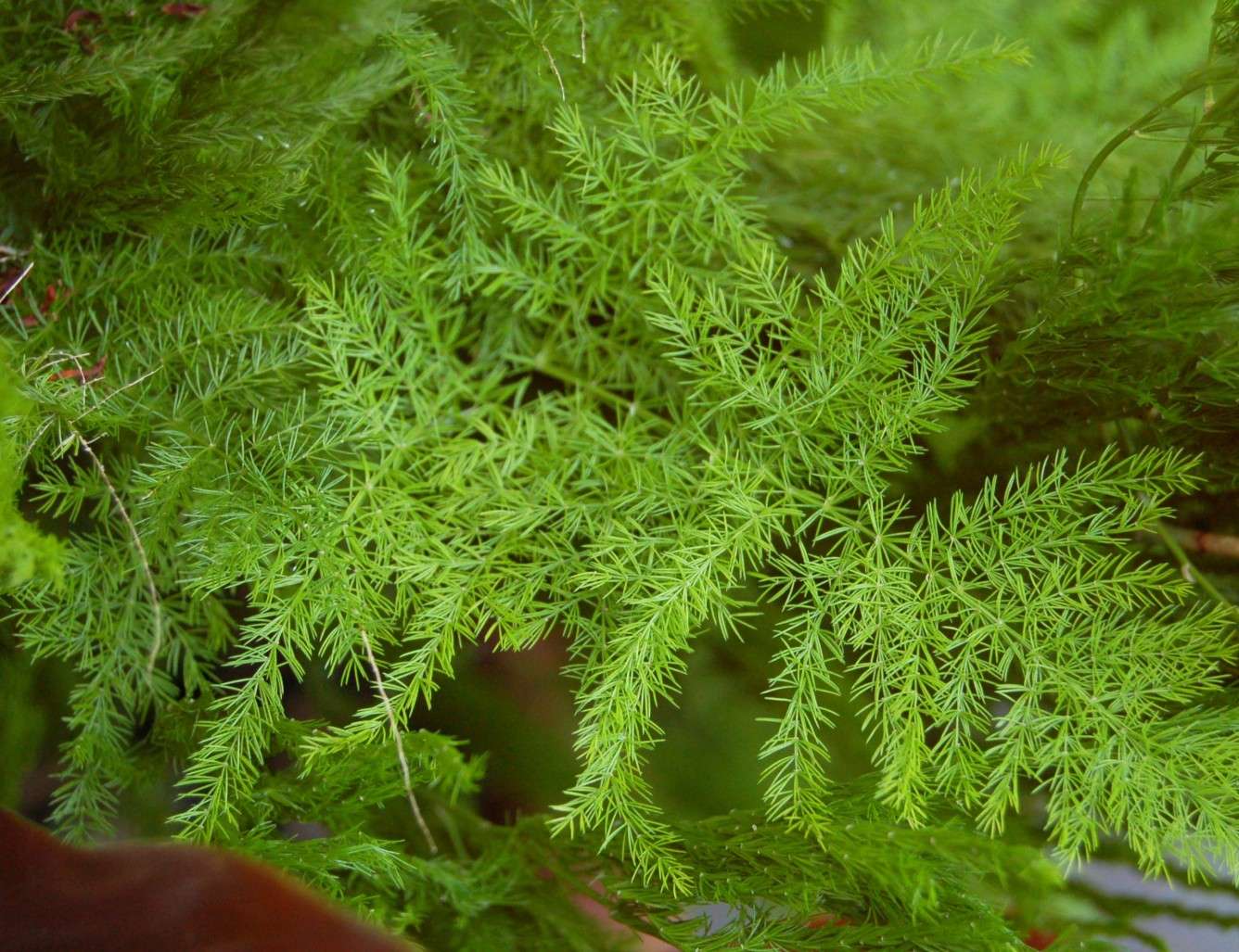
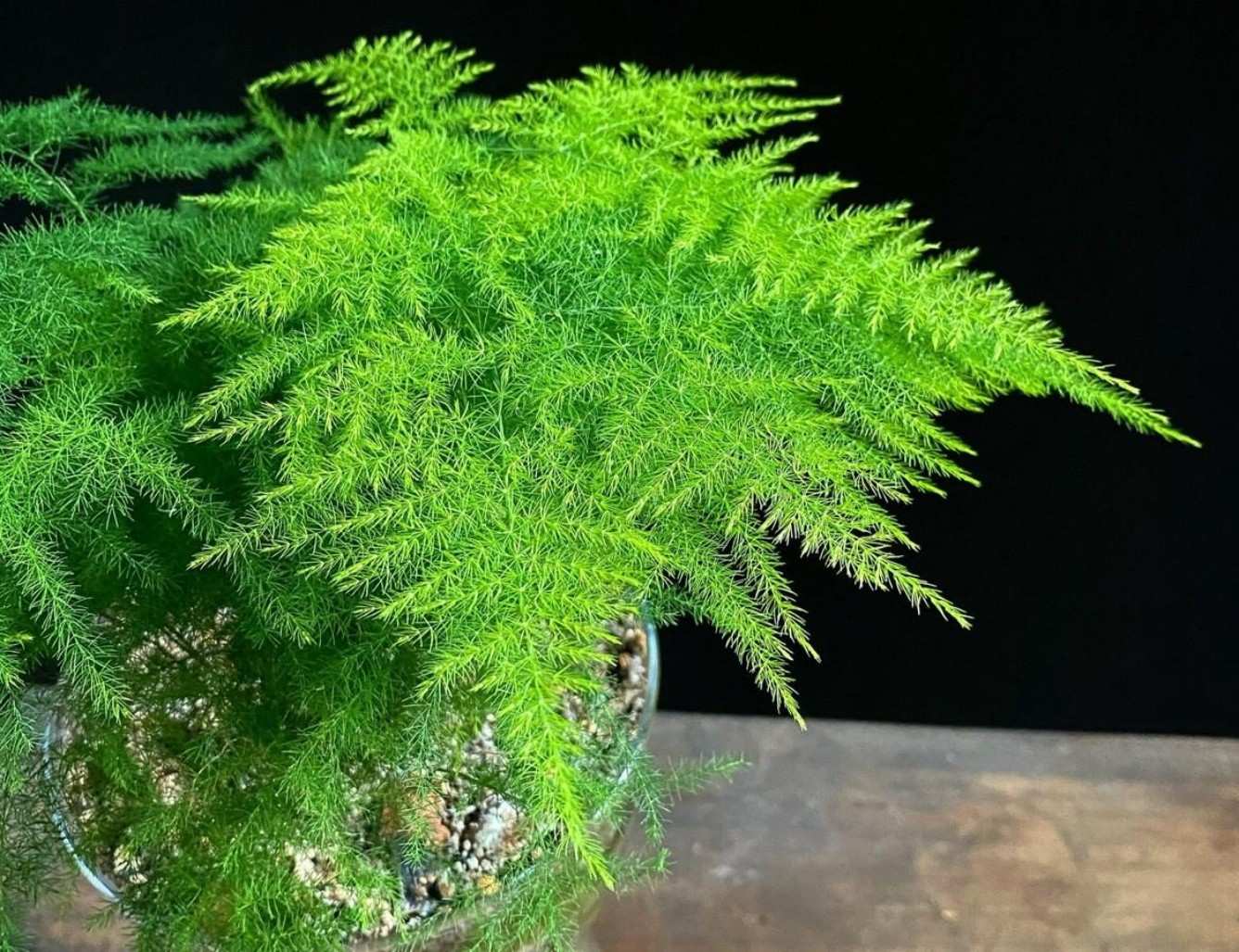
Common asparagus fern is an evergreen perennial in the Asparagaceae family, native to southern Africa. Not a true fern, it has fine, feathery cladodes resembling fern fronds, wiry stems with small thorns, tiny white flowers, and toxic black berries. Popular as an ornamental houseplant for its delicate, airy foliage.
Popular Plant Encyclopedia
-
-
Poisonous and danger
- Rhus typhina
-
-
-
Edible and medicinal
- Common sunflower
-
-
-
Poisonous and danger
- Plumeria rubra
-
-
-
Wild and common weed
- Convolvulus arvensis
-
-
-
Edible and medicinal
- Perilla frutescens
-
-
-
Edible and medicinal
- Pogostemon cablin
-
-
-
Edible and medicinal
- Common fenugreek
-
-
-
Edible and medicinal
- Garden Thyme
-
 Poisonous and danger
 Edible and medicinal
 Wild and common weed
Advertisement