Rhus typhina
-
 Poisonous and danger
 - Also known as:staghorn sumac
 Poisonous and danger
Nursing Skills
Staghorn sumac is low-maintenance and tough. Plant in full sun for best color and fruiting, in any well-drained soil—tolerates dry, poor, or rocky ground. Water regularly only when young; established plants need little moisture. Prune in late winter/early spring to remove dead wood and control shape; cut back hard to rejuvenate every few years. Watch for aggressive suckering—dig up unwanted shoots to contain spread.
Advertisement
Plant Properties
-
- Toxicity
- Humans
-
- Flower Color
- Yellow-green flowers
-
- Plant Type
- Large shrub / small tree
-
- Leaf Type
- Pinnately compound leaves
-
- Bloom time
- Summer
-
- Lifespan
- 20–30 years
Plant Care Requirements
-
Maintenance Difficulty
Very low, low-maintenance, drought-tolerant, and adaptable
-
Watering Schedule
Regular watering when newly planted
-
Light Requirements
Full sun ; tolerates light shade but performs poorly
-
Soil pH
pH 5.5–7.5
-
Planting Time
Early spring or fall
-
Hardiness Zones
USDA 3–8
-
Growth Rate
Fast-growing
Advertisement
Plant Care Guide
-
What is the difficulty level of caring for Rhus typhina, and is it suitable for beginner gardeners?
Rhus typhina is extremely low-maintenance, making it an excellent choice for beginner gardeners and those with busy schedules. It is highly adaptable to various growing conditions and requires minimal intervention once established. This plant is drought-tolerant, pest-resistant, and can thrive in poor soil, eliminating the need for frequent monitoring or specialized care. Unlike finicky plants that demand precise watering, fertilizing, or pruning, staghorn sumac is resilient and forgiving of minor care mistakes. Even gardeners with little experience can successfully grow it, as it only needs basic attention during the initial establishment period. The main consideration is managing its aggressive spread (via suckers), but this is a simple task with regular maintenance, making it accessible to all skill levels.
-
What is the proper watering schedule for Rhus typhina, and how does it change with different growth stages?
deeply once or twice a week 2+ weeks without rainThe watering needs of Rhus typhina vary significantly between young and mature plants. For newly planted specimens (first 1–2 years), water deeply once or twice a week to ensure the root system establishes properly. Aim to moisten the soil to a depth of 15–20 cm, as shallow watering can lead to weak, shallow roots. Avoid overwatering, as this plant is susceptible to root rot in waterlogged soil. Once established (after 2 years), staghorn sumac becomes highly drought-tolerant and rarely needs additional watering. During prolonged dry spells (2+ weeks without rain), a deep watering every 2–3 weeks is sufficient to keep it healthy. In hot, arid regions, occasional deep watering may be needed to prevent leaf wilting, but overall, it thrives with minimal moisture. Avoid frequent light watering, as this encourages surface roots and reduces drought resistance.
-
What are the light requirements for Rhus typhina, and how does light affect its growth and appearance?
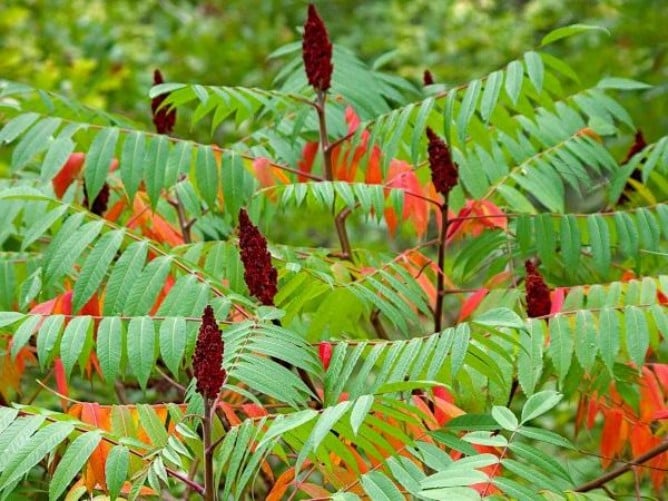
at least 6–8 hoursRhus typhina requires full sun to thrive, meaning at least 6–8 hours of direct sunlight per day. Full sun is critical for two key reasons: vibrant fall foliage and abundant fruiting. In full sun, the plant develops its characteristic velvety stems, lush pinnate leaves, and intense scarlet-orange autumn color—one of its most striking features. If planted in light shade (2–4 hours of sun), it will grow leggy, with sparse foliage and less vibrant fall color. In heavy shade (less than 2 hours of sun), it will struggle to grow, become susceptible to disease, and may fail to produce the iconic red fruit clusters. For the best aesthetic and health, plant it in an open area with unobstructed sunlight, away from tall trees or buildings that cast shade. Even in hot climates, full sun is preferred, as the plant is heat-tolerant and benefits from the light for photosynthesis.
-
What soil pH range is suitable for Rhus typhina, and what type of soil does it prefer?
pH 5.5–7.5Rhus typhina is highly adaptable to a wide range of soil pH levels, tolerating acidic to slightly alkaline conditions (pH 5.5–7.5). It performs best in neutral to slightly acidic soil (pH 6.0–7.0), but it can thrive in soils outside this range with minimal issues. The most important soil requirement is good drainage—staghorn sumac cannot tolerate waterlogged or poorly drained soil, which leads to root rot and plant decline. It prefers loamy or sandy loam soil that retains some moisture but drains quickly, but it can also grow in poor, rocky, or clay soils (as long as drainage is improved). To enhance drainage in heavy clay soil, add compost, sand, or perlite before planting. It does not require rich, fertile soil; in fact, overly fertile soil can encourage excessive sucker growth, making it harder to control. Avoid planting in low-lying areas where water accumulates after rain.
-
When is the best time to plant Rhus typhina, and what precautions should be taken during planting?
Early spring or late autumnThe best time to plant Rhus typhina is in early spring (after the last frost) or late fall (4–6 weeks before the first frost). These periods provide mild temperatures and consistent moisture, allowing the root system to establish before extreme heat or cold. Early spring planting gives the plant the entire growing season to develop roots, while late fall planting lets roots settle in during dormancy, leading to vigorous growth the following spring. Avoid planting in mid-summer (extreme heat) or mid-winter (frost), as this can stress the plant and reduce survival rates. When planting, dig a hole twice as wide as the root ball and slightly deeper. Loosen the soil at the bottom of the hole, place the plant so the root collar (where the stem meets the roots) is level with the soil surface, and backfill with soil. Water deeply after planting to settle the soil and eliminate air pockets. Add a 5–7 cm layer of mulch (e.g., wood chips, straw) around the base to retain moisture and suppress weeds, keeping the mulch away from the stem to prevent rot.
-
What hardiness zones does Rhus typhina tolerate, and how can it be protected in colder zones?
zones 3–8Rhus typhina is extremely cold-hardy, tolerating USDA hardiness zones 3–8. This means it can withstand winter temperatures as low as -40°C (-40°F) in zone 3, making it suitable for most regions of North America, Europe, and parts of Asia with cold winters. In zones 3–5 (colder regions), the plant may lose all its leaves in winter (deciduous) but will regrow vigorously in spring. To protect young plants (first 1–2 years) in zone 3, add a thick layer (10–15 cm) of mulch around the base in late fall to insulate the roots from extreme cold. Avoid pruning in late fall, as this can stimulate new growth that is vulnerable to frost. Mature plants require no additional protection in cold zones, as their root systems are well-established and resilient. In zone 8 (warmer regions), the plant may retain some foliage longer in fall but still benefits from full sun and well-drained soil to avoid heat stress.
-
What is the growth rate of Rhus typhina, and how can its growth and spread be managed?
fast-growingRhus typhina is a fast-growing plant, with an average growth rate of 30–60 cm per year. It typically reaches a mature height of 3–6 m and width of 2–4 m, but its growth can be more aggressive due to its tendency to spread via underground suckers. These suckers can sprout up several meters from the parent plant, forming dense thickets if left unmanaged. To control its spread, regularly remove suckers as they appear—dig them up at the base (including the root) to prevent regrowth. Pruning in late winter/early spring (while dormant) can also help manage size and shape; cut back overgrown branches to maintain a compact form, and remove dead or diseased wood. For those who want to limit its spread, plant it in a contained area (e.g., near a sidewalk or fence) or use a root barrier during planting to restrict sucker growth. Despite its aggressive spread, its fast growth makes it an excellent choice for quickly establishing hedges, windbreaks, or naturalized areas.
Advertisement
Frequently Asked Questions
-
1 Is Rhus typhina toxic, and are there any safety precautions to take when growing it?
Rhus typhina is not highly toxic, but it does require some safety precautions due to its sap. The plant belongs to the Anacardiaceae family, which includes poison ivy, and its sap contains urushiol—a compound that can cause skin irritation, redness, itching, and blisters in sensitive individuals. This irritation is similar to poison ivy but is generally milder for most people. When handling the plant (especially when pruning or planting), it’s recommended to wear gloves, long sleeves, and long pants to avoid direct contact with the sap. If sap comes into contact with the skin, wash the area immediately with soap and water to reduce irritation. Additionally, keep the plant away from small children and pets who might touch or ingest it, as ingestion of leaves or stems can cause mild gastrointestinal discomfort (nausea, vomiting, diarrhea). The fuzzy red fruit clusters are not toxic to birds, which often feed on them, but they are not safe for human consumption. Overall, with basic protective measures, the plant is safe to grow in home gardens.
-
2 Why is my Rhus typhina not producing its iconic red fruit clusters, and how can I fix it?
The most common reason Rhus typhina fails to produce red fruit clusters is a lack of female plants—this species is dioecious, meaning individual plants are either male or female, and only female plants bear fruit. If your plant is male, it will produce yellow-green flowers in early summer but no fruit. To fix this, you’ll need to plant at least one female plant near the male (within 10–15 meters) to ensure cross-pollination, as wind and bees are the primary pollinators. Other factors that can reduce fruiting include insufficient sunlight—female plants need full sun (6–8 hours of direct light daily) to produce fruit, so if your plant is in shade, it may flower but not set fruit. Poor soil drainage or overwatering can also stress the plant, leading to reduced flowering and fruiting. Ensure the soil is well-drained, and avoid overwatering mature plants. Additionally, pruning too heavily in late spring or early summer can remove flower buds, so prune only in late winter/early spring while the plant is dormant to preserve flowering wood.
-
3 How do I control the aggressive spread of Rhus typhina, and is it invasive?
Rhus typhina is not considered invasive in most regions, but it is a vigorous spreader due to its underground suckers—horizontal roots that send up new shoots, which can form dense thickets if left unmanaged. To control its spread, the key is regular maintenance. First, remove suckers as soon as they appear: use a shovel to dig up the sucker at the base, ensuring you remove the entire root attached to the parent plant (cutting just the stem will cause it to regrow). For larger infestations, you can use a root barrier (a thick plastic or metal sheet buried 30–40 cm deep around the plant) to prevent suckers from spreading beyond the desired area. Pruning in late winter/early spring can also help manage size—cut back overgrown branches and remove any wayward suckers at the base. Avoid planting Rhus typhina near lawns, gardens, or other areas where you don’t want it to spread, as it can outcompete other plants. In naturalized areas or large gardens, its spread is less of a concern and can even be beneficial for erosion control.
-
4 What pests and diseases affect Rhus typhina, and how can I prevent or treat them?
Rhus typhina is relatively pest and disease resistant, making it a low-maintenance plant, but it can occasionally be affected by a few issues. The most common pests are aphids and scale insects: aphids feed on the sap of new growth, causing leaves to curl and yellow, while scale insects attach to stems and leaves, sucking sap and excreting a sticky substance (honeydew) that attracts mold. To treat aphids, spray the plant with a strong stream of water to knock them off, or use insecticidal soap for severe infestations. For scale, prune heavily infested branches and apply horticultural oil in late winter to kill overwintering scales. As for diseases, the main concern is root rot, which occurs in poorly drained soil or from overwatering. Symptoms include yellowing leaves, wilting, and stunted growth. To prevent root rot, ensure the soil is well-drained and avoid overwatering, especially for mature plants. Leaf spot (fungal disease) may occasionally appear, causing brown spots on leaves, but it is usually not severe—remove fallen leaves to reduce fungal spores, and avoid overhead watering to keep leaves dry. Overall, proper care (full sun, well-drained soil, minimal watering) is the best way to prevent pests and diseases.
Advertisement
Introduction
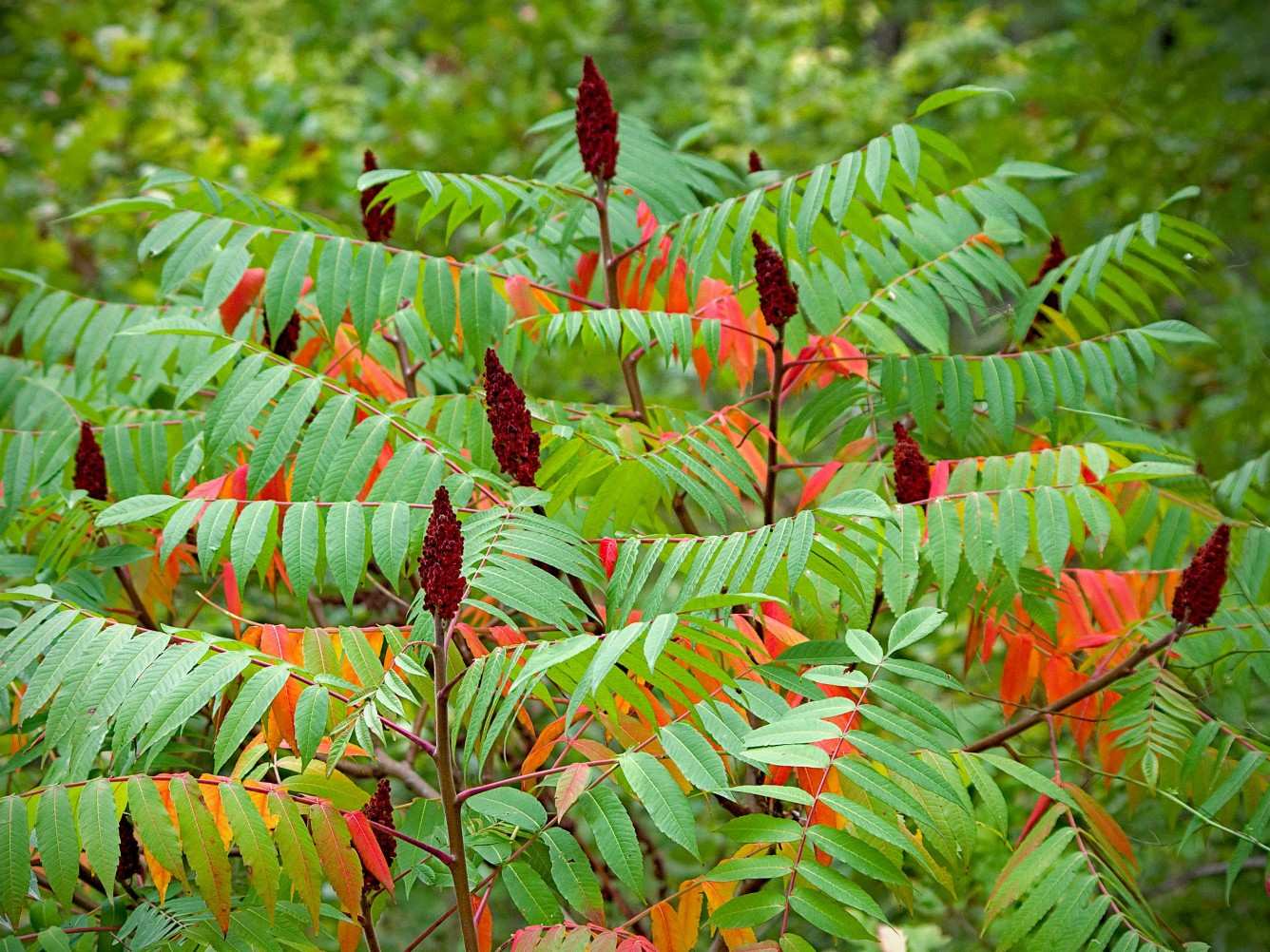
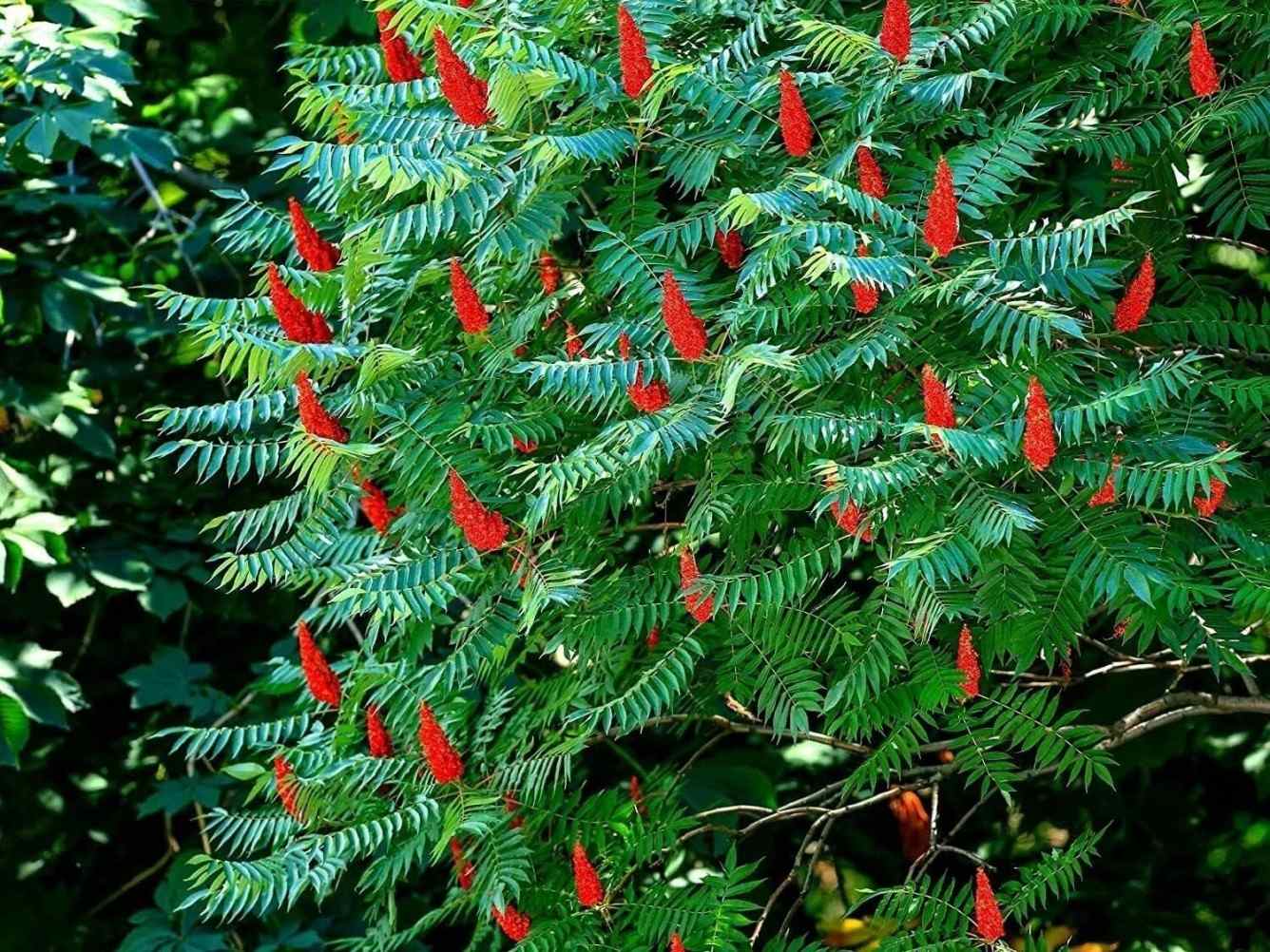
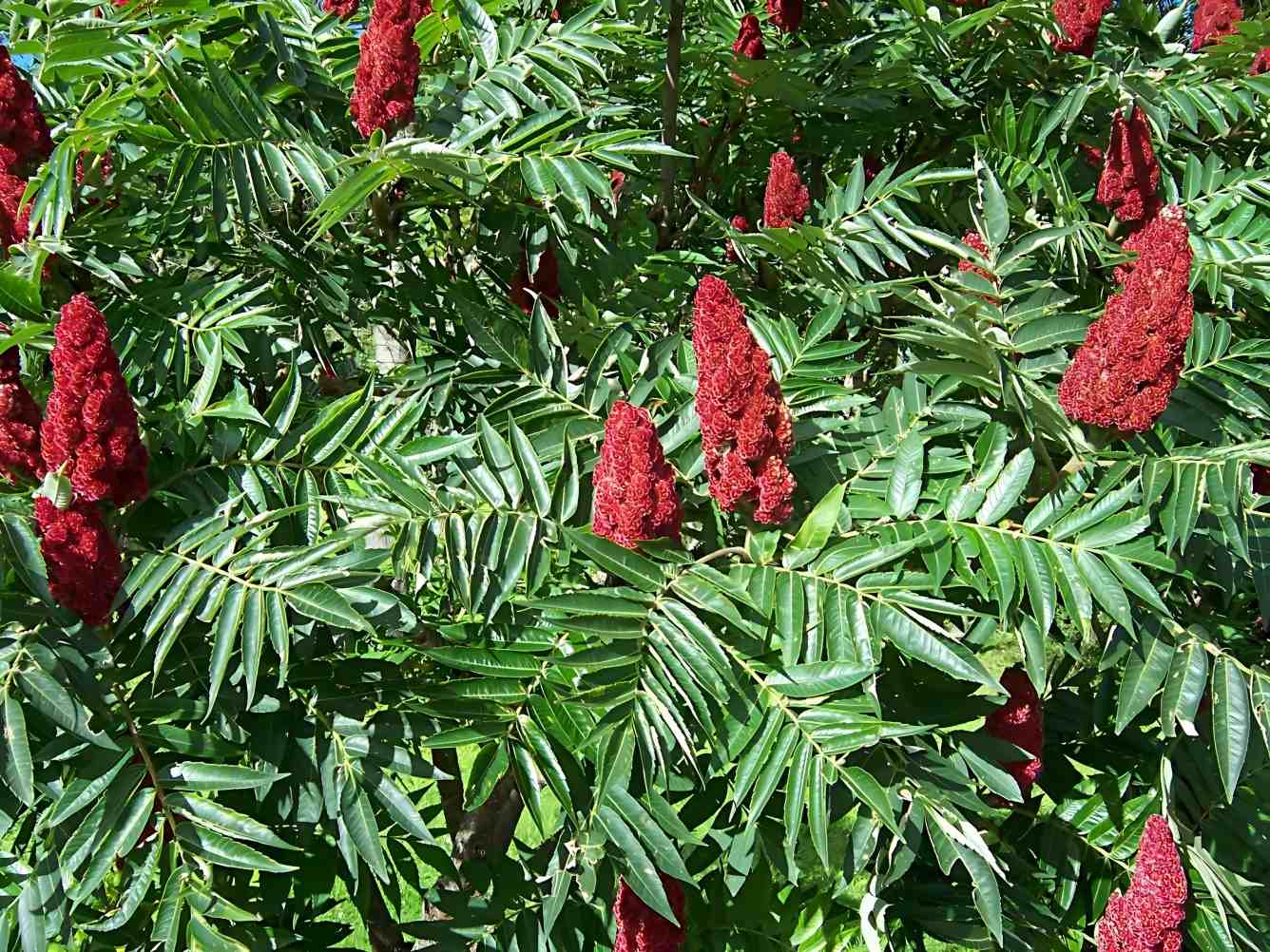
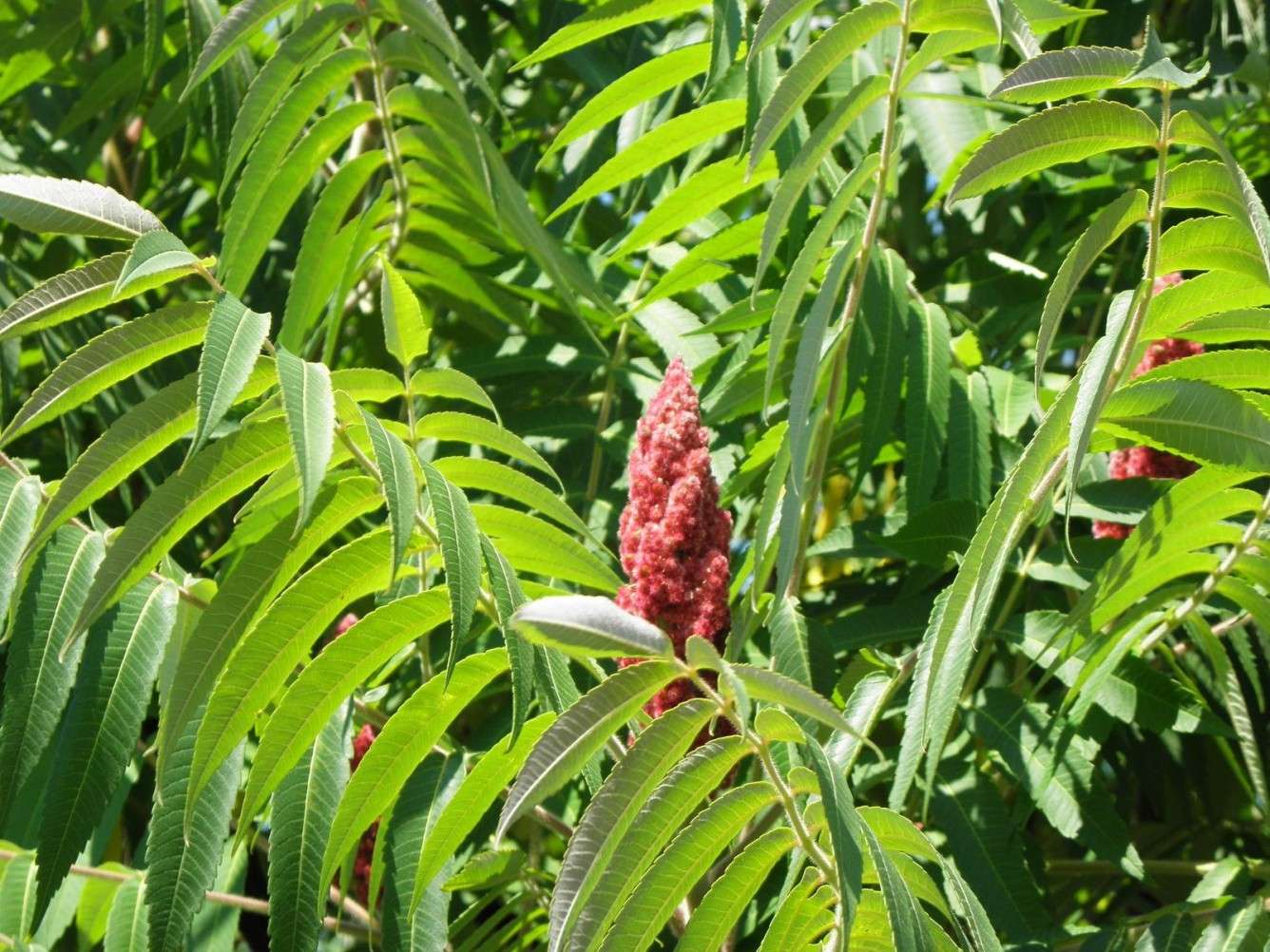
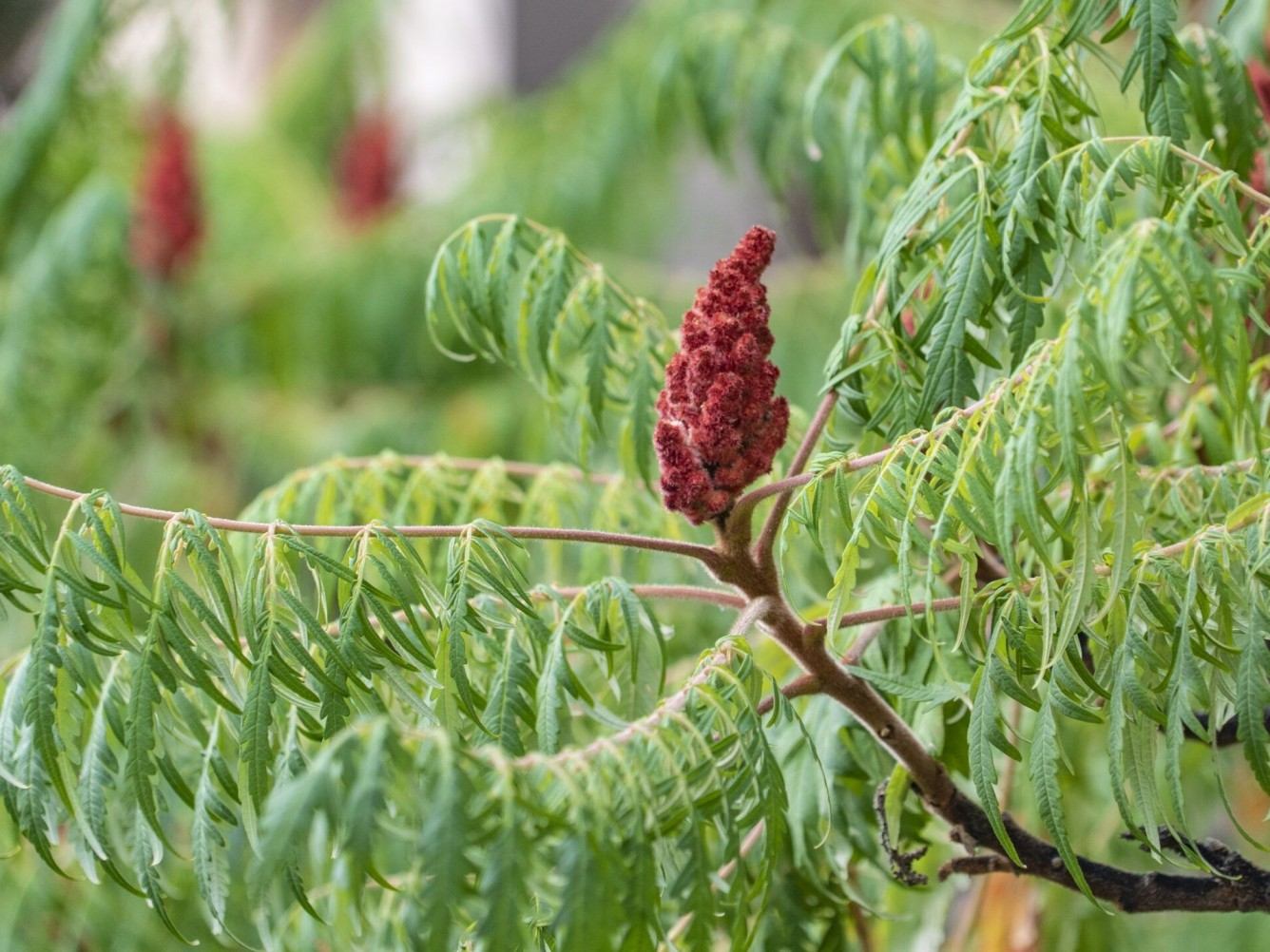
Rhus typhina is a deciduous shrub or small tree in the Anacardiaceae family, native to eastern North America. It grows 3–6m tall with velvety, branching stems resembling deer antlers. Large, pinnate leaves turn vivid scarlet and orange in autumn. Dioecious, with tiny yellow-green flowers; female plants bear dense, crimson fuzzy fruit clusters that persist through winter. Widely grown ornamentally for bold foliage and vibrant fall color, though it can spread aggressively in favorable conditions.
Popular Plant Encyclopedia
-
-
Poisonous and danger
- Rhus typhina
-
-
-
Edible and medicinal
- Common sunflower
-
-
-
Poisonous and danger
- Plumeria rubra
-
-
-
Wild and common weed
- Convolvulus arvensis
-
-
-
Edible and medicinal
- Perilla frutescens
-
-
-
Edible and medicinal
- Pogostemon cablin
-
-
-
Edible and medicinal
- Common fenugreek
-
-
-
Edible and medicinal
- Garden Thyme
-

 Edible and medicinal
 Wild and common weed
Advertisement