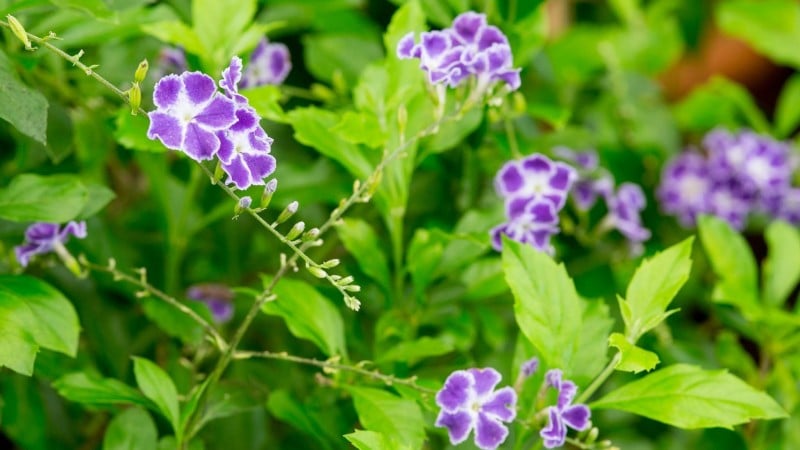
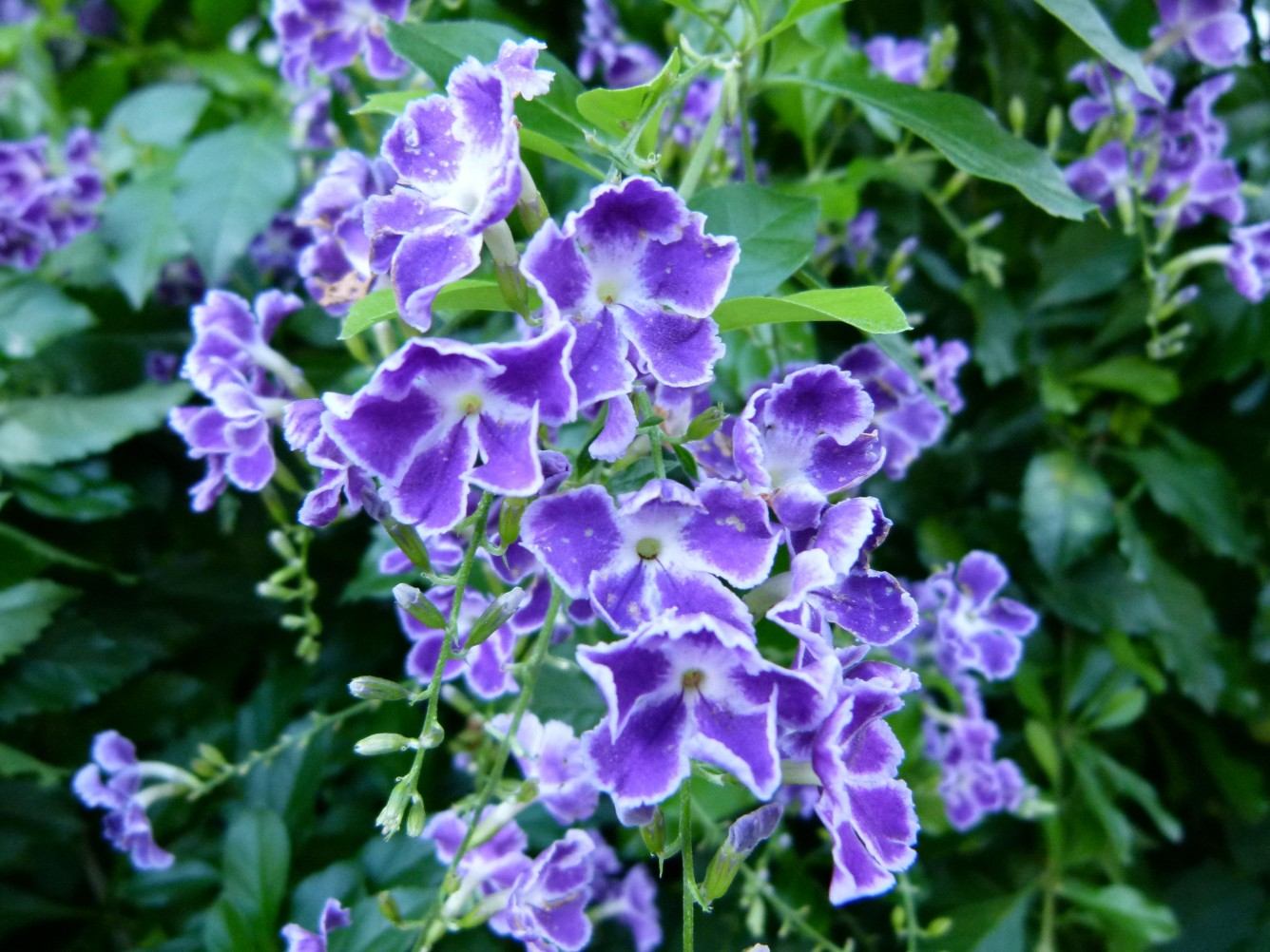
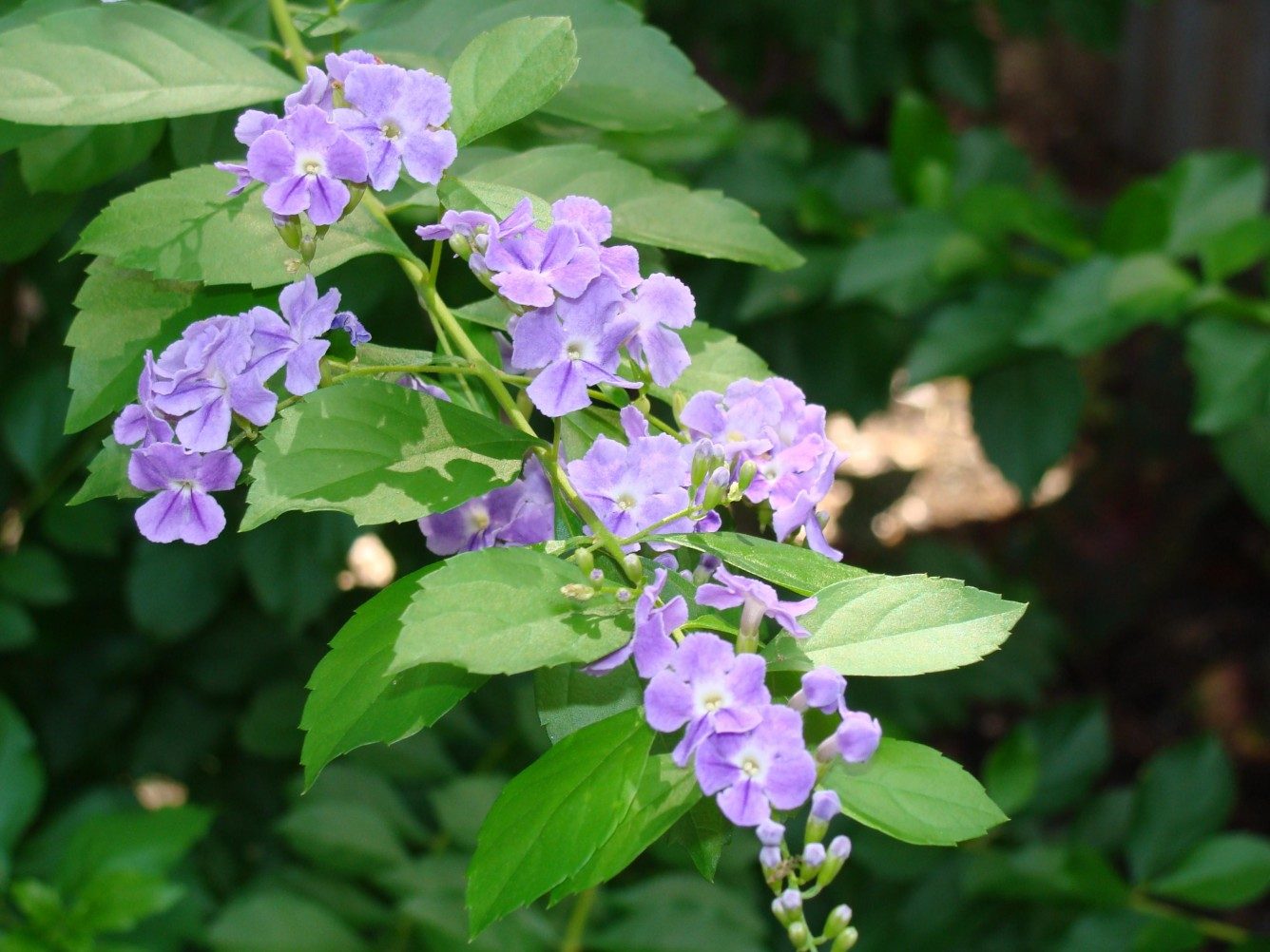
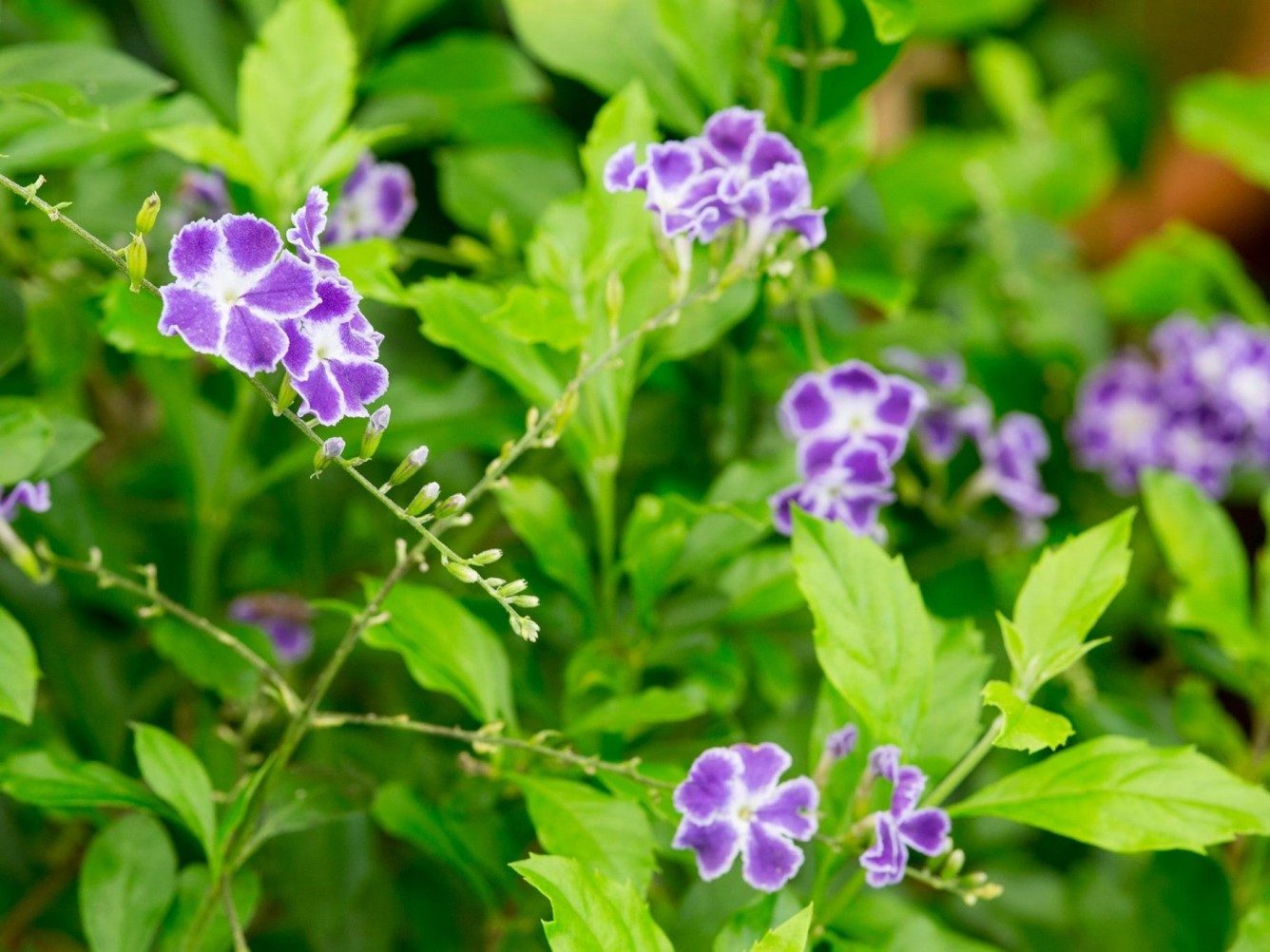
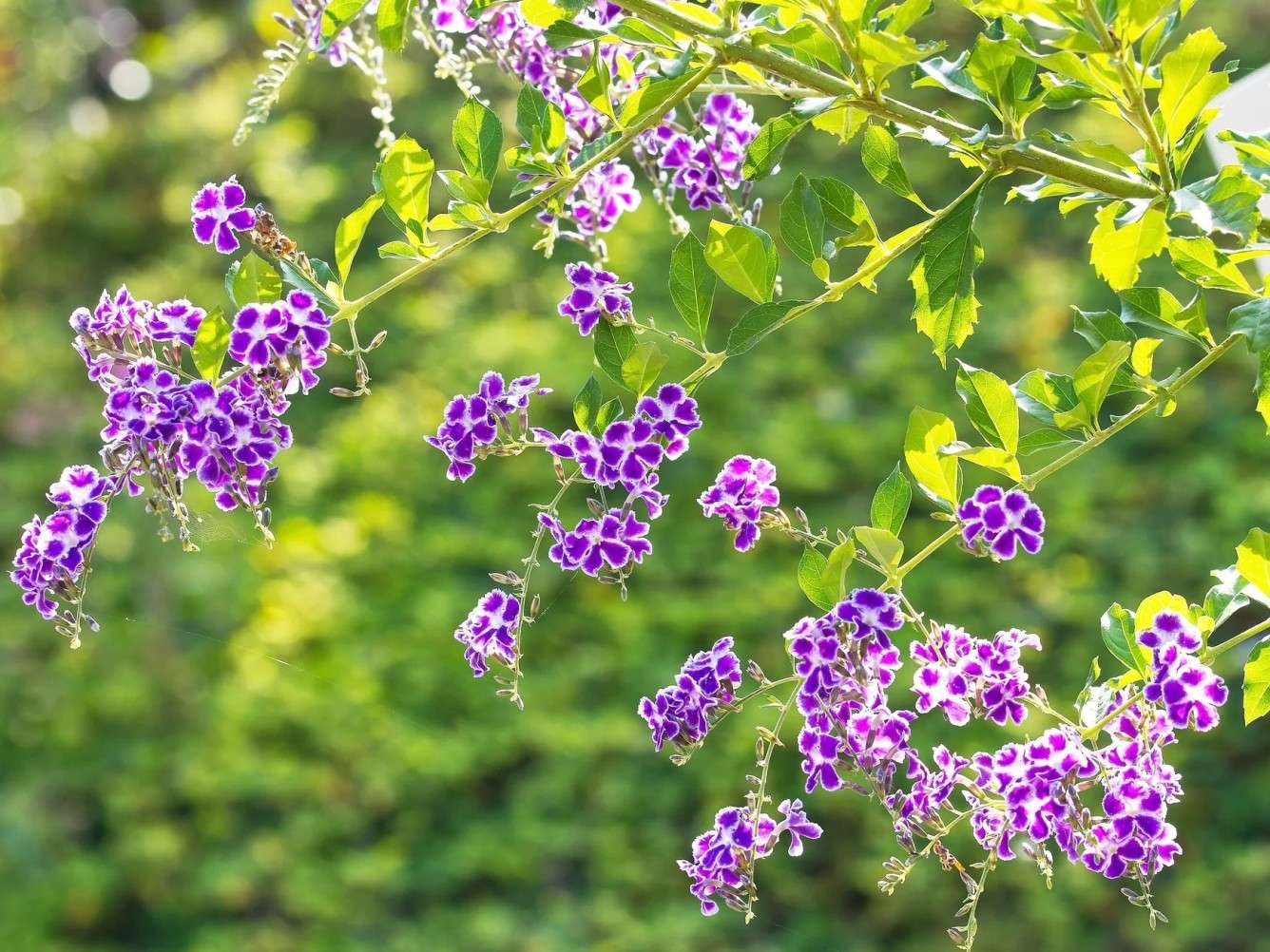
Duranta erecta
-
 Poisonous and danger
 - Also known as:golden dew
 Poisonous and danger
Nursing Skills
Duranta erecta loves full sunlight and warm climates, thriving best in loose, well-drained soil. Water regularly to keep soil slightly moist but avoid waterlogging. Prune branches frequently to maintain its bushy shape and promote dense growth. Apply balanced fertilizer monthly in growing seasons. It tolerates mild drought but needs frost protection in cold weather.
Advertisement
Plant Properties
-
- Toxicity
- Humans,Pets
-
- Flower Color
- Purple, blue, white
-
- Plant Type
- Evergreen shrub
-
- Leaf Type
- Ovate-lanceolate
-
- Bloom time
- Year-round
-
- Lifespan
- Perennial
Plant Care Requirements
-
Difficulty Level
Easy
-
Watering Schedule
Moderate water; keep soil slightly moist, avoid waterlogging
-
Light Requirements
Full sun
-
Soil pH
pH 6.0–7.5
-
Planting Time
Spring to early summer
-
Hardiness Zones
USDA 9–11
-
Growth Rate
Fast-growing
Advertisement
Plant Care Guide
-
What light conditions does Duranta erecta need to thrive, and what happens if it doesn’t get enough light?
Duranta erecta is a sun-loving plant that requires full direct sunlight for 6–8 hours per day to grow vigorously and produce abundant flowers and fruits. It can tolerate partial shade for 1–2 hours daily, but prolonged low light will significantly affect its growth and blooming. In full sun, its leaves remain bright green, branches grow densely, and flower clusters are lush and colorful (blue, purple, or white). If it lacks light, the plant will become leggy, with sparse branches and few leaves; flower buds will fail to form or fall off easily, and the leaves may turn yellow and drop. When planting indoors, place it near a south-facing or west-facing window to ensure sufficient light; outdoors, choose an open area without shade from tall trees or buildings. In hot summer, moderate shade at noon can prevent leaf scorching, but avoid long-term shade to maintain its ornamental value.
-
What is the proper watering schedule for Duranta erecta, and how to avoid overwatering or underwatering?
Water every 2-3 days in spring and summer Water every 4-5 days in autumn Water every 7-10 days in winterDuranta erecta prefers moderately moist soil and requires a flexible watering schedule based on seasons, temperature, and soil moisture. In spring and summer (growing season), water once every 2–3 days: check the top 2–3 cm of soil; if it feels dry, water thoroughly until water drains out of the pot’s bottom. In autumn, reduce watering to once every 4–5 days as the temperature drops and growth slows. In winter, water sparingly, once every 7–10 days, keeping the soil slightly dry to prevent root rot. Overwatering is more harmful than underwatering: it causes soil waterlogging, leading to root rot, yellowing leaves, and even plant death. To avoid this, ensure the pot has drainage holes and discard excess water in the saucer. Underwatering will make leaves wilt and dry; if this happens, water thoroughly immediately, and the plant will usually recover within 1–2 days. Adjust watering frequency according to rainfall outdoors—reduce watering after heavy rain and increase it during hot, dry spells.
-
What type of soil and soil pH is suitable for Duranta erecta, and how to prepare the planting soil?
pH 6.0–7.5Duranta erecta thrives in loose, well-draining, fertile soil with a slightly acidic to neutral pH of 6.0–7.5. It is not tolerant of heavy clay soil or overly alkaline soil; heavy clay soil retains too much water, causing root rot, while alkaline soil (pH above 7.5) leads to yellowing leaves due to iron deficiency. To prepare the planting soil, mix 4 parts garden soil, 3 parts leaf mold (or peat moss), and 2 parts perlite (or river sand) to improve drainage and fertility. Add a small amount of decomposed organic fertilizer (such as cow manure or compost) as base fertilizer to provide long-term nutrients. For potted plants, choose a pot with drainage holes and use the above soil mix; for outdoor planting, if the soil is heavy clay, dig a planting hole 2–3 times the size of the root ball, fill it with the prepared soil, and mix well with the original soil to avoid poor drainage. Regularly test the soil pH; if it is too alkaline, add a small amount of sulfur powder to adjust.
-
When is the best time to plant Duranta erecta, and what should be noted during the planting process?
Spring (March to May)The best planting time for Duranta erecta is spring (March–May) to early summer (June), when the temperature is 18–25℃, the soil is warm, and rainfall is moderate—these conditions promote rapid root growth and improve survival rate. Avoid planting in summer (July–August) when the temperature is too high, as it easily causes leaf wilting and root damage; also avoid planting in winter (November–February) when the temperature is low, as the plant is dormant and has poor adaptability, leading to low survival rate. During planting, first trim the damaged roots, yellow leaves, and overly long of the seedling to reduce water and nutrient consumption. Dig a planting hole slightly larger than the root ball, place the seedling in the center, fill with prepared soil, and compact gently to ensure the root ball is in close contact with the soil. Water thoroughly after planting to settle the soil and help the roots absorb water. For potted plants, choose a pot 1–2 sizes larger than the root ball to leave room for root growth; for outdoor planting, space plants 1–1.5 meters apart to avoid overcrowding.
-
What is the cold hardiness zone of Duranta erecta, and how to protect it from cold damage in winter?
USDA 9–11Duranta erecta is a tropical and subtropical plant with poor cold resistance, suitable for USDA cold hardiness zones 9–11 (minimum temperature -6.7℃ to 4.4℃). In zones below 9, it is easily damaged by frost and low temperatures; when the temperature drops below 0℃, its branches and leaves will freeze, and severe cold may kill the entire plant. To protect it in winter: for potted plants, move them indoors before the first frost (when the temperature drops to 5℃), place them in a bright, well-ventilated room with a temperature of 5–10℃, reduce watering, and stop fertilizing to let the plant enter dormancy. For outdoor plants in zones 8–9, wrap the trunk with straw or burlap, cover the root area with mulch (such as fallen leaves or pine needles) to keep the soil warm, and prune dead branches in early spring. In areas with frequent frost, it is best to grow it as an annual plant or bring it indoors for overwintering to ensure its survival.
-
What is the growth rate of Duranta erecta, and how to prune it to maintain its shape and promote growth?
fast growthDuranta erecta has a fast growth rate; under suitable conditions (full sun, adequate water and fertilizer), it can grow 30–60 cm per year, and mature plants can reach 2–4 meters in height and width. Without pruning, it will grow randomly, becoming leggy and messy, affecting ornamental value. Pruning should be done in spring (before new growth) and after flowering: in spring, cut off dead, diseased, and overly long branches to promote new branch growth; after flowering, trim the faded flower clusters and overly dense branches to maintain a compact, bushy shape. When pruning, use clean, sharp pruning shears to make cuts at 45 degrees above leaf nodes to avoid damaging the branches. For potted plants, prune regularly to control height (usually 50–80 cm) and shape it into a spherical or umbrella shape. For outdoor hedges, prune once every 2–3 months to keep the hedge neat and dense. Pruning also helps promote more flower buds, making the plant bloom more lushly in the next flowering period.
Advertisement
Frequently Asked Questions
-
1 Is Duranta erecta toxic, and what precautions should I take if I have pets or children at home?
Yes, Duranta erecta is toxic, primarily its berries and leaves, which contain toxic compounds such as saponins and alkaloids. While the toxicity level is moderate, ingestion of the berries or leaves can cause adverse reactions in both humans and pets. For children, accidental ingestion may lead to nausea, vomiting, diarrhea, and mild abdominal pain; in pets (especially dogs and cats), it can cause similar gastrointestinal symptoms, along with lethargy and drooling. To ensure safety, place Duranta erecta in an area out of reach of young children and pets, such as high shelves for potted plants or outdoor areas where pets do not roam freely. If ingestion occurs, contact a doctor or veterinarian immediately, providing details about the plant and the amount ingested. It is also important to wear gloves when pruning or handling the plant to avoid skin irritation, as some people may be sensitive to its sap. Despite its toxicity, Duranta erecta is still a popular ornamental plant as long as proper safety precautions are taken.
-
2 Why does my Duranta erecta fail to bloom or have few flowers, and how can I fix this issue?
The most common reasons Duranta erecta fails to bloom or produces few flowers are insufficient light, improper watering, lack of nutrients, or over-pruning. First, Duranta erecta requires 6–8 hours of full direct sunlight daily; if it is grown in partial shade for a long time, it will focus on leaf growth rather than flower bud formation. Move the plant to a sunnier location, such as a south-facing outdoor spot or a bright indoor window. Second, inconsistent watering—either overwatering or underwatering—can stress the plant and inhibit blooming. Keep the soil slightly moist but well-drained, adjusting watering frequency based on seasons (more frequent in growing seasons, less in winter). Third, a lack of phosphorus and potassium (key nutrients for flowering) can reduce bloom production. Apply a balanced, water-soluble fertilizer with a higher P-K ratio (such as 10-10-10 or 5-10-10) every 4–6 weeks during the growing season (spring to summer), avoiding excessive nitrogen which promotes leaf growth over flowers. Finally, avoid over-pruning in late summer or fall, as this can remove flower buds that form for the next season; prune only after flowering or in early spring.
-
3 Can Duranta erecta be grown in pots, and what are the key points for potted Duranta erecta care?
Yes, Duranta erecta can be successfully grown in pots, making it suitable for balconies, patios, or indoor spaces. The key points for potted care are choosing the right pot, soil, and proper maintenance. First, select a pot with drainage holes that is 1–2 sizes larger than the root ball to allow room for root growth; avoid overly large pots as they retain too much water and cause root rot. Use a well-draining soil mix: combine 4 parts garden soil, 3 parts peat moss, and 2 parts perlite or river sand, adding a small amount of decomposed organic fertilizer as base fertilizer. Place the pot in a location with full sun (6–8 hours daily) and good ventilation. Water regularly to keep the soil slightly moist, but empty excess water in the saucer to prevent waterlogging. Fertilize monthly with a balanced fertilizer during the growing season, and reduce watering and stop fertilizing in winter. Prune regularly to control the plant’s height (usually 50–80 cm) and shape it into a compact, bushy form. Repot every 1–2 years in spring to refresh the soil and provide more space for root growth, trimming any damaged or overgrown roots during repotting.
Advertisement
Introduction
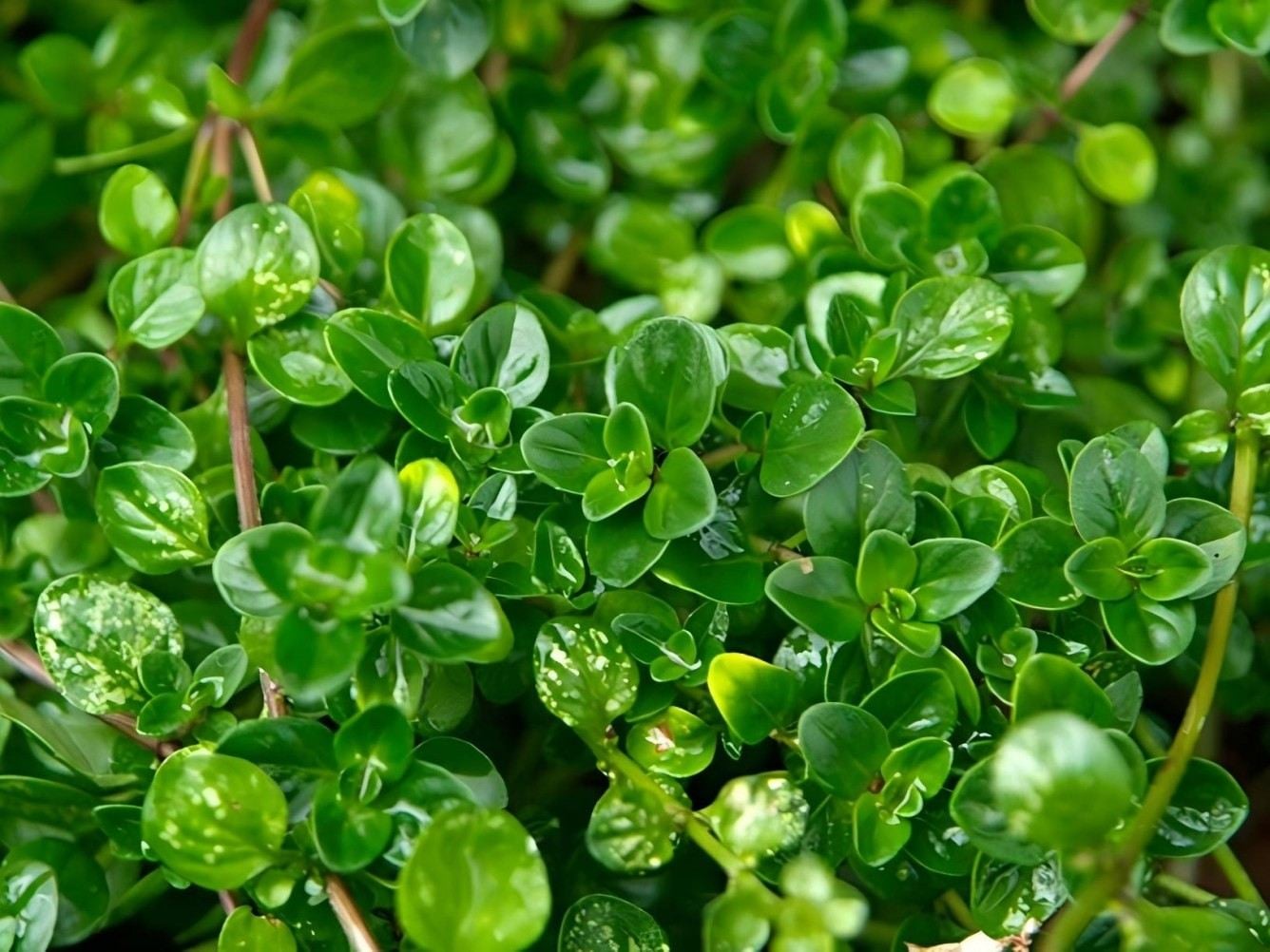
Duranta erecta is a fast-growing tropical evergreen shrub. It features arching branches, bright green oval leaves, and clusters of delicate blue or purple tubular flowers. Small golden berry fruits follow the blooms, adding ornamental appeal. Hardy and adap, it thrives in full sun and well-drained soil, widely planted in gardens as a decorative hedge or landscape accent.
Popular Plant Encyclopedia
-
-
Poisonous and danger
- Rhus typhina
-
-
-
Edible and medicinal
- Common sunflower
-
-
-
Poisonous and danger
- Plumeria rubra
-
-
-
Wild and common weed
- Convolvulus arvensis
-
-
-
Edible and medicinal
- Perilla frutescens
-
-
-
Edible and medicinal
- Pogostemon cablin
-
-
-
Edible and medicinal
- Common fenugreek
-
-
-
Edible and medicinal
- Garden Thyme
-
 Edible and medicinal
 Wild and common weed
Advertisement