
Common Ailments of Plantago major: Identifying, Treating and Preventing Diseases in Broadleaf Plantain
Advertisement
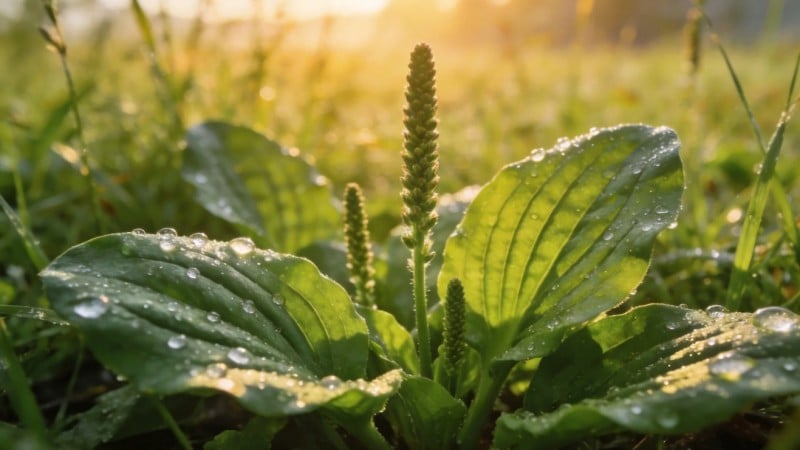
Many gardeners know Plantago major, or broadleaf plantain, as a stubborn lawn weed. What fewer people realise is this hardy perennial is also a valuable medicinal herb, widely grown in home herb gardens and small‑scale specialty plant production across temperate regions. Its thick‑rosette foliage has long been harvested for topical wound care, anti‑inflammatory remedies, and edible greens.
For most of the growing season, broadleaf plantain is remarkably tough. It tolerates compacted soil, foot traffic, partial shade, and inconsistent watering, shrugging off stress that would kill many delicate garden herbs. Even so, it is not immune to disease. When growing conditions shift, especially with prolonged humidity, poor airflow, or water‑logged ground, fungal, bacterial, and oomycete pathogens can move in, damaging leaves, weakening crowns, ruining harvests, and even killing established plants.
Growing plantain intentionally changes how we view its health. In the wild, diseased specimens can survive alongside healthy ones, but in garden beds, container set‑ups, or herb‑growing plots, infections spread quickly between closely spaced rosettes.
Once leaf spots, mildew coatings, or wilting symptoms show up, they rarely disappear on their own. Left unchecked, pathogens spread by rain splash, garden tools, insect vectors, and wind‑blown spores. Growers who harvest leaves for medicine or food face an extra concern: diseased foliage should never be collected for consumption or herbal preparations, as infected tissue may carry harmful pathogens or metabolic by‑products. Learning to spot early warning signs, understand environmental triggers, and apply practical management keeps your plantain crop productive and safe to use.
Fungal Foliar Diseases: The Most Common Threats to Plantago major
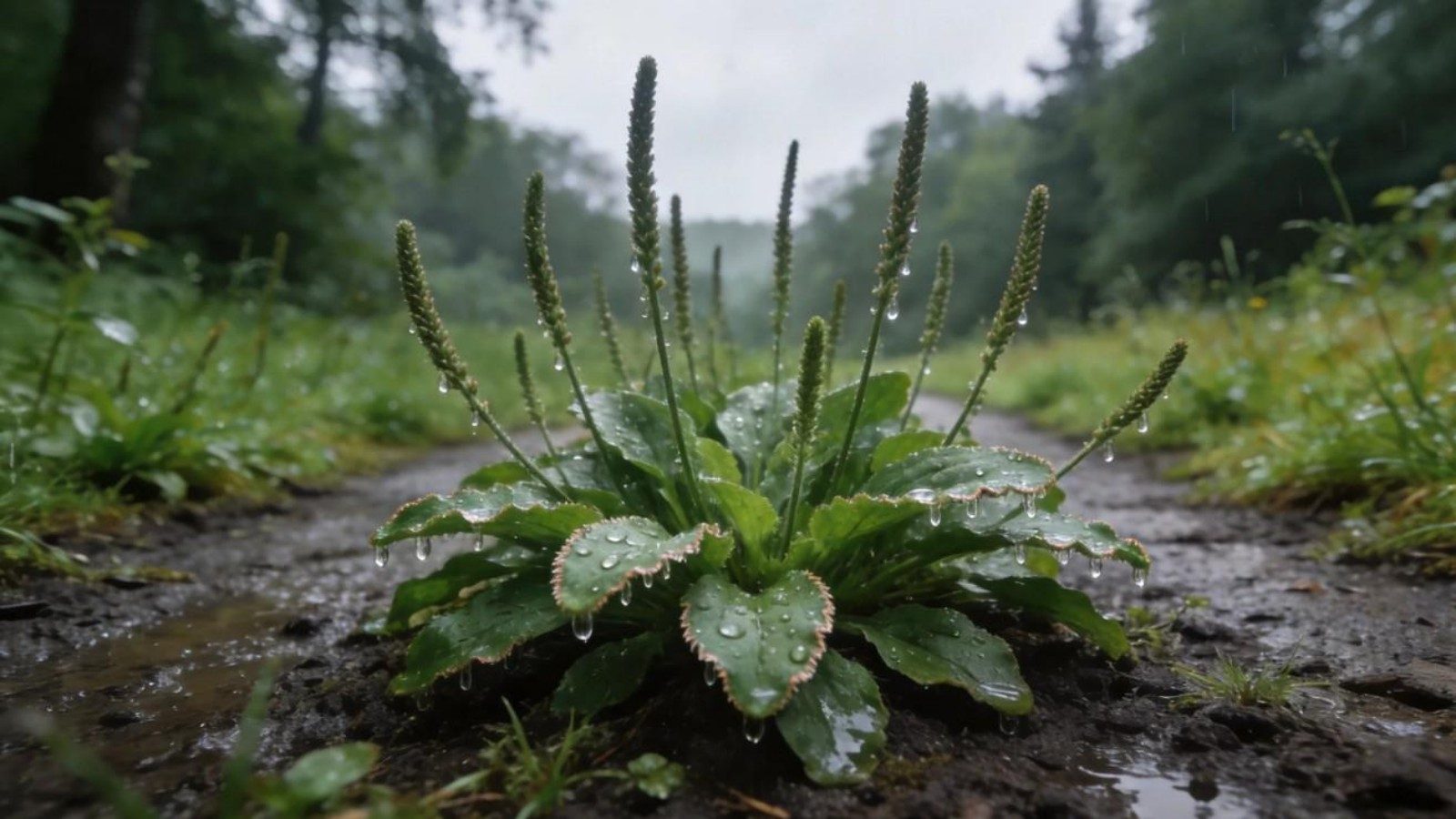
Powdery mildew is the most frequently reported disease on broadleaf plantain, caused primarily by Golovinomyces sordidus, a host‑specific fungus that thrives under a very particular set of garden conditions. Unlike many fungal infections that need constant wet leaf surfaces, powdery mildew develops when days are warm and dry, while nights bring high relative humidity. You will first notice faint, whitish‑grey powdery blotches on upper leaf surfaces, which slowly expand and merge across the rosette. As the infection progresses, leaves become dull, slightly distorted, yellow‑streaked, and lose their firm texture. In late summer and autumn, tiny dark speckles, the pathogen’s over‑wintering fruiting bodies, appear within the white powder. Older lower leaves are usually attacked first before spreading upwards to younger growth and even flower spikes.
Many gardeners mistakenly believe rainy weather alone brings powdery mildew. In reality, dense planting, partial shade, poor air circulation, and excess nitrogen fertiliser are bigger risk factors. Crowded herb beds where foliage stays trapped in stagnant air create perfect micro‑climates for spore germination. When you spot the first white patches, immediately remove all heavily infected leaves and dispose of them — do not add them to home compost piles, as fungal structures can survive there. Water only at soil level, avoiding overhead sprinklers that raise leaf‑zone humidity. For mild outbreaks, potassium bicarbonate or sulphur‑based organic sprays applied early in the morning slow colony expansion. Severe cases require repeated applications every seven‑to‑ten‑day intervals. Long‑term prevention relies on spacing rosettes apart, trimming surrounding competing vegetation, and balancing fertilisers with phosphorus and potassium rather than heavy nitrogen inputs.
Leaf spot diseases, driven by Alternaria and related fungal genera, represent another widespread foliage issue for Plantago major. Early‑stage symptoms include small, scattered tan‑brown or purplish‑brown circular lesions across leaf blades. As the disease advances, individual spots grow larger, merge together, and create big necrotic dead patches across the leaf surface. Lower‑position mature leaves suffer first, turning yellow and dropping prematurely. Prolonged wet weather, frequent overhead watering, and splashing rain spread fungal spores from old leaf debris onto fresh tissue. If your plantain is growing in poorly‑drained heavy soil, leaf spot infections tend to become far more aggressive.
It is easy to confuse fungal leaf spot with bacterial leaf spot. Bacterial lesions often show water‑soaked, translucent borders around dark brown‑black spots, whereas fungal spots usually have defined dry edges with visible concentric ring patterns at their centres. Once leaves are heavily spotted, no spray will reverse existing tissue damage. Your priority is stopping further spread. Remove and destroy all symptomatic foliage. Clear away fallen dead plant debris around the base of each rosette, because spores over‑winter in old leaf litter. Copper‑based fungicides work as protective sprays for new growth, but they cannot cure already‑damaged leaves. Avoid working among wet plants, because touching damp foliage transfers bacteria and fungal spores from sick to healthy rosettes. If leaf spot returns year after year in the same bed, consider rotating growing locations, as pathogen populations build up in soil and leftover plant material.
Downy mildew infections on Plantago major are caused by several Peronospora species, obligate oomycete pathogens specialised to attack this host plant. Gardeners often misdiagnose downy mildew as powdery mildew, yet the two diseases behave differently. Downy mildew creates pale yellow angular blotches on upper leaf surfaces; underneath, you will see faint grey‑purple fuzzy spore growth, mostly visible when dew or morning moisture is present. It spreads fastest during cool, damp spring and early‑autumn weather. Leaves gradually turn brown and die from the edges inward. Unlike powdery mildew, downy mildew absolutely requires leaf wetness for spores to infect tissue.
Improving airflow is your most powerful defence against downy mildew. Thin over‑crowded plantings so wind can move through rosettes. Water early in the day so any accidental leaf wetness dries quickly before evening. Remove infected leaves right away. Once plants are heavily infected, rescue is difficult. Preventative copper sprays can offer partial protection, but infected plants are best removed entirely to stop spore loads building up in your garden space.
Soil‑Borne Diseases: Root Rot, Crown Rot and Vascular Wilt
Above‑ground leaf diseases are visible and easy to spot, yet soil‑borne pathogens often cause silent, devastating losses for Plantago major. Root rot complex describes infections from Pythium and Phytophthora organisms, which attack fibrous root systems when soil stays persistently saturated. Even though broadleaf plantain tolerates compacted ground, it cannot stand sitting in stagnant water. Early warning signs are easy to misread: plants look wilted, even when soil is damp. Leaves turn pale yellow, lose turgor, and the whole rosette slowly collapses. Dig up an affected specimen, and you will see dark, mushy, foul‑smelling decaying roots instead of firm pale‑tan healthy root tissue. The central crown may turn soft and discoloured as rot moves upward.
Container‑grown plantain suffers root rot far more often than field‑grown specimens, because pots trap standing water at the bottom. Drainage holes clogged with old potting mix amplify risk. Once root rot takes hold, recovery chances are limited. For mildly‑affected plants, cut back all rotted root material, replant into fast‑draining, looser growing medium, and suspend watering until soil dries substantially. Severely rotted plants should be discarded. Preventative steps are far more reliable: avoid over‑watering, improve bed drainage, amend heavy clay soil with coarse organic material, and never let containers sit in pooled water trays. Do not reuse potting soil from diseased plantings, as oomycete spores persist for multiple seasons.
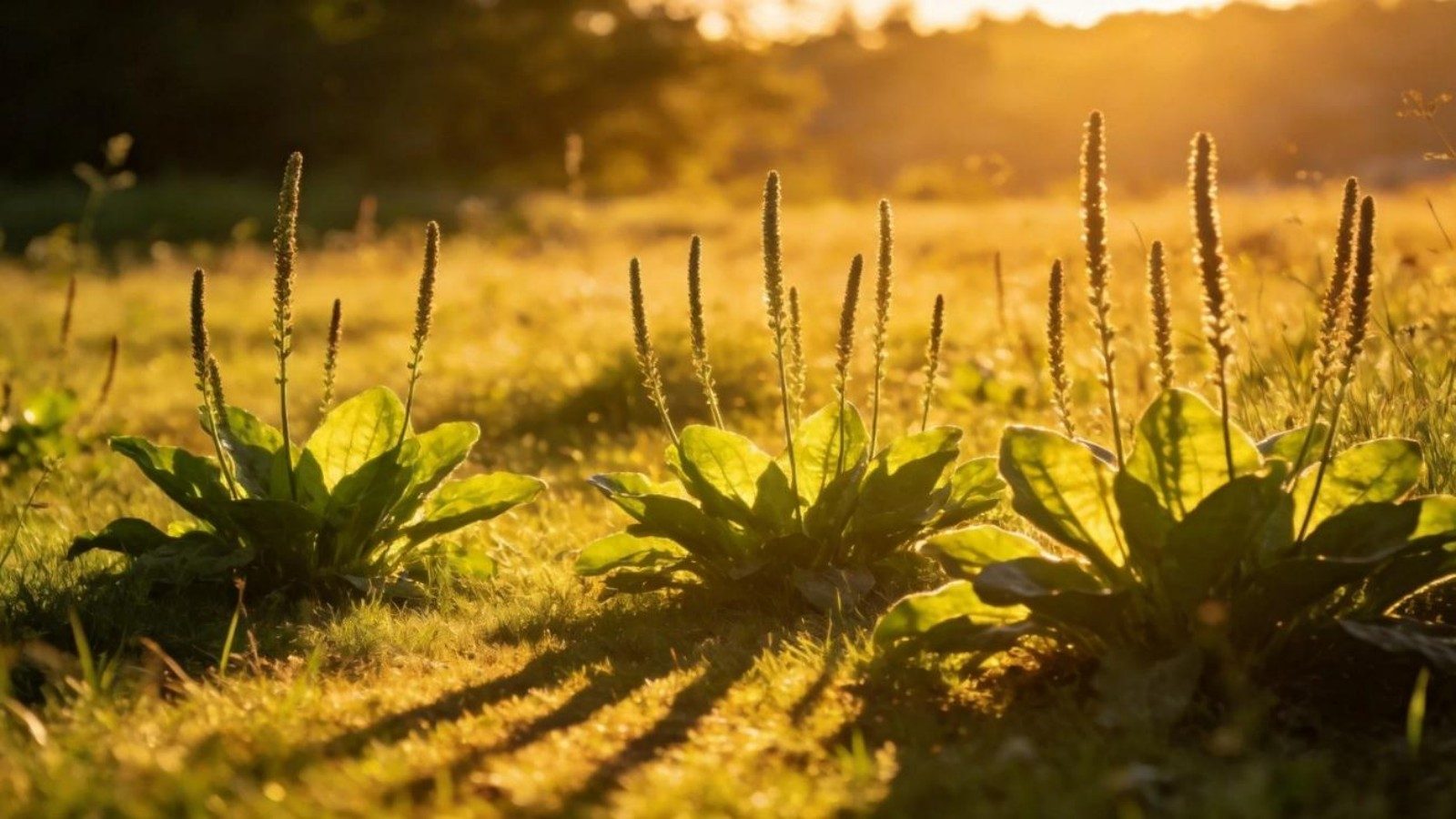
Vascular wilt diseases caused by Fusarium and Verticillium fungi, plus bacterial wilt from Ralstonia solanacearum, produce dramatic, sudden wilting in Plantago major. Pathogens invade internal water‑conducting tissues inside roots and crowns, blocking water movement even when soil moisture is adequate. Individual leaves or the entire rosette droops sharply, turns yellow, and dies back rapidly. There is no practical cure once a plant is fully infected. You must pull and destroy every affected rosette immediately. These pathogens survive for years within soil, so replanting plantain into the exact same spot will result in repeated infection. Practise crop rotation, sanitise trowels and shears between working on different plant beds, and always start with disease‑free seed or young transplants.
Rust disease occasionally appears on Plantago major, especially in shaded, humid garden corners. Small, bright‑orange or rust‑brown powdery pustules dot leaf undersides. As infection worsens, leaves develop yellow spotting and premature die‑off. Isolate affected plants, prune away all infected foliage, and boost ventilation. Organic copper fungicides can suppress further spore development.
Secondary Drivers: Insect Pests That Fuel Disease Outbreaks
Pest activity rarely kills plantain outright, yet insects create entry wounds for bacteria and fungi, while also acting as vectors that carry viral pathogens between plants. Understanding pest‑disease connections helps you manage problems before they escalate. Aphids cluster on young leaf bases and flower spikes, sucking sap and producing sticky honeydew. Honeydew coats leaf surfaces and creates ideal conditions for sooty‑mould fungal growth. Heavy aphid feeding distorts new leaf growth and weakens overall plant vigour. A strong jet of plain water knocks down light aphid populations. For larger infestations, use insecticidal soap sprays. Encourage natural predators such as ladybugs and lacewings in your herb garden to keep aphid numbers balanced long‑term.
Plantain flea beetles leave countless tiny round shot‑holes across leaf tissue, mostly harming young seedlings and fresh rosette growth. Each feeding hole is an opening where spores and bacteria can penetrate leaf tissue. Slugs and snails chew large ragged notches along leaf margins, most actively on damp nights. All these physical injuries make Plantago major far more vulnerable to leaf‑spot and bacterial infections. Good garden sanitation, removing plant debris where pests shelter, and hand‑picking slugs in the evening reduce pressure without heavy chemical intervention.
Integrated Disease Management for Home Growers and Small‑Scale Herb Producers
Successful Plantago major disease management does not rely only on spraying once symptoms appear. Integrated plant health starts with cultural choices that lower disease risk before infections ever take hold. First, match your growing environment to what the plant actually needs. Broadleaf plantain handles many soil types, but well‑drained ground remains non‑negotiable. If you grow it in heavy clay, add compost and grit to improve drainage. Space rosettes so air flows freely between plants; do not cram specimens tightly together in herb‑garden beds. Water smartly: irrigate soil, not foliage, and water early in the day so any accidental leaf moisture dries quickly. Avoid over‑applying nitrogen fertilisers, which produce soft leafy growth highly susceptible to mildew and leaf‑spot pathogens.
Sanitation is under‑rated yet extremely powerful. Every growing season, clear away fallen dead leaves and old plant debris surrounding plantain rosettes. These piles hold over‑wintering spores of powdery mildew, leaf‑spot fungi, and downy mildew. When you find diseased leaves or whole sick plants, remove them and discard them — do not compost them. Clean your trowels, pruners and harvesting scissors between beds. A quick wipe with diluted household disinfectant stops you carrying pathogens from sick plants to healthy ones. Use clean seed sources; seed can carry surface‑borne fungal spores that trigger early‑season infections.
When disease does show up, start with non‑chemical interventions first: remove infected tissue, adjust watering patterns, improve airflow. Reserve sprays for when cultural steps are not enough. Organic options include sulphur, potassium bicarbonate, and copper‑based products. Always follow label instructions carefully, especially if you plan to harvest leaves for herbal use. Respect pre‑harvest waiting periods. Synthetic fungicides are available for larger‑scale production, yet they rarely make sense for small home gardens, where sanitation and plant‑spacing deliver most of the protection you need.
Final Thoughts
Plantago major deserves its reputation as a tough, resilient herb, but resilience does not equal invulnerability. Powdery mildew, leaf spot, downy mildew, root rot, and vascular wilts all appear when environmental conditions tip in favour of pathogens. Many growers overlook these risks because they mostly encounter plantain as a wild weed, where sick specimens blend into the landscape. When you cultivate it intentionally for medicine or food, disease problems become impossible to ignore.
The good news is most Plantago major diseases are strongly driven by environment. Simple adjustments: better spacing, careful watering, thorough garden‑bed sanitation, and balanced fertiliser will drastically cut infection rates. Learn to scan your rosettes regularly for early warning signs: powdery coatings, odd‑coloured spots, unexpected yellowing, or unexplained wilting. Catching issues early gives you far more treatment options and prevents whole‑bed outbreaks. By understanding the diseases that affect broadleaf plantain, you can maintain healthy, vigorous plants you can safely harvest year after year.
Advertisement
Learn More
-

- October 20,2026
- Lily Disease Guide: Whats Killing Your Lilium longiflorum and How to Stop It
-
- September 17,2026
- Wax-Leaf Privet Diseases: Identification, Treatment & Prevention Guide
-
- September 1,2026
- Vinca Minor Diseases: Identification, Treatment and Long‑Term Garden Management
-
- August 18,2026
- Tree Philodendron Diseases: Identification, Treatment and Long‑Term Prevention
-
- August 6,2026
- Common Ailments of Plantago major: Identifying, Treating and Preventing Diseases in Broadleaf Plantain
-
- July 30,2026
- Zodiac-themed Bouquets Combined with Floral Language: Different Color Schemes Create More Artistic Birthday Surprises

Advertisement

 Poisonous and danger

 Edible and medicinal
 Wild and common weed