
Are the branches scorched? Fire blight is spreading rapidly!
Advertisement
What is Fire Blight?
Fire Blight is a highly contagious plant disease caused by the bacterium Erwinia amylovora. It is considered one of the most destructive bacterial diseases in horticultural and fruit tree cultivation systems across Europe and North America. First identified in North America, the disease spread to Europe and other temperate regions through the dissemination of fruit tree varieties and international nursery stock trade. It is now a plant disease under key surveillance in numerous countries.
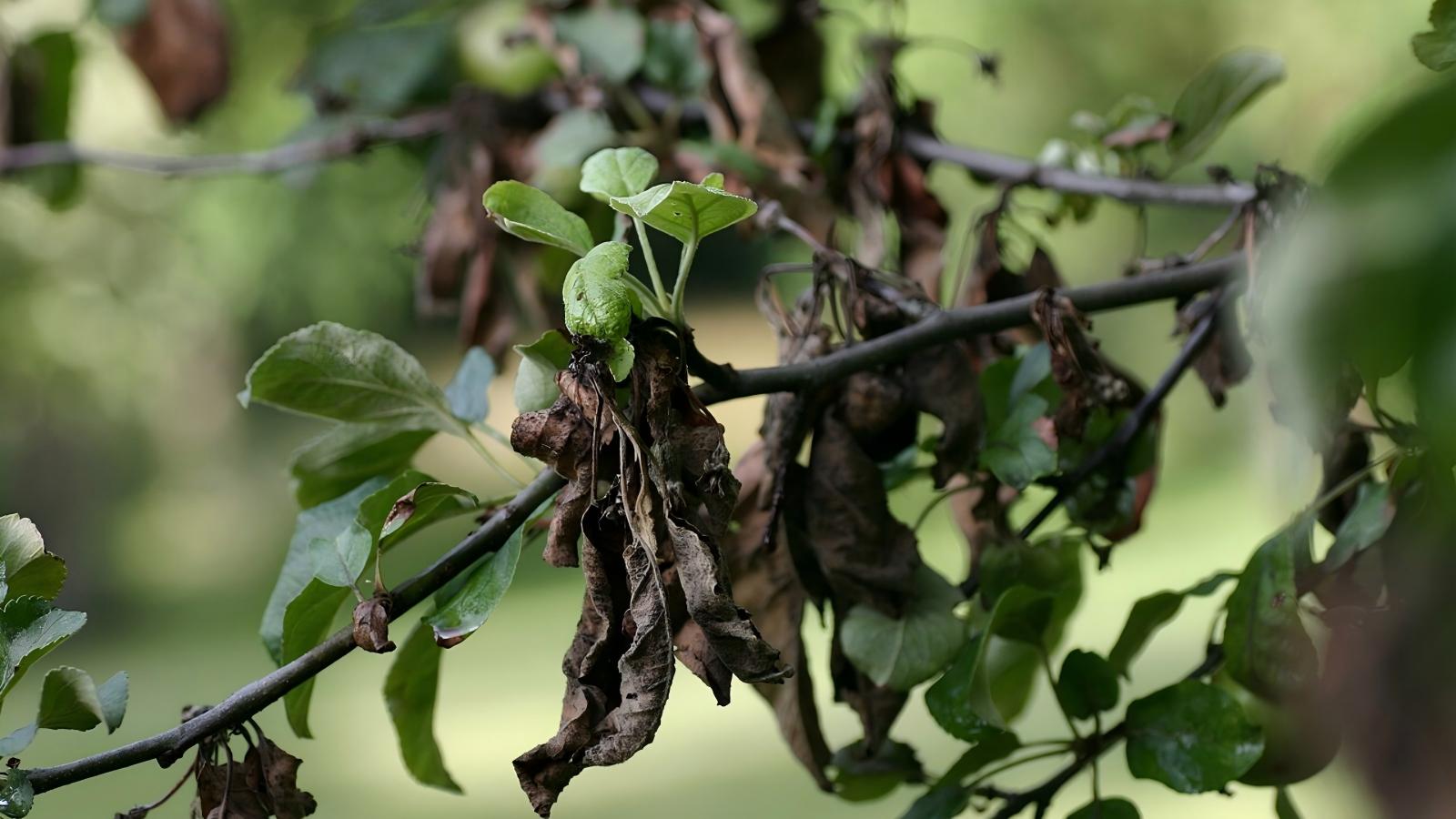
The most distinctive feature of Fire Blight is its extremely rapid progression, often causing visible wilting and necrosis within a short period. Infected plant branches, leaves, and inflorescences quickly turn black and wither, resembling scorching by flames—hence the name “Fire Blight.” Unlike many fungal diseases, fire blight does not form a visible mold layer on plant surfaces. Instead, it spreads through internal tissues, complicating early detection and control efforts.
Within European and American fruit tree cultivation systems, fire blight impacts not only home orchards and ornamental plants but also inflicts severe economic damage on commercial orchards. Once the disease penetrates the trunk or main branches, it often signifies that the affected branch—or even the entire plant—is beyond salvage. Consequently, fire blight is widely regarded as a plant disease that “must be managed primarily through prevention.”
Which regions are susceptible to fire blight?
Fire blight primarily occurs in temperate and humid temperate climates, which coincide with the most concentrated areas of fruit tree and ornamental plant cultivation in Europe and North America. In North America, fire blight is widespread across the United States and Canada, particularly prevalent in the Great Lakes region, the Northeast, the Pacific Northwest, and parts of the Midwest. These regions experience rapid spring temperature increases and frequent rainfall, creating ideal conditions for bacterial proliferation during the flowering period.
In Europe, fire blight has repeatedly erupted in countries including Germany, France, Italy, the United Kingdom, the Netherlands, and Switzerland. Particularly in areas with dense fruit tree plantings, warm and humid spring weather can enable rapid and widespread transmission of the disease within a short timeframe. Some countries have even classified fire blight as a statutory quarantine disease, mandating compulsory isolation and eradication upon detection.
Additionally, certain fruit-growing regions in New Zealand and Australia, along with some Mediterranean coastal nations, have become potential high-risk areas for fire blight due to suitable climatic conditions and the introduction of susceptible fruit tree varieties. Overall, regions characterized by warm springs, high humidity, and extensive planting of Rosaceae plants possess the fundamental conditions for the occurrence and spread of fire blight.
Which plants are susceptible to fire blight?
Fire blight does not infect all plants but shows a marked preference for Rosaceae species. In Europe and North America, the most commonly affected plants include apple trees, pear trees, serviceberries, hawthorns, and various ornamental Rosaceae shrubs and small trees.
In home gardens and landscaping, ornamental crabapples, ornamental pears, and firethorns are particularly high-risk. These plants typically produce abundant flowers during concentrated blooming periods and are often densely planted or frequently pruned, facilitating bacterial spread between plants. In commercial orchards, apples and pears are primary targets of fire blight, and once infected, they often incur significant management costs.
It is crucial to note that young plants, newly planted seedlings, and vigorous young shoots are more susceptible to fire blight than mature plants. Flowers and new shoots possess soft, water-rich tissues that serve as ideal entry points for bacterial infection. Consequently, the risk significantly increases during flowering periods and rapid growth stages for these plants.
What causes fire blight?
The occurrence of fire blight is not accidental but results from the combined effects of multiple environmental and management factors. Within European and American horticultural and fruit tree cultivation systems, fire blight is often regarded as a “conditionally induced disease.” This means the disease rapidly erupts and spreads only when specific conditions converge simultaneously—including climate, plant growth stage, and human management practices. Understanding these triggering factors is the core prerequisite for preventing fire blight.
1. Climate and Temperature
The fire blight pathogen multiplies extremely rapidly in warm environments. When spring or early summer temperatures stabilize between 18–30°C (65–86°F), bacterial activity significantly increases, enabling massive proliferation within a very short timeframe. This temperature range coincides closely with spring conditions across most of Europe and North America, coinciding with the flowering and shoot growth stages of fruit trees and ornamental Rosaceae plants. At this time, plant tissues are tender, cell walls are not yet fully lignified, and natural defenses are relatively weak, making them more susceptible to bacterial invasion. Once warm weather persists for several days or more, fire blight can rapidly escalate from isolated infections to regional outbreaks. This explains why many growers perceive fire blight as “hitting fast and hard.”
2. Humidity and Rainfall
High humidity and frequent rainfall are key environmental conditions for fire blight spread. In moist environments, fire blight bacteria not only survive longer on plant surfaces but also move more easily between tissues via water films. During rainfall, splashes generated when raindrops strike infected areas directly transfer bacteria to nearby plants' flowers, young leaves, and new shoots, enabling rapid short-distance transmission. In many regions of Europe and America, spring often brings prolonged rainy spells or heavy morning dew. This persistently humid environment significantly increases the risk of fire blight outbreaks. Compared to dry climates, fire blight is often more difficult to control under wet conditions and spreads at a faster rate.
3. Infection During Flowering
The primary and most dangerous point of entry for fire blight is the flower. Bacteria typically enter through nectaries into the floral organs, then invade the vascular tissue of branches via the flower stalk. Since flowers naturally secrete sugary substances, these secretions provide an ideal breeding ground for bacteria. Once bacteria successfully enter the vascular system, they can rapidly spread downward through the xylem, causing systemic infection. Therefore, plants with concentrated flowering periods and abundant blooms face higher fire blight infection risks. In European and American orchards, the synchronized flowering periods of apples and pears are often regarded as the “critical window” for fire blight control. Even minor negligence can lead to entire trees being affected.
4. Insect Activity
Pollinating insects like bees and flies play a significant yet often overlooked role in fire blight transmission. These insects move frequently between flowers, inadvertently carrying fire blight bacteria while collecting nectar or pollen and spreading it from infected to healthy flowers. Due to their extensive range and high activity frequency, they can rapidly disseminate the pathogen throughout an entire tree or even an orchard. Particularly under warm, sunny conditions with persistently high humidity, insect activity intensifies, significantly accelerating the spread of fire blight.
5. Pruning and Human Operations
Unsterilized pruning tools represent one of the most destructive human factors in fire blight transmission. In European and American horticultural practices, where pruning is frequent and concentrated, a single improper pruning operation—without strict sterilization protocols—can transfer bacteria from diseased branches to healthy ones within minutes, potentially infecting multiple plants. Bacteria can rapidly enter plants through pruning wounds, bypassing natural defense barriers. Thus, while pruning itself does not cause fire blight, improper techniques often create a “shortcut” for rapid disease spread.
6. Excessive Nitrogen Fertilizer
Over-application of nitrogen fertilizer is a significant contributing factor to fire blight. High-nitrogen environments stimulate plants to produce abundant tender, succulent new shoots—precisely the vulnerable tissues most susceptible to fire blight bacterial invasion. In European and American home gardening and orchard management, an excessive pursuit of “rapid growth” and “lush foliage” is commonplace. This approach inadvertently heightens the risk of fire blight outbreaks.
Typical Symptoms Following Infection with Fire Blight
Fire blight exhibits distinct phasic and systemic characteristics, with abnormal changes observable in nearly every part of the plant. Unlike many other diseases, fire blight rarely confines itself to a single organ but progressively spreads throughout the entire plant over time.
Flowers
The earliest symptoms usually appear during flowering. Infected flowers rapidly turn from white or pink to brown, then gradually blacken and wilt. Unlike normal wilting, these flowers do not naturally fall off but remain “frozen” on the branches for extended periods. This phenomenon is often mistaken for late frost or cold damage. However, if flowers exhibit a distinct scorched appearance that doesn't fully align with temperature fluctuations, high vigilance for fire blight is warranted.
Shoots and Terminal Buds
As the disease progresses, new shoots abruptly lose their upright posture, gradually bending downward to form the characteristic “shepherd's crook” shape. This symptom is considered one of the most distinctive indicators of fire blight. Infected shoots rapidly turn from healthy green to deep brown or black, appearing as if scorched by fire. As the bacteria spread through the vascular tissue, the new growth often dehydrates completely and dies within a short period.
Leaves
Infected leaves rapidly lose moisture, exhibiting curling, shriveling, and blackening. Unlike drought or natural aging, these leaves usually do not fall immediately but remain stiffly attached to the branches, creating a “black but not fallen” state. This appearance often leads growers to mistakenly attribute the damage to frost or mechanical injury from strong winds, delaying timely control measures.
Branches and Bark
As the disease progresses, branches and bark may develop dark, irregularly edged lesions where tissue gradually necrotizes. In humid conditions, infected areas may ooze a milky white or amber-colored sticky substance. This exudate contains large numbers of active bacteria, serving as a highly contagious source of fire blight. Without prompt treatment, these areas often become centers for sustained spread.
Fruit
Once infected, young fruit typically cease normal development, gradually turning black and shriveled while remaining attached to branches for extended periods. These dried, shrunken fruits are not only inedible but also continue releasing pathogens into the next growing season, becoming new sources of infection. In commercial orchards, this situation directly impacts yield and increases subsequent management difficulties.
How to Control and Prevent Fire Blight?
Once fire blight occurs, complete cure is nearly impossible. However, through scientific and systematic management measures, disease spread can be effectively controlled and losses significantly reduced. In Europe and America, the core principle of fire blight prevention and control has always been “prevention is better than cure.”
1. Reasonable Plant Spacing
Maintaining good ventilation is one of the fundamental measures for preventing fire blight. By controlling planting density appropriately, humidity retention time between branches and leaves can be reduced, thereby decreasing opportunities for bacteria to survive and spread on plant surfaces. Well-ventilated environments also accelerate the drying of leaves and flowers, making it harder for pathogens to establish stable infections.
2. Strict Pruning Sanitation
When pruning diseased branches, cuts should be made at least 20–30 cm below the lesion to ensure removal of potentially infected tissue. Thoroughly disinfect tools after each pruning session using methods like alcohol or diluted bleach solution. Strict pruning hygiene is crucial for preventing human-mediated transmission.
3. Prompt Removal of Infected Parts
Immediately prune and remove any diseased branches or severely infected areas from the planting zone for destruction. Never compost these plant debris, as bacteria may survive and spread again in the future. Prompt removal of infection sources effectively prevents disease spread.
4. Control Watering Methods
Avoiding overhead watering is crucial for fire blight prevention. Switching to drip irrigation or root-zone watering significantly reduces leaf and floral wetness duration, minimizing bacterial transmission via water films. This practice is widely recommended in European and American home gardening and orchard management.
5. Apply Fertilizer Wisely
During spring and flowering periods, avoid excessive nitrogen fertilizer application to prevent the plant from producing too many susceptible new shoots. Balanced fertilization not only promotes healthy plant growth but also enhances overall disease resistance.
6. Chemical Control (Prevention-Oriented)
In Europe and America, copper-based compounds or approved antibiotic-based control solutions are often applied before or during flowering as preventive measures to reduce the risk of initial infection. Specific application methods and frequencies must strictly comply with local agricultural or horticultural regulations to prevent misuse.
7. Selecting Disease-Resistant Varieties
When planting new fruit trees or landscape plants, prioritizing varieties with fire blight tolerance is one of the most effective and sustainable long-term strategies for managing the disease.
Fire blight is feared not only for its rapid spread, but also because it often delivers a fatal blow to plants without warning. For horticultural enthusiasts and fruit growers in Europe and America, the most effective approach to combating fire blight lies in early symptom recognition, understanding the conditions that trigger it, and implementing preventive management measures. With proper management, fire blight is not beyond control.
Advertisement
Learn More
-

- October 20,2026
- Lily Disease Guide: Whats Killing Your Lilium longiflorum and How to Stop It
-
- September 17,2026
- Wax-Leaf Privet Diseases: Identification, Treatment & Prevention Guide
-
- September 1,2026
- Vinca Minor Diseases: Identification, Treatment and Long‑Term Garden Management
-
- August 18,2026
- Tree Philodendron Diseases: Identification, Treatment and Long‑Term Prevention
-
- August 6,2026
- Common Ailments of Plantago major: Identifying, Treating and Preventing Diseases in Broadleaf Plantain
-
- July 30,2026
- Zodiac-themed Bouquets Combined with Floral Language: Different Color Schemes Create More Artistic Birthday Surprises


Advertisement


 Poisonous and danger
 Edible and medicinal
 Wild and common weed