
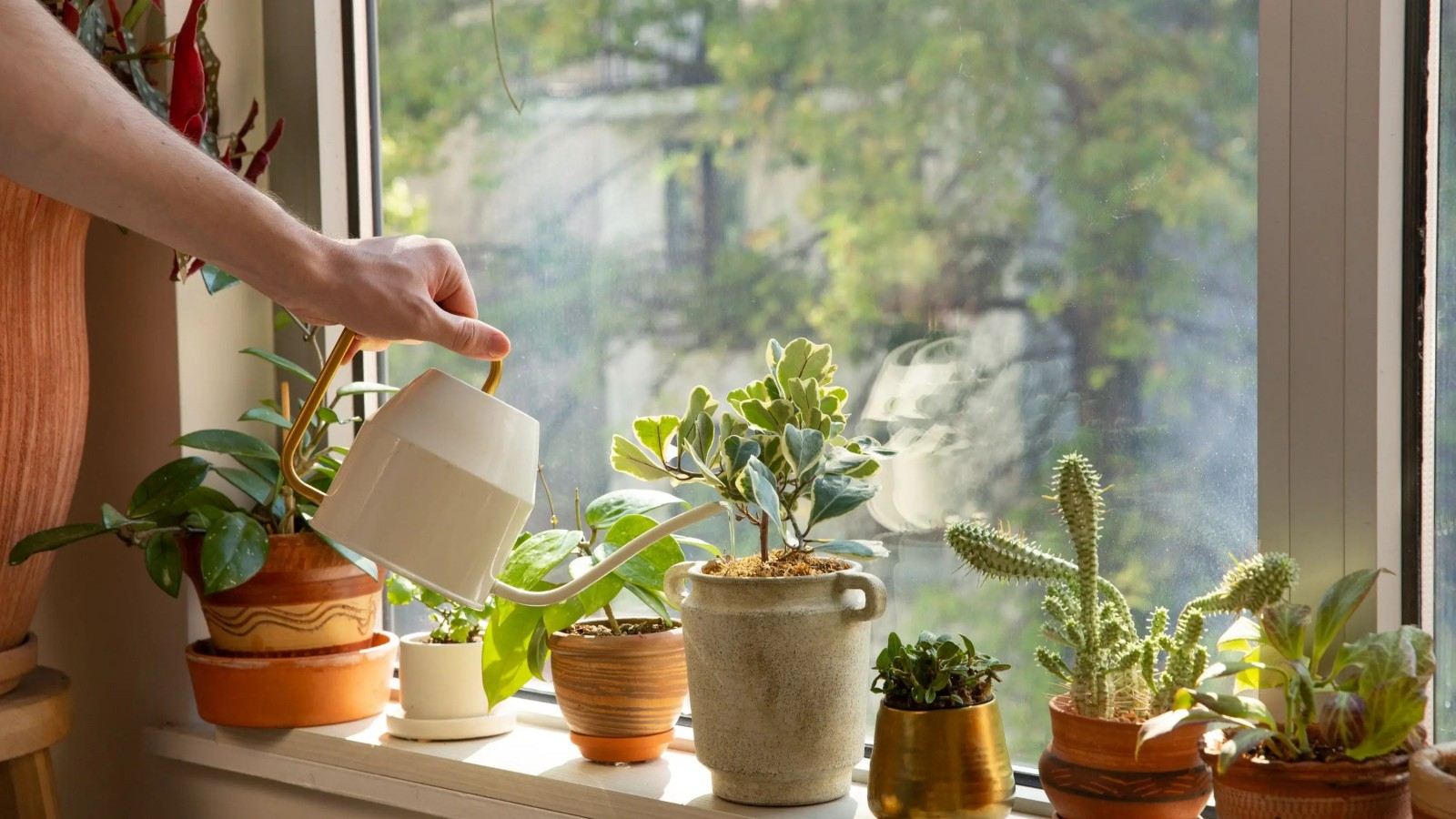
Arranging plants at varying heights creates a visual focal point.
Advertisement
Many people are genuinely enthusiastic when they go shopping for plants. Gazing at the lush green foliage, they imagine how soothing and therapeutic it would be to have them displayed in their home. Yet, the reality often turns out quite differently: as the plant collection grows, the living space becomes increasingly cluttered. Your living room ends up with pots scattered haphazardly—one here, one there—without any rhyme or reason. Ultimately, instead of enhancing the room's aesthetic appeal, this approach makes the home look even more chaotic.
The problem usually lies not with the plants themselves, but rather with *how* they are arranged. The true secret to making a space look beautiful is hidden within a simple yet frequently overlooked technique: varying heights.
I. Why Is "Varying Heights" So Important?
First, visualize this scenario: What happens if you place all your plants at the exact same level—for instance, by lining them all up on the floor or grouping them all together on a tabletop?
The answer is simple: the visual effect is "flat," completely lacking in depth and dimension. It resembles a painting without any contours or undulations; after staring at it for a while, it begins to feel monotonous—perhaps even a little stifling.
However, when plants are arranged at varying heights—some tall, some short—a natural sense of visual flow emerges. Your gaze drifts effortlessly from the higher elements down to the lower ones, and then back up again, subconsciously "wandering" through the space. This sensation is precisely what designers often refer to as "visual rhythm."
To sum it up in a single sentence:
Without varying heights, there is no focal point; without distinct layers, there is no true aesthetic beauty.
II. Height Variation: It’s About More Than Just "High" and "Low"
Many people interpret "varying heights" simply as placing one tall plant next to one short one. However, truly beautiful arrangements typically involve a more nuanced system of "hierarchies."
You can categorize your plants into three distinct groups:
High-Level Plants:Floor-standing, large-scale greenery (such as Fiddle-Leaf Figs or Monstera plants—species that possess a strong, commanding presence).
Mid-Level Plants:Medium-sized plants placed atop tables, cabinets, or side tables.
Low-Level Plants:Small potted plants, ground-level accents, or even trailing/hanging plants.
When these three distinct levels are present simultaneously, the entire space takes on a vibrant, three-dimensional quality. For instance, consider a simple combination:
One tall floor plant + one tabletop plant + one small potted plant on the floor
This immediately looks far more sophisticated than simply "putting everything on the table."
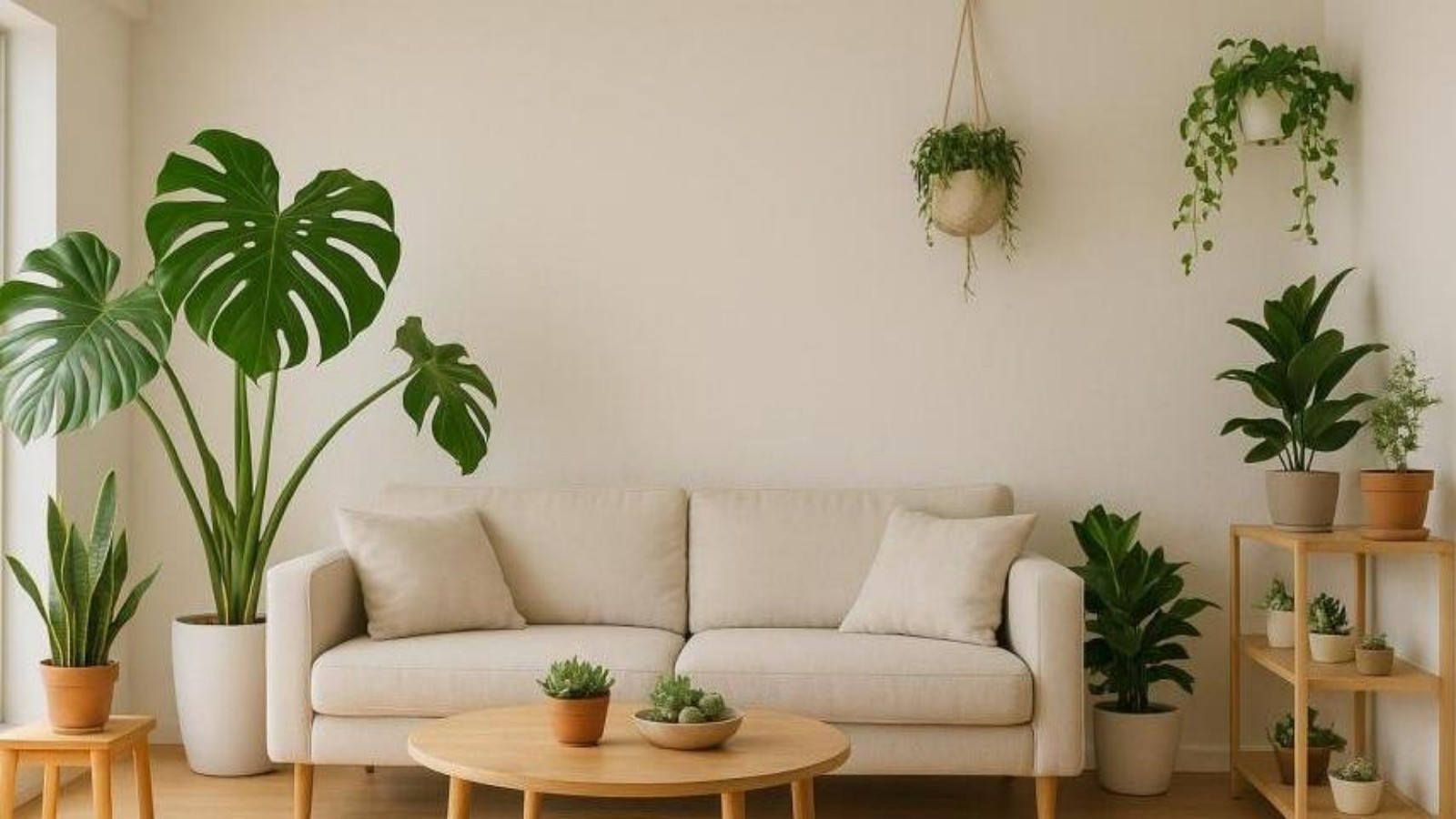
III. Create a Visual Focal Point: Avoid "Spreading Your Effort Too Thin"
Many people encounter a common problem when arranging plants:
They place a few plants in every corner, but lack a central focus.
The result of this approach is: greenery everywhere, yet nothing truly stands out.
In fact, a much better strategy is to—create a "visual focal point."
You can select a specific area—such as a living room corner, next to the sofa, or by a window—and focus your efforts on arranging a cohesive grouping of plants there. This grouping can feature variations in height and contrasts in size; you might even add a few decorative accents (such as a lamp, a piece of art, or a side table).
This way, the moment someone walks through the door, their gaze will be immediately drawn to this specific area.
As for the plants in other parts of the room, they can be kept more "restrained"—serving as supporting elements rather than stealing the spotlight.
IV. Height-Based Arrangement Techniques for Different Spaces
1. The Living Room: Focus on "Corner Groupings"
The living room is the ideal space for creating a complete, multi-layered plant display.
You might arrange it like this:
One tall floor plant (serving as the visual centerpiece)
A medium-height side table or small cabinet topped with a potted plant
A small pot or woven basket placed on the floor to add a finishing touch
If space permits, you can also incorporate a hanging plant to create a cascading effect from above.
This establishes a complete "top-middle-bottom" structure that is visually harmonious and pleasing.
2. The Balcony: Utilize Vertical Space
The balcony is often where the greatest number of plants reside, yet it is also the place most prone to looking cluttered.
To achieve an aesthetically pleasing look, you must learn to "build upwards."
You can do this by:
Using plant stands to create multi-tiered structures
Hanging plants on the wall (using hanging pots or wall-mounted planters)
Suspending various trailing plants from above
The advantage of this approach is:
You can accommodate the same number of plants while occupying less floor space—and creating a much more layered, dynamic look.
3. The Bedroom: Less Is More—Focus on Height Variation
The bedroom is not the ideal place for an abundance of plants; instead, the focus should be on a more refined and curated selection. Suggestions:
Place a small plant on the bedside table (at a low level).
Place a medium-height plant by the window or in a corner.
If space permits, add a small floor-standing plant.
The key takeaway:
Do not place them all on the exact same horizontal plane.
Even if you only have two or three plants, as long as their heights vary, the arrangement will look much more sophisticated and intentional.
V. Little Tricks to Elevate the Visual Appeal
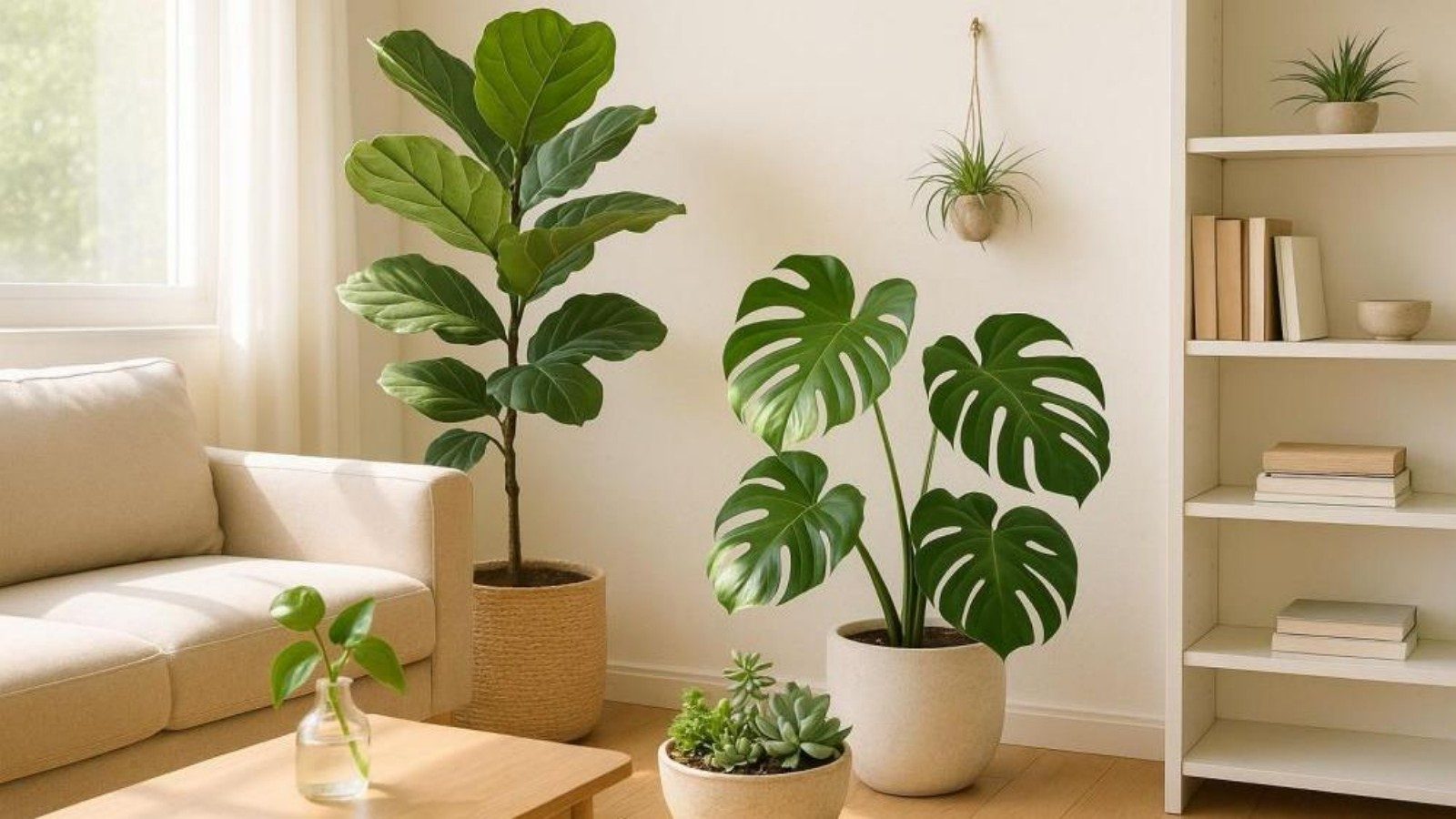
Beyond varying heights, a few additional details can take the overall aesthetic to the next level:
1. Container Height Contributes to "Layering"
It’s not just about the plants themselves; height variations can also be achieved through the choice of planters.
For example:
Use a tall-legged planter to elevate a plant.
Place a small plant atop a stack of books or a small wooden stand.
You can alter the visual structure without having to swap out the plants themselves.
2. Negative Space Is More Important Than Filling Every Spot
Many people feel compelled to display every plant they buy all at once. However, the reality is—
Leaving a little empty space actually looks better.
When plants have "breathing room" between them, each individual plant stands out more effectively.
3. Create a Clear Contrast in Size
If all your plants are roughly the same size—even if they vary slightly in height—the arrangement will lack visual impact.
Try this combination:
One very large plant + one medium-sized plant + one very small plant.
This kind of "strong contrast" makes the visual composition much more engaging.
4. Vary Colors and Leaf Shapes
Beyond height, "shape" and "color" are also integral components of visual layering.
For example:
Large leaves paired with small leaves.
Upright plants paired with trailing plants.
Deep green foliage paired with lighter green foliage.
A little variety makes the overall arrangement feel much more vibrant and alive.
VI. Common Pitfalls to Avoid
Finally, here are a few common mistakes to watch out for so you can steer clear of potential blunders:
1. Arranging everything in a straight line.
It may look tidy, but it appears rigid and completely lacks visual depth or layering.
2. Having too many plants without any structure.
The more plants you cram in, the messier it looks; it’s better to have fewer plants arranged with a deliberate design.
3. Ignoring lighting requirements.
Placing plants solely for aesthetic reasons—without considering their light needs—will result in unhealthy plants, which ultimately detracts from the overall aesthetic.
4. Scattering plants haphazardly throughout the room.
This fragments the space and prevents the eye from finding a clear visual focal point.
VII. Treat "Arranging Plants" as a Form of Interior Design
Many people view plants merely as decorative accessories, but in reality, they function more like "soft furnishing design tools." When you begin arranging your plants at varying heights, you will discover that:
The space acquires greater depth and dimension;
The visual flow becomes more rhythmic;
And your home takes on a more refined, tasteful air.
You don't even need to replace your furniture or undertake a major renovation; simply rearranging your plants is enough to give your entire home a fresh, brand-new look.
A truly beautiful home begins with the art of arrangement.
Plants are inherently beautiful, but if they are positioned incorrectly, even the finest specimens will fail to reach their full potential.
When you master the technique of organizing them at staggered heights, you are, in fact, engaging in an act of true design—one that infuses your space with a distinct sense of style.
Advertisement
Learn More
-

- October 20,2026
- Lily Disease Guide: Whats Killing Your Lilium longiflorum and How to Stop It
-
- September 17,2026
- Wax-Leaf Privet Diseases: Identification, Treatment & Prevention Guide
-
- September 1,2026
- Vinca Minor Diseases: Identification, Treatment and Long‑Term Garden Management
-
- August 18,2026
- Tree Philodendron Diseases: Identification, Treatment and Long‑Term Prevention
-
- August 6,2026
- Common Ailments of Plantago major: Identifying, Treating and Preventing Diseases in Broadleaf Plantain
-
- July 30,2026
- Zodiac-themed Bouquets Combined with Floral Language: Different Color Schemes Create More Artistic Birthday Surprises

Advertisement


 Poisonous and danger
 Edible and medicinal
 Wild and common weed