
Camellia japonica buds are falling off, don’t ignore the key points of maintenance!
Advertisement
Camellia japonica is loved by gardening enthusiasts for its elegant flower shape and rich color. However, many growers will encounter a troubling problem - a large number of flower buds fall off. This phenomenon not only affects the ornamental value, but may also indicate plant health problems. According to statistics, the bud drop rate of Camellia japonica can reach 30%-50% if it is not properly maintained, while the bud drop rate of scientifically managed plants can be controlled below 5%.
1. Analysis of the reasons for Camellia japonica bud drop
(I) Sudden environmental changes
Camellia japonica is sensitive to the growth environment. Sudden changes in the environment can easily lead to physiological disorders, resulting in bud drop. For example, after purchasing Camellia japonica potted plants, if they are suddenly transferred from a relatively stable environment such as a greenhouse or flower market to a home indoor environment, changes in temperature, light, humidity and other conditions may make it difficult for Camellia japonica to adapt. The indoor environment of a home usually has poor air circulation, and the light intensity and duration are different from those in a greenhouse environment. The temperature may also fluctuate greatly. These changes will cause Camellia japonica to have a stress response, resulting in bud drop.
(II) Temperature discomfort
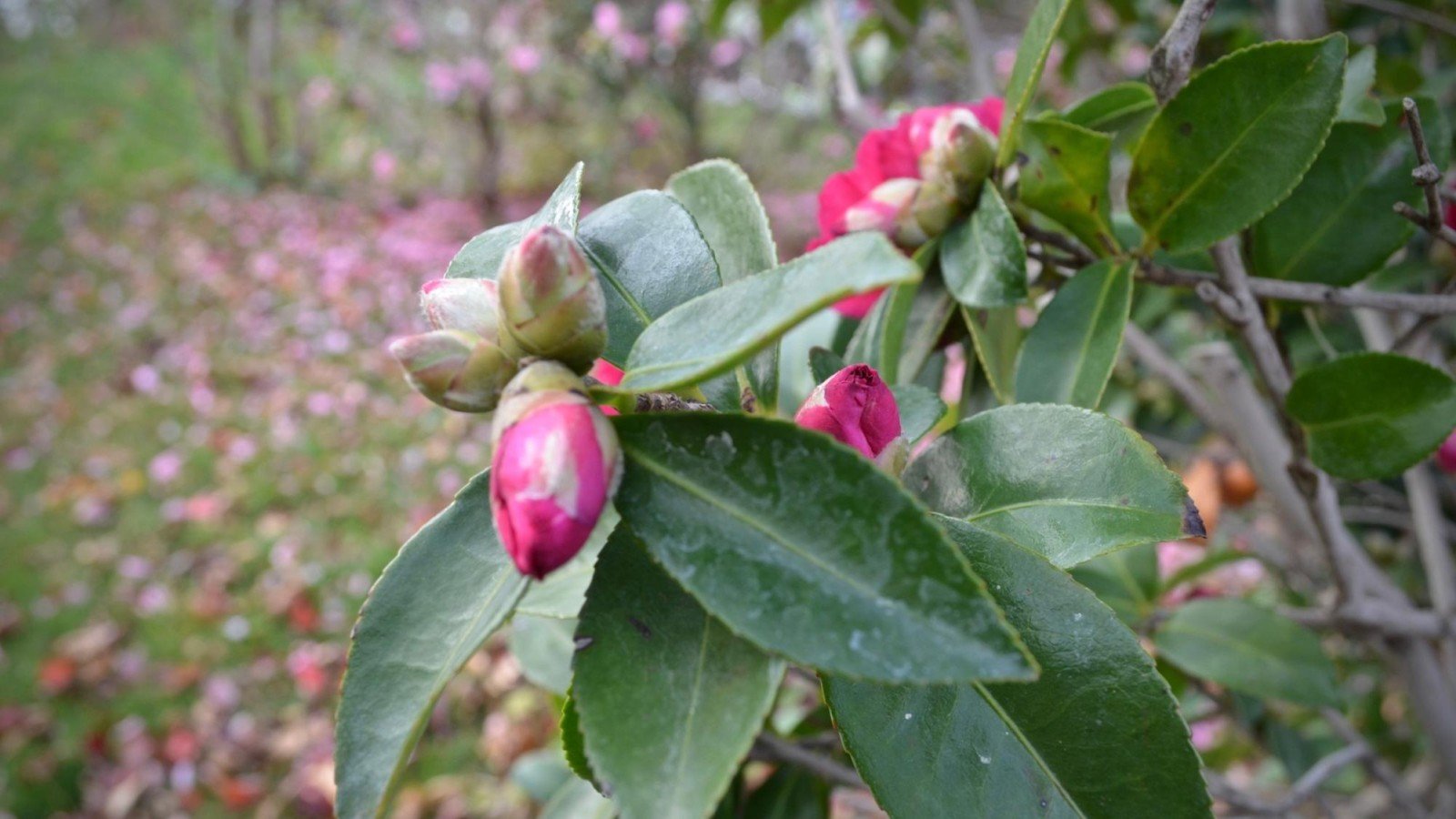
Temperature is an important factor affecting the growth and flowering of Camellia japonica. Camellia japonica is suitable for growing in a warm environment, and the most suitable growth temperature is 18-25℃. When the temperature is below 5℃, Camellia japonica grows slowly, the development of flower buds is hindered, and the buds are prone to falling off; when the temperature is above 30℃, the transpiration of the plant intensifies, the water loss is too fast, and the flower buds will fall off due to lack of water. In addition, the large temperature difference between day and night will also have an adverse effect on Camellia japonica. Too high temperature during the day and too low temperature at night will disrupt the physiological rhythm of the plant and cause the flower buds to fall off.
(III) Improper light
Light is an important condition for Camellia japonica to carry out photosynthesis, and plays a key role in the development and flowering of flower buds. Camellia japonica likes a semi-shaded environment and avoids strong direct light. If Camellia japonica is placed in a place with insufficient light for a long time, the photosynthesis of the plant will be weakened, the nutrient accumulation will be insufficient, the flower buds will be poorly developed, and the buds will fall off easily; and if the light is too strong, especially in the hot summer season, direct sunlight will burn the leaves and flower buds, and the water will evaporate too quickly, causing the flower buds to fall off.
(IV) Poor water management
Water is an indispensable factor for the growth of Camellia japonica. Too much or too little watering will cause harm to the plant, leading to bud drop. When watering is too little, the soil is dry, the plant lacks water, the root system cannot absorb water and nutrients normally, and the flower buds dry up and fall due to insufficient water supply; when watering is too much, the soil is waterlogged, the root system lacks oxygen, and it is easy to rot, affecting the plant's absorption function and causing the flower buds to fall off. In addition, insufficient air humidity will also affect Camellia japonica, especially in dry seasons. Excessive dry air will cause the water on the surface of the flower buds to evaporate too quickly, causing the flower buds to dry up and fall off.
(V) Insufficient or unbalanced nutrients
Camellia japonica needs sufficient nutrient supply during the development of flower buds. If the nutrients are insufficient or the fertilization is improper, the flower buds will develop poorly and fall off. When fertilization is insufficient, the plant lacks the necessary nutrients such as nitrogen, phosphorus, and potassium, and the flower buds cannot grow and develop normally; excessive fertilization or improper fertilization, such as partial nitrogen fertilizer, will cause the plant to grow too tall, inhibit flower bud differentiation and flower bud development, and excessive fertilizer may also burn the root system and affect the plant's absorption function. In addition, the lack of certain trace elements, such as boron and zinc, can also cause Camellia japonica to drop buds.
(VI) Pest and disease invasion
Pests and diseases are one of the important factors affecting the growth and flowering of Camellia japonica. During the growth of Camellia japonica, common diseases include anthracnose and leaf spot, which will harm leaves and buds, causing leaves to turn yellow and flower buds to rot and fall off; common pests include aphids and red spiders, which will suck the juice of the plant, affect the growth and development of the plant, and cause the flower buds to fall off. In addition, the invasion of pests and diseases will also reduce the resistance of the plant, making it more susceptible to other adverse factors and aggravating the phenomenon of bud drop.
2. Maintenance points of Camellia japonica
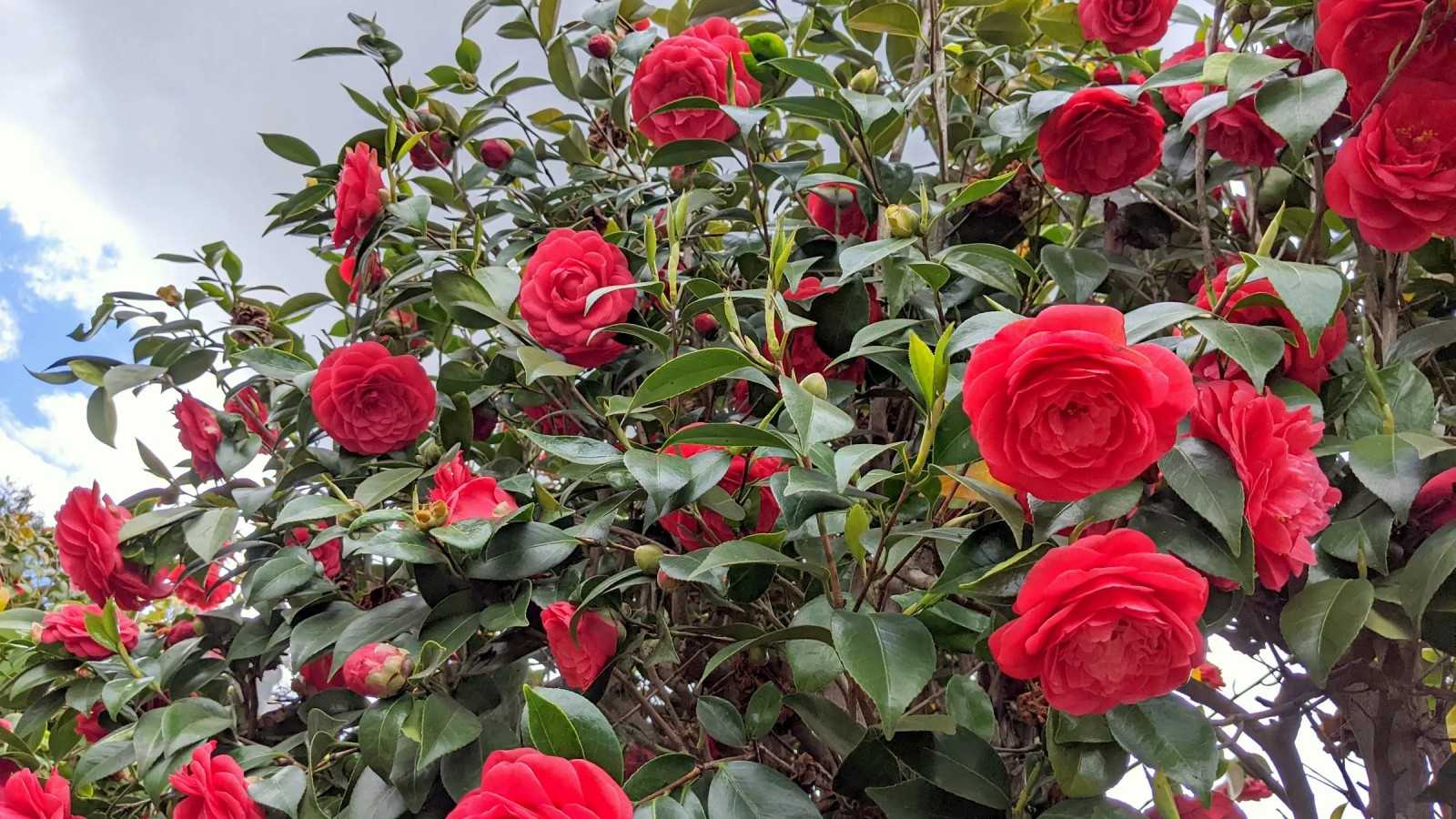
(I) Create a suitable growth environment
Temperature control: During the maintenance of Camellia japonica, it is important to maintain a suitable temperature. When the temperature is low in winter, Camellia japonica should be moved to a warm place indoors for maintenance, and the room temperature should be kept above 5℃ to prevent the plant from freezing; when the temperature is high in summer, Camellia japonica should be placed in a cool and ventilated place to avoid direct sunlight. The temperature can be lowered by spraying water, ventilation, etc., and the room temperature should be kept below 30℃. At the same time, it is important to keep the temperature difference between day and night not too large, generally not exceeding 10℃.
Light management: Camellia japonica likes semi-shady environment. In spring and autumn, it can be placed in a place with sufficient scattered light, such as a balcony, window sill, etc., to ensure 4-6 hours of light per day; in summer, it should avoid direct sunlight. It can be placed under the shade of a tree or shaded with a shade net, and the shading rate is controlled at about 50%; in winter, the light is weak, so it can be placed in a sunny place to increase the light intensity and promote plant growth and flower bud development.
Humidity regulation: Camellia japonica likes a humid environment, and the air humidity is preferably 60%-70%. In dry seasons, such as spring and winter, the air humidity can be increased by spraying water, placing a humidifier, etc. When spraying water, be careful not to spray water on the flower buds to avoid causing the flower buds to rot; in the rainy season or when the air humidity is high, pay attention to strengthening ventilation, reducing air humidity, and preventing the occurrence of plant diseases.
(II) Reasonable watering
Watering principles: Camellia japonica should be watered according to the principle of "see dry and see wet", that is, wait until the soil surface is dry before watering, water thoroughly, make the soil fully moist, but do not accumulate water. You can judge whether the soil is dry by observing the color change of the soil surface or inserting your fingers into the soil to feel the humidity. When the soil surface turns white and the finger inserts into the soil and feels dry, you can water it.
Watering time: Watering time should be adjusted according to the season and temperature. When the temperature is high in summer, you should choose to water in the morning or evening, and avoid watering at high temperature at noon, so as to avoid the water temperature and soil temperature The temperature is too different, affecting the normal function of the root system; when the temperature is low in winter, you should choose to water at noon when it is warm, so as to avoid cold water stimulating the root system.
Water quality requirements: The water quality used for watering is preferably rainwater or river water. If tap water is used, it should be left for 1-2 days to allow the chlorine to evaporate before use. In addition, Camellia japonica likes slightly acidic soil. When watering, a small amount of ferrous sulfate can be added to the water regularly to adjust the pH value of the soil and maintain the acidic environment of the soil.
(III) Scientific fertilization
Fertilization time: Fertilization of Camellia japonica should be reasonably arranged according to its growth stage and season. In spring and autumn, the plants grow vigorously, and more fertilizers should be applied to promote the growth of the plants and flower bud differentiation; in summer, the temperature is high and the plants grow slowly, so less fertilizer or no fertilizer should be applied to avoid fertilizer damage; in winter, the plants enter a dormant period and fertilization should be stopped.
Fertilizer selection: Fertilizers rich in nutrients such as nitrogen, phosphorus, and potassium should be selected for Camellia japonica fertilization, and attention should be paid to supplementing trace elements. During the growth period of the plant, decomposed organic fertilizers or compound fertilizers can be applied to promote the growth of the branches and leaves of the plant; during the flower bud differentiation period and the flower bud development period, the application of phosphorus fertilizers and potassium fertilizers should be increased, such as applying potassium dihydrogen phosphate solution, to promote flower bud differentiation and flower bud development, and improve the quality of flowering.
Fertilization method: When applying fertilizer, you should pay attention to applying thin fertilizer frequently to avoid excessive or too concentrated fertilizer. Organic fertilizer should be fully decomposed before application to avoid burning the root system; chemical fertilizer should be dissolved before application, and the concentration should not be too high, generally 0.1%-0.2% is appropriate. Water should be applied in time after fertilization to dilute the fertilizer and promote root absorption.
(IV) Prevention and control of diseases and pests
Disease control: Common diseases of Camellia japonica include anthracnose and leaf spot. Disease control should strengthen maintenance and management, keep the plants ventilated and light-permeable, water and fertilize reasonably, and improve the resistance of the plants. When the disease is found, the diseased leaves and buds should be removed in time, and sprayed with agents such as carbendazim and methyl thiophanate for prevention and control, spraying once every 7-10 days, and spraying 2-3 times continuously.
Pest control: Common Camellia japonica pests include aphids and red spiders. To prevent and control pests, the plants should be checked in time. When pests are found, the leaves and buds can be washed with clean water to reduce the number of pests, and then sprayed with dichlorvos, omethoate and other pesticides for prevention and control. Spray once every 5-7 days, and spray 2-3 times continuously. At the same time, pay attention to protecting natural enemies, such as ladybugs and lacewings, to maintain ecological balance.
(V) Other precautions
Repotting and soil change: After Camellia japonica grows for a period of time, the nutrients in the soil are gradually exhausted, and the root system will continue to grow, causing the soil to compact, affecting the growth and development of the plant. Therefore, Camellia japonica should be repotted and soil changed regularly. The repotting time is generally in spring or autumn every year. When repotting, a suitable flower pot should be selected. The diameter of the new flower pot should be 1-2 sizes larger than the original flower pot to ensure that the root system has enough growth space. When changing the soil, the plant should be taken out of the original pot, some of the old soil should be removed, the roots that are too long and too dense should be trimmed, and then new culture soil should be filled. The culture soil should be loose, fertile, well-drained, slightly acidic soil, such as a mixture of leaf mold, garden soil, river sand, etc.
Bud thinning and pruning: In order to ensure the flowering quality of Camellia japonica, bud thinning and pruning should be carried out in time. Bud thinning is generally carried out after the flower buds are formed. When the flower buds grow to the size of soybeans, they should be thinned according to the growth of the plant and the number of flower buds. 1-2 strong flower buds can be retained on each branch. Excessive, small, and weak flower buds should be thinned to reduce nutrient consumption and promote the development of flower buds. Pruning should be carried out after the flowering period ends, mainly pruning diseased branches, weak branches, overcrowded branches, and leggy branches to maintain ventilation and light transmission of the plant and a good plant shape.
In short, Camellia japonica bud drop is caused by the combined effect of multiple factors. To avoid the occurrence of bud drop, you need to understand the growth habits of Camellia japonica, create a suitable growth environment, manage water, nutrients, light, temperature, etc., prevent and control pests and diseases in time, and pay attention to details such as changing pots and soil, bud thinning and pruning. Only with careful maintenance can Camellia japonica grow healthily and bloom beautiful flowers. I hope that the maintenance points in this article can help flower lovers solve the problem of Camellia japonica bud drop, let your Camellia japonica bloom on the branches, and add a touch of bright color to your life.
Advertisement
Learn More
-

- October 20,2026
- Lily Disease Guide: Whats Killing Your Lilium longiflorum and How to Stop It
-
- September 17,2026
- Wax-Leaf Privet Diseases: Identification, Treatment & Prevention Guide
-
- September 1,2026
- Vinca Minor Diseases: Identification, Treatment and Long‑Term Garden Management
-
- August 18,2026
- Tree Philodendron Diseases: Identification, Treatment and Long‑Term Prevention
-
- August 6,2026
- Common Ailments of Plantago major: Identifying, Treating and Preventing Diseases in Broadleaf Plantain
-
- July 30,2026
- Zodiac-themed Bouquets Combined with Floral Language: Different Color Schemes Create More Artistic Birthday Surprises
Advertisement
 Poisonous and danger
 Edible and medicinal
 Wild and common weed