
How to solve the problem of dry tips of Chlorophytum comosum? Find the root cause!
Advertisement
Have you ever experienced this kind of trouble? The green leaves of the carefully cared-for Chlorophytum comosum, which should have drooped gracefully, have turned yellow and dried up at the tips, as if they were burned by fire? Don't worry, this is a challenge that almost every plant lover will encounter. Today, we will work together to find out the root cause of the problem and bring your Chlorophytum comosum back to life.
Improper water management: the primary cause of dry tips
1. Overwatering and root suffocation
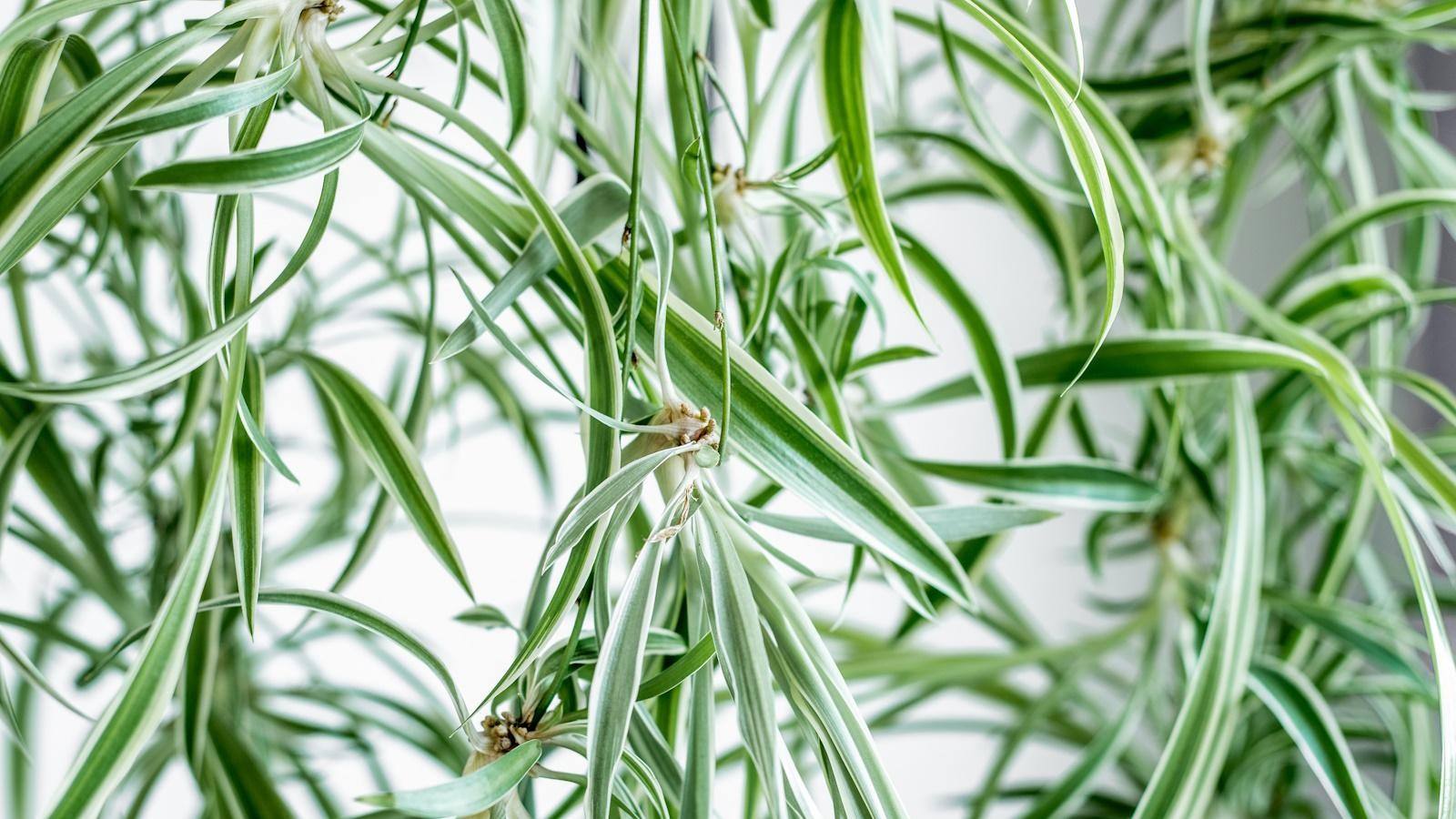
Although Chlorophytum comosum likes a humid environment, its roots are extremely sensitive to waterlogging. When the potting soil is saturated for a long time, the soil pores are completely occupied by water, and the oxygen content drops sharply, causing the root cells to be unable to perform aerobic respiration due to lack of oxygen. At this time, anaerobic bacteria (such as Fusarium) will take the opportunity to multiply in large numbers, secrete toxins to erode the root tissue, and cause root rot. The rotten roots lose the ability to absorb and transport water, and the leaf tips, as the "terminal station" of water transport, will be the first to dry out due to lack of water.
Identification characteristics:
The leaves are uniformly yellow, and the tip of the stem feels soft like cloth (not brittle).
White mold spots may appear on the soil surface, or a sour smell may be emitted.
When the plant is gently lifted, the roots are separated from the soil, and brown rotten roots can be seen.
Solution:
Finger tip test method: insert the second joint of the index finger into the soil. If it still feels moist at this depth (about 3-4 cm), postpone watering.
Container selection: Use red pottery pots or unglazed pots instead, which are much more breathable than plastic pots; a 2 cm thick ceramsite drainage layer needs to be laid at the bottom of the pot.
Emergency repotting steps:
① After removing the pot, shake the old soil lightly and cut off the blackened and rotten roots with sterilized scissors;
② Apply sulfur powder or carbendazim powder to the wound;
③ Use a mixed substrate of leaf mold + perlite (3:1) to replant, avoiding pressing the soil.
2. Long-term drought stress
When the soil moisture content is less than 10%, Chlorophytum comosum will start a self-protection mechanism, reducing water transpiration by closing stomata, and giving priority to the limited water supply to the base leaves, causing the top tissue to die due to lack of water. Chlorophytum comosum in air-conditioned rooms or near heaters is more vulnerable - experimental data show that the water evaporation rate in such environments is three times that of normal temperature environments.
Special tips:
The thin aerial roots of vine-type varieties (such as lipstick Chlorophytum comosum) are more sensitive to drought.
"Folding" wilting of leaves (mesophyll droops while veins remain upright) is a sign of water shortage.
Remedies:
Immersion pot method: immerse the flower pot in a container filled with water to 1/2 the height of the pot, take it out and drain it after 10-15 minutes.
Smart reminder: Set a watering memo on your mobile phone every Wednesday and Sunday, or use a soil moisture meter to assist in monitoring.
Water quality and mineral imbalance: invisible killer
1. Chemical substances in tap water
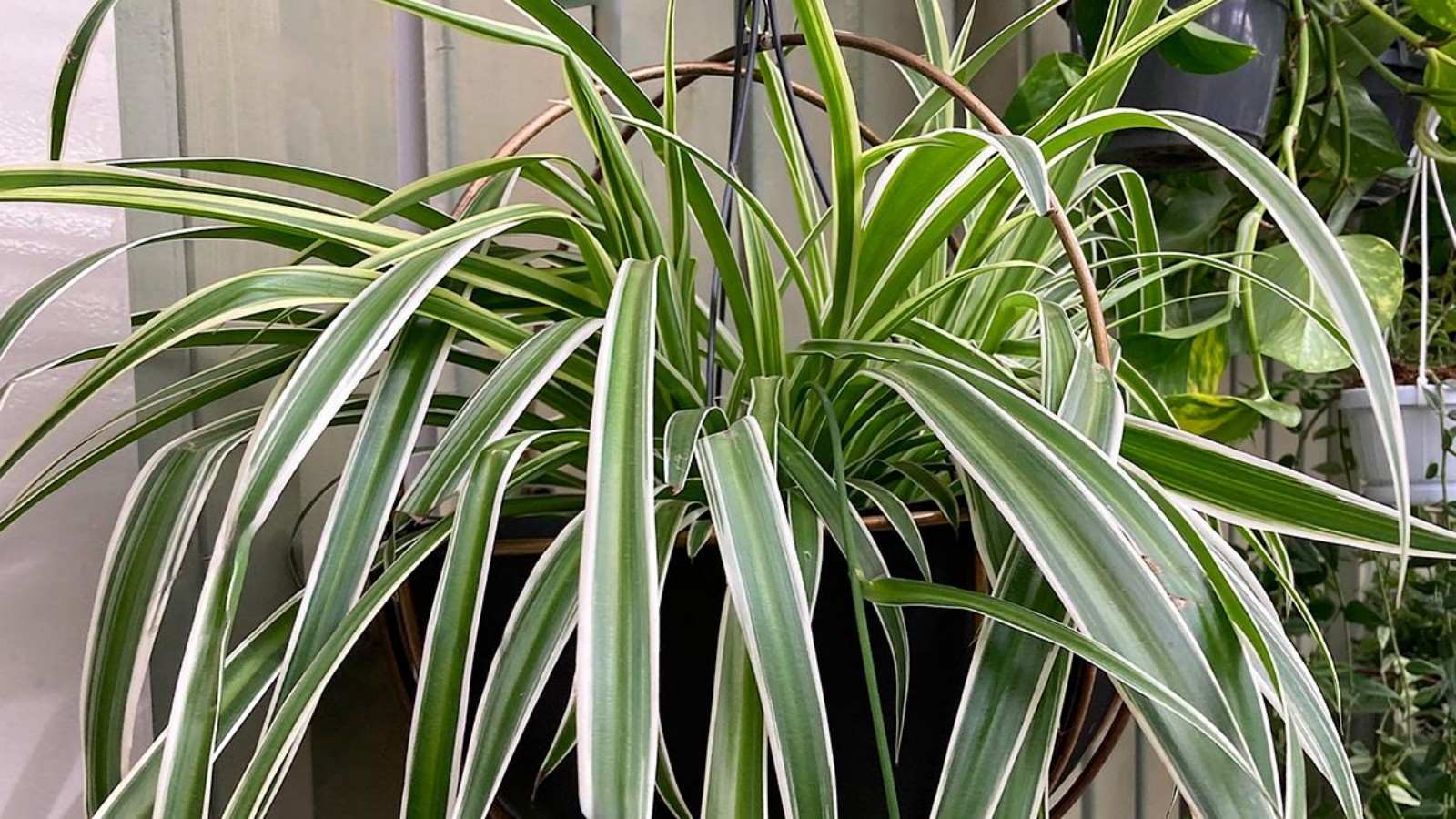
Tap water in my country generally contains chlorine (0.3-0.5mg/L) and fluorine (0.5-1.0mg/L). These substances will accumulate on the leaf edge as water evaporates, destroying the cell membrane structure. Experiments show that the dry tip rate of Chlorophytum comosum, which is continuously irrigated with untreated tap water, reaches 78% after 3 months, while fluorine-sensitive varieties (such as ‘Bonnie’ curly leaf Chlorophytum comosum) will have brown leaf tips within 2 months.
Water quality improvement plan:
Stationary method: After receiving water, leave it open for 48 hours to allow the chlorine to completely evaporate (fluoride takes longer).
Rainwater utilization: Collect unpolluted rainwater in the rainy season, or install a balcony rainwater collection system.
Soil flushing: Slowly irrigate the soil with distilled water every month until water flows out of the drainage hole to take away the salt.
2. Nutritional imbalance
Nitrogen excess: Excessive nitrogen fertilizer will inhibit calcium absorption, causing thinning of the cell wall at the leaf tip, scorching and curling.
Potassium deficiency: The tip of the old leaf first appears "V"-shaped and scorched, then extends to the leaf edge, accompanied by curling of the leaf edge.
Boron deficiency: The tip of the new leaf turns transparent and brown, and the leaves become twisted and deformed in the later stage.
Precision fertilization suggestions:
Fertilizer selection: Use water-soluble fertilizer with N-P-K of 10-5-8, and dilute it by 1 times according to the concentration in the instructions.
Fertilization cycle: Apply once every 15 days during the growing season (April-September), and stop fertilizing in winter; irrigate with clean water the next day after fertilization.
Soil renewal: When repotting every spring, mix 10% of decomposed sheep manure or earthworm manure into the substrate.
Analysis of environmental stress factors
1. Strategies for dealing with insufficient humidity
When the air humidity is lower than 40%, Chlorophytum comosum stomata close to reduce transpiration, but this will hinder carbon dioxide absorption and reduce photosynthesis efficiency by 30%. At this time, the leaves will retain water by thickening the cuticle, and the tip cells will die due to metabolic imbalance.
Innovative humidification methods:
Microenvironment creation method: Spread 3 cm thick pebbles on the tray, fill water to 1/3 of the height of the stones, and place the flower pot on it.
Group moisturizing effect: Place 3-5 pots of plants closely to form a local microclimate through leaf transpiration.
Use of humidifier: Turn on the ultrasonic humidifier at night, set the humidity to 50%-60%, and keep it more than 1 meter away from the plant.
2. Adjustment plan for improper lighting
Chlorophytum comosum is native to the shade of tropical rainforest trees and has evolved to adapt to scattered light. Strong direct light will destroy the chloroplast structure, while long-term shade will lead to insufficient photosynthetic products.
Light optimization guide:
Ideal location: east-facing windowsill (2-3 hours of morning light) or 1 meter away from south-facing windows.
Shading measures: Use white gauze curtains with a light transmittance of 70%, or apply frosted glass film.
Rotation tips: Rotate the flower pot 45 degrees clockwise every two weeks to avoid the plant's phototropic growth and cause the crown to be biased.
Special pathological factors screening
1. Root-knot nematode infection
This invisible parasite (about 0.5 mm long) will penetrate the roots to absorb juice, and at the same time inject saliva to cause abnormal cell division, forming pearl-like nodules. The water conduction of infected plants is blocked, and the stem tip will spread at a rate of 1-2 cm per week.
Prevention and control measures:
Isolation and quarantine: Newly purchased Chlorophytum comosum should be placed separately for 2 weeks to observe whether there is a slow yellowing of leaves.
Soil treatment: Infected plants should be sealed in black plastic bags and discarded after 7 days of exposure; old soil should be sterilized with high-temperature steam at 121℃ for 30 minutes.
2. Leaf blight (Phyllosticta spp.)
The fungus overwinters in the diseased leaf residues as conidia and spreads through water droplets and splashes. In the early stage, only brown spots with a diameter of 1 mm are seen. In the later stage, the spots merge and the leaves dry up from the tip downwards.
Treatment process:
① When cutting off diseased leaves, the scissors need to be wiped and disinfected with 75% alcohol cotton pads;
② Spray 600 times of 70% mancozeb (or 2000 times of 25% pyraclostrobin), focusing on spraying the back of the leaves;
③ Increase ventilation and use circulating fans to keep air flowing to avoid water accumulation on the leaves.
Seasonal maintenance tips
Spring (March-April):
Retain 1/3 of the old soil when repotting to avoid damaging the new root system; you can combine repotting with division propagation.
Summer (June-August):
Use a sprayer to spray water mist on the leaves and surrounding space every morning and evening, avoiding the high temperature period at noon.
Autumn (September-October):
Before pruning old leaves, burn the scissors on the flame for 10 seconds to disinfect; you can add phosphorus and potassium fertilizers to promote lignification.
Winter (December-February):
Watering time is selected in the morning when the water temperature is close to room temperature; plastic bags can be used to cover the pots at night to keep warm.
Each Chlorophytum comosum is a unique organism. It may show different needs due to differences in varieties (such as Chlorophytum comosum with golden edges is more drought-resistant), growth stage (less water is needed in the seedling stage) or placement (humidification is needed near the heater). It is recommended to conduct a 10-minute "plant inspection" at a fixed time every week: touch the leaves lightly, observe the growth of new buds, and check the condition of the pot soil. When one day you discover that the newly grown leaves are as translucent as emeralds, and the leaf tips naturally droop to form an elegant arc, that sense of accomplishment is the most precious gift that plants give us. Now, with this knowledge, go and have an in-depth conversation with your Chlorophytum comosum!
Advertisement
Learn More
-

- October 20,2026
- Lily Disease Guide: Whats Killing Your Lilium longiflorum and How to Stop It
-
- September 17,2026
- Wax-Leaf Privet Diseases: Identification, Treatment & Prevention Guide
-
- September 1,2026
- Vinca Minor Diseases: Identification, Treatment and Long‑Term Garden Management
-
- August 18,2026
- Tree Philodendron Diseases: Identification, Treatment and Long‑Term Prevention
-
- August 6,2026
- Common Ailments of Plantago major: Identifying, Treating and Preventing Diseases in Broadleaf Plantain
-
- July 30,2026
- Zodiac-themed Bouquets Combined with Floral Language: Different Color Schemes Create More Artistic Birthday Surprises
Advertisement
 Poisonous and danger
 Edible and medicinal
 Wild and common weed