
Identification, Harm, and Control of Solanum ptychanthum!
Advertisement
In North American cornfields, soybean fields, vegetable growing areas, and even urban vacant lots and roadside thickets, you may have already seen an inconspicuous yet persistent wild plant—Solanum ptychanthum. Often called the Eastern Black Nightshade, it is an annual broadleaf weed widely distributed in the United States and Canada. Because of its resemblance to edible berry plants, many people misjudge its safety; in agricultural production, it is one of the most troublesome competing weeds for growers.
I. Basic Plant Overview
*Solanum ptychanthum* belongs to the genus *Solanum* within the family Solanaceae, the same family as *Solanum lycopersicum* and *Solanum tuberosum*, but is a wild species. It is native to North America and widely distributed in the Midwestern and Eastern United States and southern Canada.
It is an annual herbaceous plant that completes its germination, flowering, fruiting, and seed maturation process within a single growing season. Due to its strong adaptability and high seed yield, it is often considered a problem weed in agricultural areas.
II. Identifying Characteristics of *Solanum ptychanthum*
Correct identification is the first step in management. Especially in North America, it is often confused with other nightshade plants, such as *Solanum americanum* or *Solanum nigrum*. The following are key identification points:
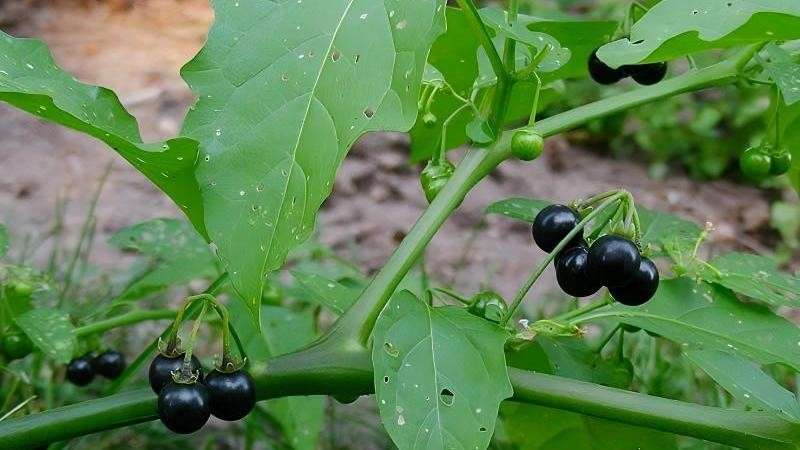
1. Plant Morphology
Tallness generally 30–90 cm
Stem erect or semi-spreading
Numerous branches
Smooth surface or with a few fine hairs
Stem color green to purplish-green
In fertile soil, the plant may be taller and denser.
2. Leaf Characteristics
Leaves alternate
Ovate or elliptical in shape
5–10 cm long
Margins slightly wavy or shallowly toothed
Dark green leaf surface, soft texture
Compared to *Solanum nigrum*, its leaf margins have shallower teeth, and the overall outline is smoother.
3. Flower Characteristics
Small white flowers
Five-lobed star-shaped corolla
Yellow anthers clustered into a conical structure
Multiple flowers forming an umbel-like inflorescence
Flowering period is usually from early summer to early autumn.
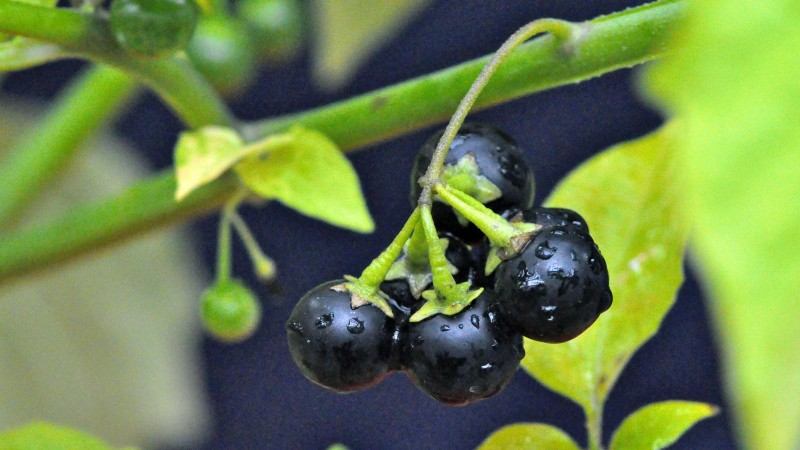
4. Fruit Characteristics
The fruit is a round berry.
Initially green, it turns black or purplish-black when ripe. The surface is glossy. The fruit diameter is approximately 6–10 mm. The fruit resembles a small blueberry or wild berry, but it should not be eaten casually.
III. Ecological Habits and Dispersal Methods
*Solanum ptychanthum* is a typical "disturbance weed," meaning it prefers disturbed environments.
1. Growing Environment
Farmland
Roadsides
Horticultural plots
Construction sites
Riverbanks and drainage ditches
It prefers sunny environments, is not particular about soil type, and tolerates mild drought.
2. Reproductive Capacity
Primarily reproduces through seeds
A single plant can produce hundreds to thousands of seeds
Seeds can survive in the soil for many years.
Dispersal methods include:
Carried by agricultural machinery
Dispersed by birds after feeding
Dispersed by water currents
Mixed with crop seeds
Its strong seed bank allows it to repeatedly appear in crop rotation systems.
IV. Agricultural Hazard Analysis
1. Competition for Resources with Crops
It competes with the following crops:
Corn
Soybeans
Wheat
Tomatoes
Potatoes
Competing for:
Soil nutrients
Water
Light
Growing space
If not controlled in the early stages, it can significantly impact crop yield.
2. Host Role for Pests and Diseases
As a member of the Solanaceae family, it can serve as an intermediate host for various pathogens and pests, including:
certain fungal diseases
Virus vectors
Aphids and other pests
This increases the indirect risk to cash crops.
3. Harvest Disturbance
Mature plants may lodging, affecting the efficiency of mechanical harvesting and potentially contaminating produce.
V. Public Health and Toxicity Risks
Solanum ptychanthum contains alkaloids (such as glycoalkaloids), especially in unripe fruit.
Possible symptoms include:
Nausea
Vomiting
Abdominal pain
Diarrhea
High risk of ingestion by children and pets. Special attention should be paid to weed control in residential areas and parks.
It is important to emphasize that the toxicity of ripe fruit decreases, but consumption is still not recommended unless professionally confirmed.
VI. Integrated Weed Management
In international agricultural environments, Integrated Weed Management (IWM) strategies are recommended.
(I) Cultural Control
Crop rotation
Reduces its dominance in continuous Solanaceae crops.
Dense planting and mulch
Enhances crop community competitiveness.
Cover crops
Such as rye or clover, inhibiting germination.
(II) Mechanical Control
Early tillage
Intertillage and weeding
Manual weeding (home gardens)
Key point: Removal before flowering and seed setting.
(III) Chemical Control
Selective herbicides can be used in large-scale planting areas:
Best results during seedling stage
Combined with resistance management strategies
Rotational mechanism of action
Must follow local agricultural department or EPA-approved guidelines.
(IV) Preventive Measures
Clean farm equipment
Monitor field edges
Prevent seed dispersal
Early detection and early control are core principles.
VII. Distinguishing it from other nocturnal shade plants
Accurate differentiation is crucial in the international agricultural context.
Key distinguishing features include:
Inflorescence morphology
Fruit size
Leaf margin structure
Degree of drooping of mature fruit
In professional agricultural management, confirmation through plant identification manuals or agricultural extension agencies is recommended.
VIII. Management Recommendations and Future Trends
With global climate change and adjustments in agricultural practices, adaptive weeds like *Solanum ptychanthum* may expand their distribution range.
Recommendations:
Strengthen field monitoring
Adopt multimodal control methods
Avoid reliance solely on chemical herbicides
Establish a long-term seed bank management strategy
Integrated management can not only reduce costs but also mitigate resistance issues.
Although *Solanum ptychanthum* appears unassuming, it plays a complex role in agricultural production and ecological management. For overseas farmers and horticulturalists, understanding its identification characteristics and damage mechanisms is a crucial step towards achieving sustainable agricultural management.
Through scientific identification, systematic control, and long-term management, we can effectively limit its impact to acceptable levels. In today's ever-changing global agricultural environment, proactive awareness and precise management are the best strategies for dealing with problem weeds.
Advertisement
Learn More
-

- July 16,2026
- Common Diseases & Pest-Related Disorders of Nepeta cataria: Full Identification, Organic Treatment and Long-Term Prevention Guide
-
- July 7,2026
- Potted Plants or Cut Flowers for Holidays? A Comparison of Aromatic Plant Gift Options
-
- July 2,2026
- Detailed Planting Steps for Quercus palustris in a Home Garden!
-
- June 24,2026
- Conveying Sentiments Through Floral Fragrance: The Cultural Significance of Gifting Flowers on International Holidays
-
- June 15,2026
- Why are the leaves of Prunus laurocerasus attacked by caterpillars?
-
- June 9,2026
- Fresh Flowers Bring Vitality, Dried Flowers Offer Delight: A Guide to Choosing High-Quality, Fragrant Plants for Long-Term Enjoyment


Advertisement
 Poisonous and danger
 Edible and medicinal
 Wild and common weed