
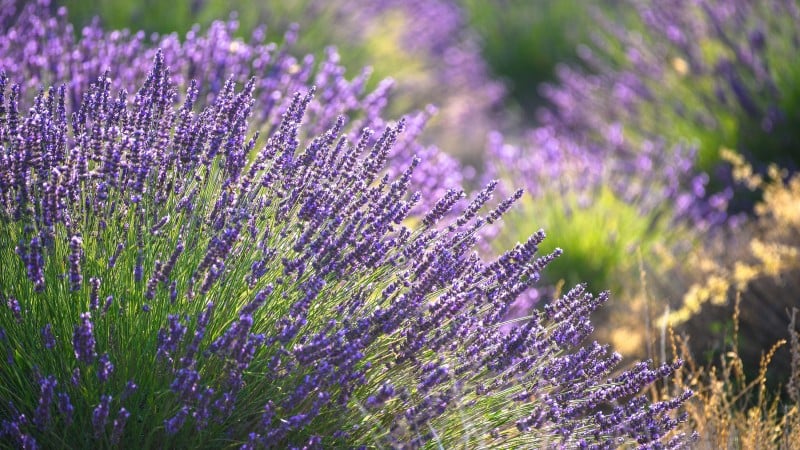
Lavender not blooming? Dont get the care tips wrong!
Advertisement
Why Does Lavender Look Healthy but Never Bloom?
Many lavender growers encounter this situation: the leaves appear normal, the stems are growing, and there are no obvious signs of disease, yet flowers never appear. This “seemingly healthy but non-flowering” state is actually one of the most typical signs of lavender care mistakes. Failure to bloom doesn't mean the plant is problem-free; rather, it indicates that its growth direction has been misguided for an extended period.
Lavender isn't primarily valued for its foliage; its growth objective is clear—to flower and reproduce under suitable conditions. If the environment keeps it in an “overly comfortable” state for too long—such as with ample water, rich nutrients, and lack of stress—it will choose to keep growing leaves instead of entering the flowering stage.
Many growers are easily misled by the term “vigorous growth.” Lush foliage isn't necessarily beneficial; for lavender, excessive vegetative growth actually hinders flowering. Failure to bloom often indicates the plant hasn't received the signal that it “needs to flower.”
From a plant physiological perspective, flower bud formation requires precise energy allocation. When conditions like light, temperature variation, and moisture are mismatched, the plant automatically prioritizes its own survival over expending energy on flowering. This is a rational choice, not a failure in care.
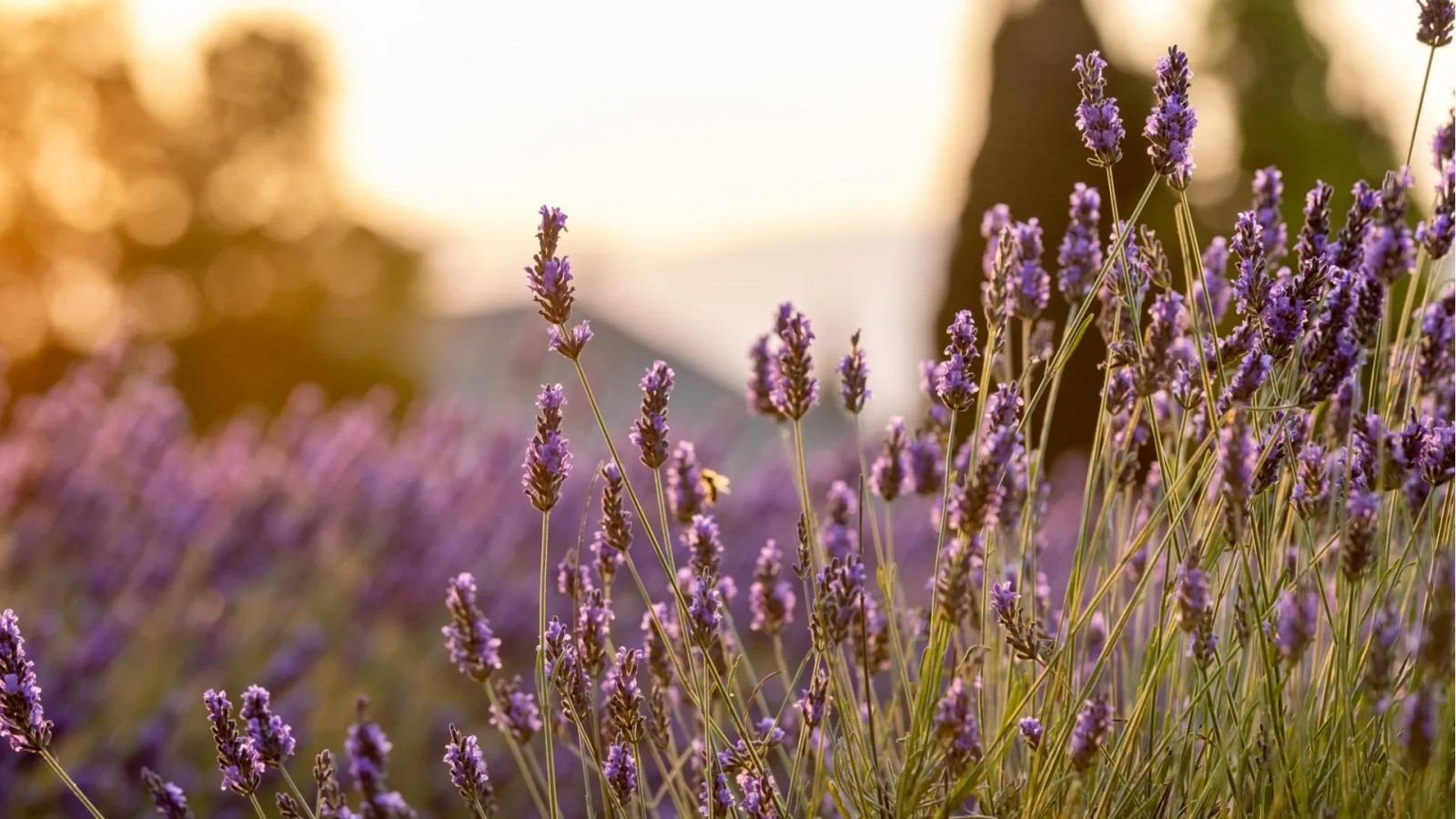
Therefore, when analyzing why lavender fails to bloom, the first step is to shift your mindset: it's not about “what haven't I done enough of,” but rather “where have I overdone it?”
Light, water, and soil form the core foundation determining flowering
Among all factors influencing lavender blooming, light takes precedence. Lavender requires prolonged, consistent direct sunlight—not merely bright but diffused ambient light. Many place lavender near windows, on inner balconies, or in partial shade, assuming “sufficient light,” yet this fails to support flower bud differentiation.
Without sufficient daily direct sunlight, lavender will continuously elongate its stems and develop darker foliage, yet remain unable to enter the flowering stage. This state can persist for years, appearing healthy but with extremely low flowering potential.
Water management is another frequently overlooked issue. Lavender naturally adapts to drier growing conditions, and its root system is ill-suited for prolonged immersion in moist soil. Overwatering, even without root rot, keeps plants perpetually in a “vegetative growth-dominant” state.
Many non-flowering lavenders have potting mix that never truly dries out. This seemingly attentive care actually deprives plants of the chance to adjust their growth rhythm. For lavender, moderate dryness is actually a positive signal.
Soil structure is equally critical. Excessively fine, organic-rich soil significantly enhances water retention, keeping the root environment perpetually damp. While ideal for certain foliage plants, this soil type is unsuitable for lavender's long-term growth and flowering.
When insufficient light, excessive moisture, and overly rich soil coincide, lavender will almost certainly fail to bloom successfully. Even with prolonged care, this outcome remains unchanged.
Improper fertilization and pruning are the direct culprits behind “only growing leaves, not flowers.”
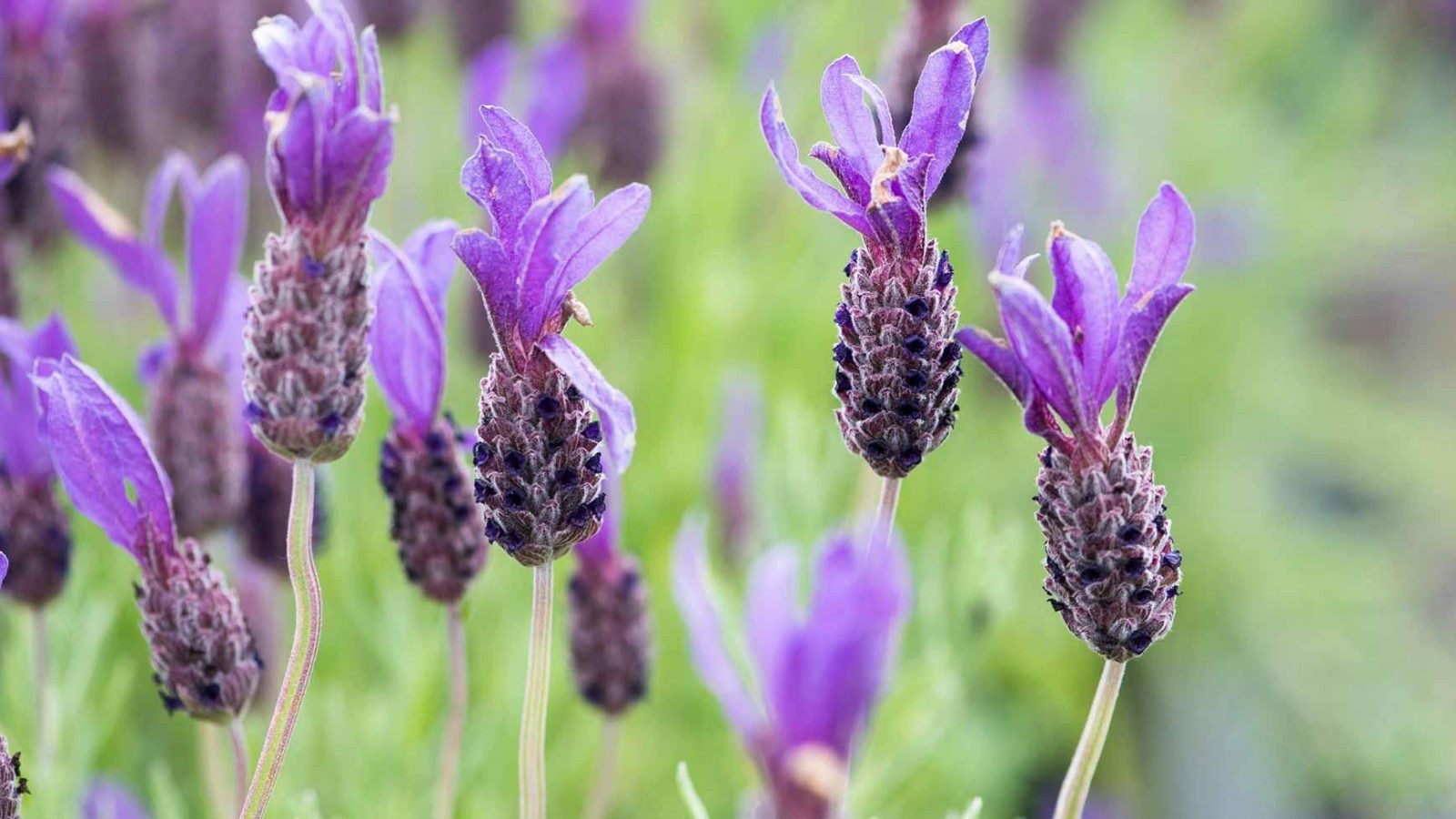
Regarding fertilization, many fall into an intuitive misconception: no flowers mean insufficient nutrients. This leads to frequent fertilization, sometimes even with high-nitrogen formulas, in hopes of “supplementing” the plant. For lavender, however, this approach often backfires.
Nitrogen fertilizers strongly stimulate leaf and stem growth, making the plant appear more lush. Simultaneously, however, they significantly inhibit flower bud formation. Long-term use of general-purpose fertilizers or foliage plant fertilizers is a common cause of lavender's failure to bloom.
Even flowering-specific fertilizers, if applied too frequently, can disrupt the plant's energy allocation. Lavender isn't a heavy-feeding plant; it prefers to complete its life cycle in relatively nutrient-poor conditions.
Improper pruning is another major cause of failure to bloom. If left unpruned for extended periods, branches gradually age and become woody, reducing new growth. Flower buds typically form only on relatively young shoots.
However, pruning too heavily or too late can directly remove buds about to form, causing the entire season's flowering to fail. Many people do prune, but their approach and timing completely miss lavender's growth rhythm.
Proper pruning should aim to “renew branches” rather than simply reduce plant height. Only by continuously producing healthy new growth can lavender establish a stable foundation for consistent flowering.
Environmental details and long-term care habits determine the final outcome
Beyond obvious factors like light, water, fertilizer, and pruning, environmental nuances also influence whether lavender blooms over time. Ventilation is one such factor. Stagnant air keeps plants in a suboptimal state; even if no surface issues appear, internal energy distribution suffers.
Temperature is equally crucial. Lavender dislikes persistently hot and stuffy conditions. If the day-night temperature difference is too small, the plant tends to continuously expend energy on maintaining metabolism rather than entering the reproductive growth phase.
Pot selection also indirectly affects flowering performance. Oversized pots prolong the soil drying cycle, increasing the risk of root rot; undersized pots may restrict root development, causing the plant to enter a weakened state prematurely.
Varietal differences present another practical challenge. Certain lavender cultivars inherently demand stricter flowering conditions. Choosing such varieties when care experience is still unstable can easily lead to the frustrating feeling of “no matter what I do, it won't bloom.”
In the long run, whether lavender blooms isn't determined by a single action but by the cumulative effect of daily care habits. Every seemingly minor deviation gets amplified over time.
Understanding lavender's “survival logic” is key to achieving blooms.
Lavender blooms not to please its caretaker, but to fulfill its reproductive purpose. It initiates this process only when conditions are stable, resources are not overly abundant, and a certain level of stress is present.
When you constantly provide abundant water, nutrients, and a mild environment, it may instead prolong its vegetative growth phase. This isn't a failure in care but the plant's natural response to its surroundings.
Truly effective care isn't about “giving more is better,” but about “giving just enough.” Moderate dryness, ample sunlight, restrained fertilization, and proper pruning form the key combination that encourages lavender to bloom.
Once these conditions gradually align, flowering won't happen instantly, but the plant's growth state will subtly shift. Branches become more compact, leaf color stabilizes, and the overall structure gains balance—all clear signs that blooming is imminent.
When lavender fails to flower, it's not an endpoint but a clear feedback signal. With the right course correction, all that remains is to give it time.
Advertisement
Learn More
-

- June 1,2026
- How to treat leaf spot disease in Wisteria?
-
- May 26,2026
- Choosing Plants for Hotel Rooms: Creating a Comfor Stay
-
- May 18,2026
- How to Deal with Plant Blight Disease in Duranta erecta?
-
- May 11,2026
- Edible Plant ion Guide: Common but Easily Misunderstood Plant Types in the Market
-
- May 6,2026
- How should I care for Common asparagus fern?
-
- April 27,2026
- Garden Maintenance Schedule: Perfect All Year Round
Advertisement
 Poisonous and danger
 Edible and medicinal
 Wild and common weed