
What to do if Daffodil grows too long? Here are the methods!
Advertisement
Daffodil flowers often grow too long during maintenance - the stems and leaves grow too tall, the stems are thin and bent, the leaves turn yellow and fall over, and even the phenomenon of "flowers hidden in the leaves" appears, which seriously affects the ornamental effect. Daffodil's long growth not only destroys the beauty of the plant, but also consumes a lot of nutrients, resulting in a shortened flowering period and withered flower arrows. What exactly causes Daffodil to grow too long? And how to deal with it scientifically? This article will provide you with a comprehensive maintenance guide from cause analysis to solutions.
1. Understanding Daffodil leggy growth: symptoms and hazards
(I) Typical symptoms of leggy growth
Abnormal elongation of stems and leaves: The normal height of Daffodil plants should be controlled at 20-30 cm, while the stems of leggy plants can reach 40-50 cm. The leaves are slender and thin, "bean sprout-like", and the proportion of petioles and flower arrows is unbalanced.
Thin and soft stems and lodging: Due to the rapid cell division but thin cell walls, the base of the stem is not strong enough to support it. It is easy to bend and fall when it encounters wind or touch, and even collapses with "top-heavy" appearance.
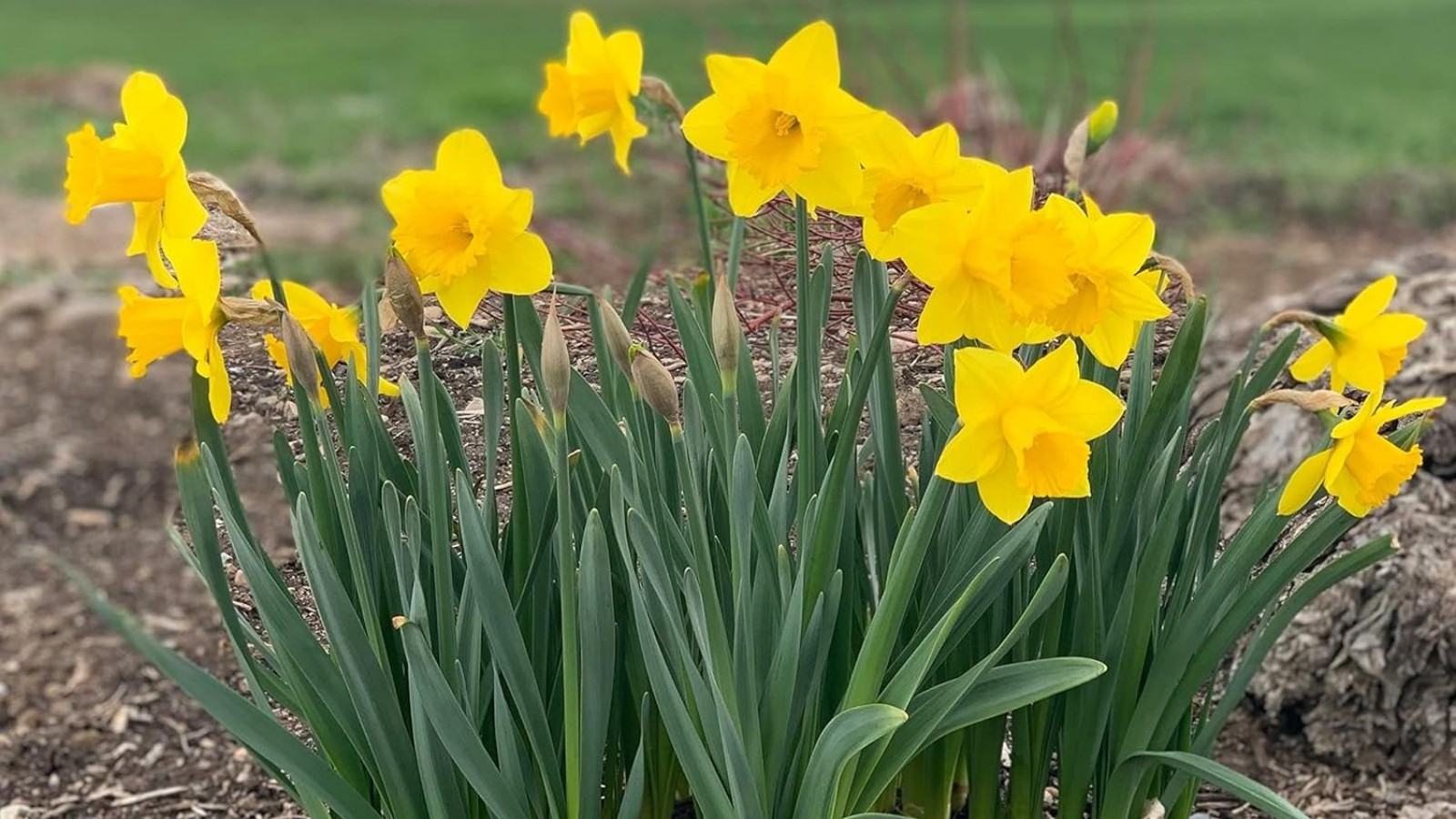
Poor flowering: It is difficult to extract the flower arrow, or the flower arrow is hidden in the leaves (commonly known as "flowers in leaves"), the number of flowers is reduced, the petals are thin, and the flowering period is shortened by 3-5 days compared with normal plants.
Yellowing leaves: The leaves turn green and yellow, and photosynthesis is weakened, which further leads to insufficient nutrient return to the bulb, affecting the next year's flowering.
(II) The core harm of leggy growth
The essence of leggy growth is the "stress growth" of plants. Daffodil competes for light resources by raising its stems and leaves, but over-consumes the nutrients stored in the bulbs, resulting in:
Loss of ornamental value: the plant shape is disorderly, which violates the aesthetic characteristics of Daffodil's "elegant and upright";
Decrease in stress resistance: the thin stems are easily attacked by pathogens and are more likely to rot when hydroponically cultivated;
Flowering failure: nutrients are concentrated on the stems and leaves, flower bud differentiation is blocked, and in severe cases, "dumb flowers" appear (flower arrows wither and cannot bloom).
2. Analysis of the six main reasons for Daffodil's leggy growth
(I) Insufficient light: the "culprit" of leggy growth
Daffodil is a strong sun-loving plant that requires 6-8 hours of direct light (or equivalent full-spectrum light) per day. If placed in a diffuse light environment indoors, on the north side of a balcony, or in places with weak light for a long time, or if the light duration in winter is less than 4 hours, the plant will initiate a "shade avoidance reaction":
The phytochrome synthesized in the leaves is unbalanced, prompting the rapid division of the stem apex meristem;
The distribution of auxin (IAA) changes, and the elongation of cells on the backlit side intensifies, leading to leggy stems and leaves.
(II) Temperature imbalance: high temperature promotes "crazy growth"
The suitable growth temperature for Daffodil is 10-15℃. When the ambient temperature is continuously higher than 20℃:
Respiration is enhanced, and the carbohydrates stored in the bulb are consumed rapidly;
The activity of cell elongation enzymes (such as expansin) increases, and the vertical growth rate of the stem increases by 30%-50%;
When the temperature difference between day and night is less than 5℃, cell elongation cannot be inhibited at night, exacerbating the tendency of leggy growth.
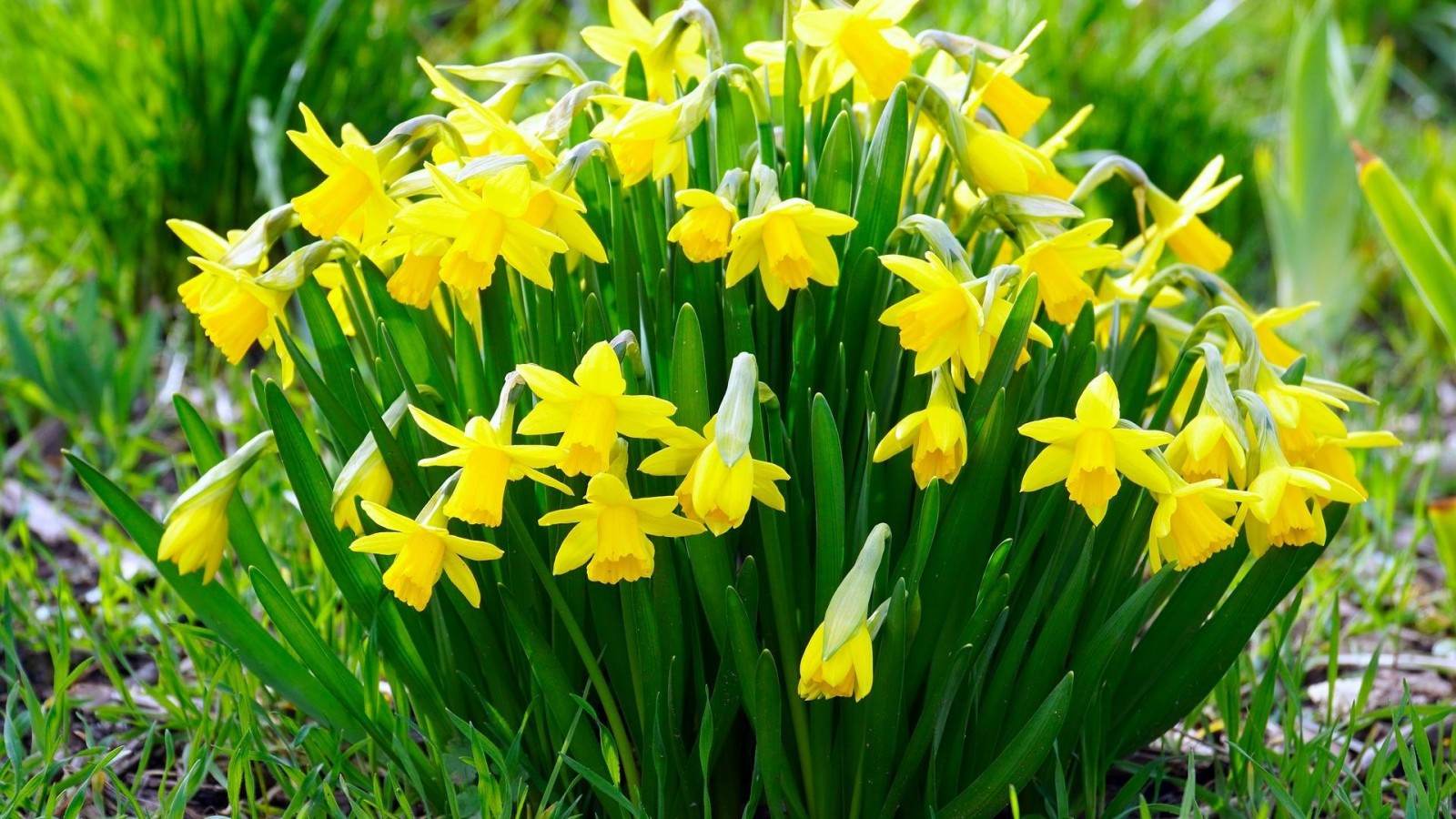
(III) Improper water management
1. Hydroponic Daffodil: The water level is too high or the water is not changed in time
The water level submerges more than 1/3 of the bulb, resulting in root hypoxia, and the plant seeks air by pulling up the stems and leaves;
Turbid water causes root rot, and the absorption function is blocked, forcing the above-ground part to grow abnormally.
2. Soil culture of Daffodil: The soil is too wet or has too strong water retention.
When the pot soil is wet for a long time, the root system cannot breathe well, and the nitrogen absorption is excessive, which stimulates the leaves to grow wildly.
Heavy soil leads to poor drainage, causing "wet damage and leggy growth".
(IV) Imbalanced fertilization: The consequences of excessive nitrogen fertilizer
Daffodil bulbs have their own nutrients, and no additional fertilizer is required during hydroponics. However, if:
Urea and other nitrogen fertilizers are applied excessively, the nitrogen, phosphorus and potassium ratio is unbalanced (the ideal ratio N-P-K=1:2:2);
Spraying high-nitrogen nutrient solution on the leaves leads to excessive cytokinin (CTK), leggy stems and leaves, and delayed development of flower arrows.
(V) Bulb quality and variety characteristics
Poor quality bulbs: small bulbs, diseased bulbs or "two-year rejuvenation bulbs" have insufficient nutrient reserves and will prioritize the use of limited nutrients for stem and leaf growth rather than flowering.
Variety differences: Some multi-flowered Daffodils (such as "Tahiti") or double-petal varieties have genetic characteristics that lead to vigorous growth of stems and leaves, which are prone to leggy growth if not intervened.
(VI) Improper placement
Close to heat sources such as radiators and air-conditioning outlets, the local temperature is too high and the air is dry, which accelerates the elongation of stems and leaves; The plants are fixed in the same direction for a long time and grow towards the light, causing the stems to twist and grow leggy.
3. Phased response: full-cycle management from prevention to rescue
(I) Before planting: control the source and reduce the risk of excessive growth
1. Select bulbs: Lay a good foundation
Select first-class bulbs with a diameter of more than 5 cm, full and hard, and shiny epidermis (main bulb weight ≥ 300 grams);
Remove moldy, softened, and brown-spotted bulbs, and soak them in 500 times carbendazim solution for 30 minutes for disinfection before hydroponics.
2. Hydroponics pretreatment: three key steps
Carving flowers to promote dwarfing (Zhangzhou Narcissus): Use a blade to gently scrape both sides of the top bud tip of the bulb, peel off some scales to expose the bud body, inhibit the main bud from growing too long, and promote the balanced development of lateral buds (be careful to avoid damaging the flower buds);
Cold water soaking: Soak the bulbs in cold water at about 10℃ for 24 hours before putting them in water to activate the dormant buds of the bulbs and inhibit the initial growth rate of the stems;
Shallow water cultivation: The water level in the hydroponic container is controlled at 1-2 cm from the base of the bulb, so that only the roots are exposed to water to avoid excessive bulb growth caused by soaking. Growth
3. Soil preparation: Create a breathable environment
Substrate formula: 4 parts leaf mold + 3 parts river sand + 2 parts perlite + 1 part decomposed sheep manure (pH 6.0-6.5, slightly acidic); lay ceramsite or broken tiles at the bottom of the pot, with a height of more than 3 cm, to enhance drainage and avoid water accumulation.
(II) Growth period: precise control to block the path of excessive growth
1. Light management: ensure "strong direct light"
Daily light ≥ 6 hours: place Daffodil on a south-facing balcony or windowsill. When the light is insufficient in winter, hang an LED plant supplementary light (red-blue spectrum ratio 3:1) 30 cm away from the plant, and supplement light for 4 hours a day;
Regularly rotate the flower pot: rotate 180° clockwise every 2 days to ensure that the plant is evenly exposed to light and prevent the stem from bending towards the light.
2. Temperature control: create a "low-temperature growth" environment
12-15℃ during the day, 5-10℃ at night: adjust the temperature through air conditioning, heating or placing it on a north-facing windowsill, especially cooling at night can inhibit cell elongation (studies have shown that low temperature treatment at night can reduce plant height by 20%-30%);
Keep away from heat sources: keep a distance of more than 1 meter from radiators and floor heating to avoid local high temperatures stimulating crazy growth of stems and leaves.
3. Water management: moderate dryness and wetness, promote rooting and control stems
Daffodil culture:
Change water frequently in the early stage: Change water every day before rooting (week 1-2) to keep the water clean; change water every 2-3 days after rooting, and the water temperature should be consistent with the room temperature (temperature difference ≤2℃);
"Intermittent dry and wet" method: During the growth period, the water in the hydroponic container can be poured out to expose the root system for 1-2 hours (done at noon), and then add new water to inhibit the excessive growth of stems and leaves through slight drought stress.
Daffodil culture:
See dry and wet: Water when the surface soil turns white, and water until the bottom of the pot is soaked, and avoid water accumulation;
Add phosphorus and potassium fertilizers: Spray 0.2% potassium dihydrogen phosphate solution once every 10 days before budding (mainly spray the back of the leaves) to promote the thickening of stems and differentiation of flower buds.
4. Chemical regulation: rational use of dwarfing agents
Paclobutrazol (PP333) treatment: After the roots of hydroponic Daffodil are formed (week 3), replace the water with 50 mg/L paclobutrazol solution, soak for 24 hours and then replace it with water again, which can reduce the plant height by 40%-50% and thicken the stem by 20%;
Note: Dwarfing agents must be diluted strictly according to the proportion. Excessive use will cause leaf rigidity and delayed flowering; soil-grown Daffodil can be irrigated with 100 mg/L chlormequat chloride (CCC) solution after planting, 200 ml per pot.
(III) After leggy growth occurs: timely rescue to reduce losses
1. Mild leggy growth (stem not lodging)
Physical support: Use thin bamboo sticks or plastic brackets (3-5 mm in diameter) to insert into the soil or hydroponic substrate next to the plant, and gently tie the middle and upper part of the stem with cotton thread (a bundle for every 3-4 plants), and be careful not to strangle the stems and leaves;
Water and temperature control: For hydroponic Daffodil, change the water every 2 days, and reduce the amount of water each time until the base of the bulb just touches the water surface; for soil-grown Daffodil, stop watering for 3-5 days, and add a small amount of water after the leaves wilt slightly.
2. Severe leggy growth (stem lodging, yellowing leaves)
Pruning and rejuvenation: Cut off 1/3 of the over-elongated leaves from the base (keep the growth point of the leaf heart), reduce nutrient consumption, and spray 0.1% urea + 0.2% potassium dihydrogen phosphate mixture to promote new leaf germination;
Division and replanting (applicable to soil cultivation): Remove the leggy plants from the pot, split the bulbs next to the bulbs, replace them with new breathable substrates and replant them, reducing the density to improve light and ventilation conditions.
3. Flower arrow rescue: Avoid "flowers hidden in leaves"
Artificial stem guidance: Use soft iron wire to bend into an arc, gently pull the flower arrow out of the leaves, fix it on the support frame, and guide it to grow upward;
Foliar fertilization: Spray foliar fertilizer containing trace elements of boron and molybdenum (such as 1000 times chelated boron fertilizer) once a week to promote the elongation of flower arrow cells and prevent wilting.
4. Special precautions for different planting methods
(I) Hydroponic Daffodil: The key to controlling leggy growth throughout the process
Deep water promotes rooting in the early stage, and shallow water controls stems in the later stage: the water level should be 1/2 of the bulb before rooting to promote root development; after the root system grows to 5 cm, the water level should be reduced to 1-2 cm to force the plant to dwarf;
Refrigeration treatment: If you buy the bulbs late (after December), you can wrap the bulbs with newspapers and store them in the refrigerator (5-8℃) for 10 days. After breaking dormancy, hydroponic cultivation can significantly shorten the height of stems and leaves.
(II) Soil-cultured Daffodil: Dual regulation of soil and fertilization
Shallow planting and top exposure: When planting, the top of the bulb is exposed to 1/3 of the soil surface, and light is used to directly inhibit the leggy growth of the stem base;
Base fertilizer selection: Mix bone meal (5 g/pot) or decomposed fish protein fertilizer when planting to increase the phosphorus and potassium ratio and avoid excessive nitrogen fertilizer.
(III) Rejuvenating Daffodil (Flowering Management in the Next Year)
If the bulbs (commonly known as "dumb bulbs") that have bloomed in the same year need to be rejuvenated, the flower stems need to be cut off in time after flowering (leafs should be retained) and transferred to soil culture:
Apply nitrogen, phosphorus and potassium compound fertilizer (1:1:1) once a month during the growing season;
The bulbs will form after the leaves wither in summer and should be stored in a dry and ventilated place. When replanting in autumn, soak the bulbs in a solution of daffodil for 30 minutes to prevent them from growing too long again.
5. FAQs
(I) Can Daffodil grow in the sun?
Yes! But it needs to be done gradually. If long-term shade cultivation leads to leggy growth, sudden exposure to the sun will cause leaf burns. It should be moved to a place with scattered light to adapt for 2-3 days, and then the direct light time should be gradually increased by 1 hour per day until it reaches more than 6 hours.
(II) Can adding salt to hydroponic Daffodil prevent leggy growth?
There is such a saying among the people, but there is insufficient scientific basis. Salt (sodium chloride) may inhibit bacterial growth, but excessive use will cause soil or water salinization and damage the root system. It is recommended to use professional dwarfing agents such as paclobutrazol first.
(III) Can leggy Daffodil still bloom?
As long as the flower arrow is not completely withered, it is still possible to bloom through support, supplementary light, temperature control and other measures, but the quality of the flowers will decline. Prevention is better than cure, and the key is to manage light and temperature well in the early stage of planting.
Through scientific management of light, temperature, water and fertilizer, combined with necessary dwarfing measures, Daffodil can maintain its ideal state of "thick stems, dark green leaves, and upright flower arrows", blooming with an elegant and charming demeanor in winter. Next time you pick up a Daffodil bulb, remember these maintenance tips!
Advertisement
Learn More
-

- October 20,2026
- Lily Disease Guide: Whats Killing Your Lilium longiflorum and How to Stop It
-
- September 17,2026
- Wax-Leaf Privet Diseases: Identification, Treatment & Prevention Guide
-
- September 1,2026
- Vinca Minor Diseases: Identification, Treatment and Long‑Term Garden Management
-
- August 18,2026
- Tree Philodendron Diseases: Identification, Treatment and Long‑Term Prevention
-
- August 6,2026
- Common Ailments of Plantago major: Identifying, Treating and Preventing Diseases in Broadleaf Plantain
-
- July 30,2026
- Zodiac-themed Bouquets Combined with Floral Language: Different Color Schemes Create More Artistic Birthday Surprises
Advertisement
 Poisonous and danger
 Edible and medicinal
 Wild and common weed